
Right to Freedom (Articles 19–22): Six Freedoms, Reasonable Restrictions & Key Judgments

The Constitution of India guarantees several Fundamental Rights to ensure liberty, dignity, and democratic governance. Among these rights, the Right to Freedom under Articles 19 to 22 occupies a central … Read More


Abolition of Untouchability (Article 17) and Titles (Article 18): Historical Context & Implementation

The Constitution of India is not merely a legal document; it is a revolutionary charter aimed at transforming society. Among the most progressive provisions within the Fundamental Rights chapter are … Read More

Article 15 & 16: Prohibition of Discrimination & Equality of Opportunity in Public Employment

The Constitution of India is one of the most comprehensive constitutional frameworks in the world. Among its most powerful guarantees are the Fundamental Rights that ensure dignity, equality, liberty, and … Read More

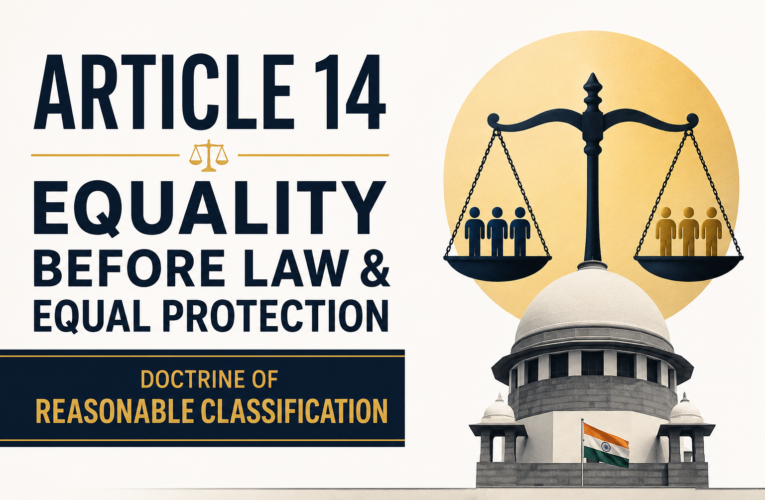
Article 14: Equality Before Law & Equal Protection – Doctrine of Reasonable Classification

Introduction Article 14 of the Indian Constitution stands as the cornerstone of the Right to Equality, embodying the foundational principles of justice, fairness, and non-discrimination that underpin India’s democratic ethos. … Read More

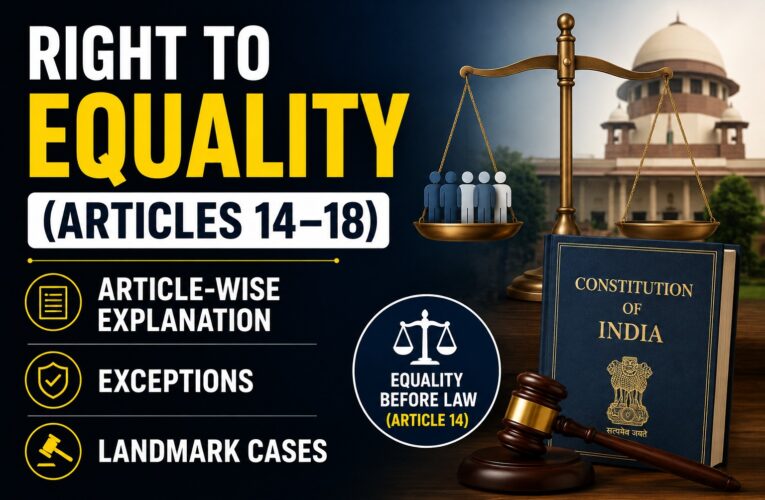
Right to Equality (Articles 14–18): Article-wise Explanation, Exceptions & Landmark Cases

Introduction: Right to Equality (Articles 14–18) The Right to Equality under Articles 14 to 18 of the Indian Constitution forms the bedrock of India’s democratic and secular framework. It ensures … Read More

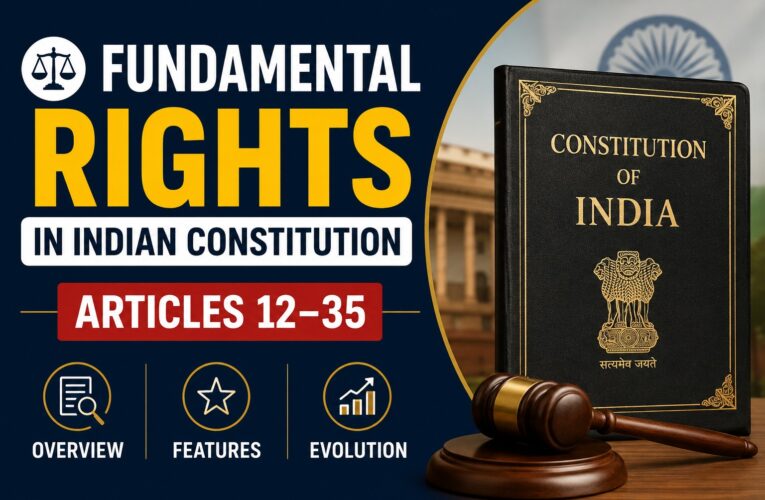
Fundamental Rights in Indian Constitution: Articles 12–35 Overview, Features & Evolution

Introduction: Fundamental Rights in Indian Constitution The Fundamental Rights enshrined in Part III (Articles 12 to 35) of the Indian Constitution are often described as the Magna Carta of India. … Read More