

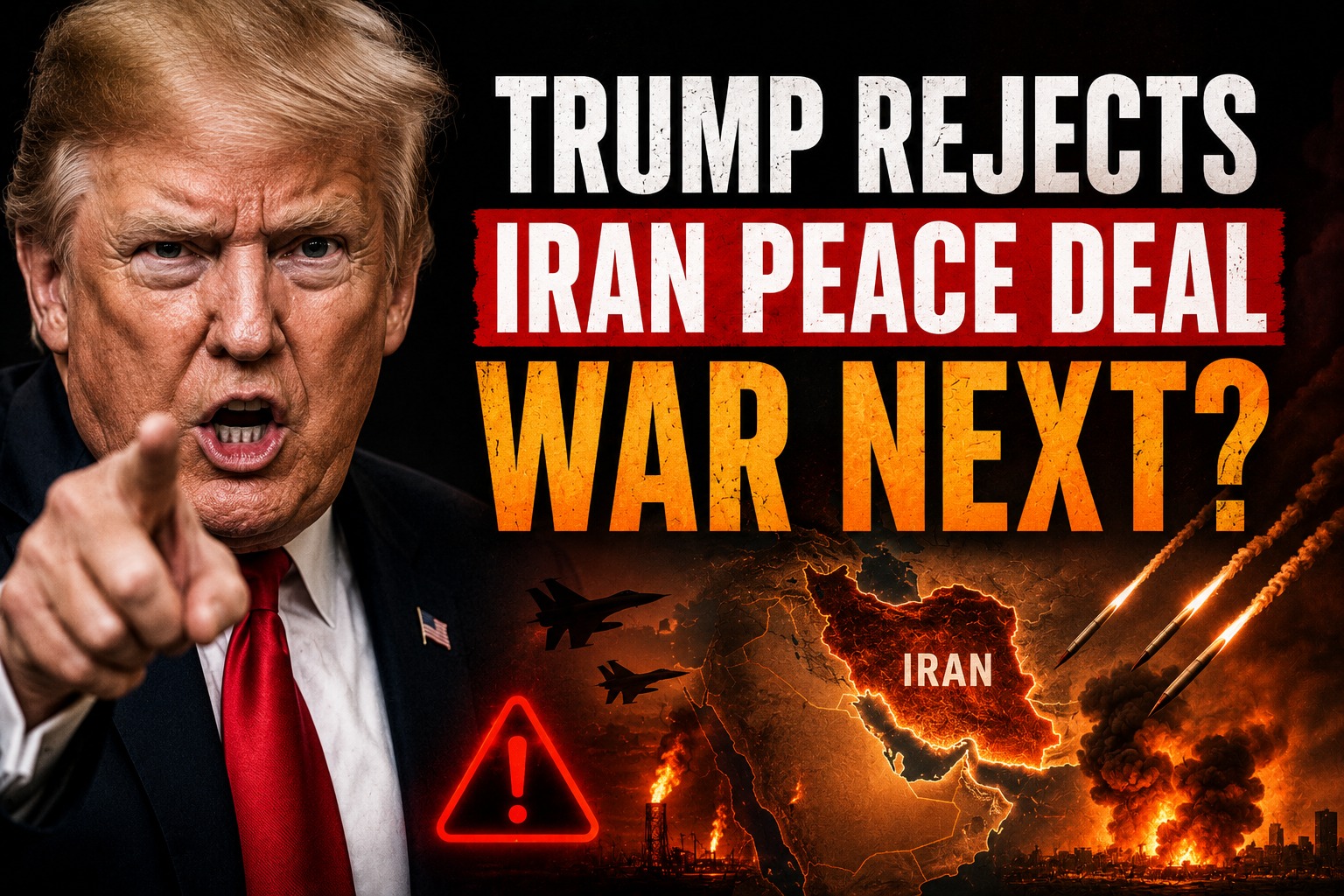
Trump Rejects Iran’s Peace Proposal as ‘Totally Unacceptable’: Stark Warning Signals Risk of Renewed War in West Asia
Trump Rejects Iran’s Peace Proposal: In a dramatic escalation of diplomatic tensions, US President Donald Trump has firmly rejected Iran’s response to a US-brokered peace proposal aimed at ending the ongoing conflict in West Asia. On Sunday, Trump posted on Truth Social: “I have just read the response from Iran’s so-called ‘Representatives.’ I don’t like it — TOTALLY UNACCEPTABLE!” This blunt dismissal has heightened fears that the fragile ceasefire could collapse, potentially restarting active hostilities that have already disrupted global energy markets for over 10 weeks.
The rejection comes amid a complex backdrop of indirect negotiations mediated by Pakistan, with both sides navigating demands related to the Strait of Hormuz, Iran’s nuclear program, sanctions relief, and regional security. As oil prices surged following the announcement, global markets are once again on edge, underscoring the high stakes for energy security and international stability.
Latest Status Update (as of May 11, 2026)
The 2026 Iran-West Asia conflict, which erupted earlier this year involving US, Israeli, and Iranian forces, has been in a precarious ceasefire phase since early April. A temporary truce, brokered with Pakistani and Chinese involvement, paused major strikes but left core disputes unresolved, including competing blockades around the Strait of Hormuz.
Key recent developments:
- Iran submitted its counterproposal through Pakistani mediators in response to a reported 14-point US framework. Iranian state media emphasized ending the war, maritime security in the Gulf, and other conditions reportedly including compensation and maintaining leverage over key waterways.
- Trump’s swift and public rejection on Sunday has stalled momentum. He accused Iran of “playing games” and warned that “they will be laughing no longer,” while reiterating concerns over Iran’s enriched uranium stockpiles.
- Limited maritime activity continues: A few vessels have passed through the Strait under escorted operations, but the dual-blockade situation (US naval actions vs. Iranian restrictions) persists, keeping shipping costs elevated and oil supplies constrained.
- No immediate resumption of full-scale strikes has been reported, but both sides remain on high alert. Iran has vowed it will “never bow” and warned of potential “new arenas of war,” while US and Israeli officials continue to stress the need for verifiable nuclear concessions.
The situation remains fluid, with Trump scheduled to engage with Chinese leaders this week on the Iran file. Markets reacted instantly, with oil prices jumping on fears of prolonged disruption.
Why Trump Rejects Iran’s Peace Proposal: Detailed Breakdown of the Peace Proposal and Rejection
The US proposal reportedly sought a comprehensive framework to de-escalate, including steps toward reopening the Strait of Hormuz fully, addressing Iran’s nuclear ambitions, and potential sanctions relief in phases. Iran’s response, while accepting the need to end hostilities, is understood to have fallen short on key US red lines—particularly robust commitments on dismantling or freezing its nuclear program and relinquishing control elements over the strategic waterway.
Trump’s characteristically direct style left little room for ambiguity. By labeling the response “totally unacceptable” without detailed elaboration, he applied maximum pressure while keeping options open for further talks or renewed military posture. Analysts interpret this as a classic Trump negotiating tactic: public rejection to force better terms, combined with implicit threats of overwhelming force if demands are ignored.
Iranian officials, for their part, have projected defiance, stating Tehran will not surrender strategic assets or accept humiliating conditions. This mirrors long-standing Iranian negotiating strategy—resilience under pressure while seeking economic relief.
Geopolitical Analysis: Why This Matters and What Could Happen Next
The current standoff is deeply intertwined with broader global power dynamics. The Strait of Hormuz, through which nearly 20-30% of global seaborne oil passes, remains the epicenter. Prolonged disruption has already contributed to higher energy prices worldwide, affecting everything from inflation in Europe to fuel costs in Asia, including India.
US Position and Strategy: Under Trump, the approach combines “maximum pressure” with pragmatic deal-making. The administration views Iran’s nuclear program and regional proxy activities as existential threats, especially alongside Israel. Trump has repeatedly signaled confidence that the US can “finish the job” quickly if needed, leveraging superior military technology and alliances. However, domestic fatigue with prolonged engagements and economic costs of blockades may push toward a negotiated exit if Iran offers credible concessions.
Iran’s Calculus: Facing economic strain from sanctions, blockades, and prior military setbacks, Iran seeks to preserve regime stability and core capabilities. By rejecting full capitulation, Tehran aims to maintain deterrence and leverage for future talks. Support from Russia, China, and remaining regional allies provides some breathing room, but internal pressures from a war-weary population could limit hardline options.
Regional and Global Ripples:
- Israel: Continues to prioritize neutralizing Iranian nuclear and missile threats. Any US-Iran deal would likely require Israeli buy-in.
- China & Russia: Act as counterweights, with China particularly interested in stable energy flows. Trump’s upcoming China visit could see Iran feature prominently in discussions.
- India and Global South: Higher oil prices exacerbate import bills. This ties directly into calls for domestic austerity and diversification of energy sources.
- Broader Risks: Escalation could involve cyber attacks, proxy conflicts in Lebanon/Syria/Yemen, or direct naval clashes, with potential to draw in more actors.
Possible Scenarios:
- Breakthrough in Coming Weeks: Renewed indirect talks yield a phased agreement focusing first on de-escalation and Hormuz access, with nuclear issues addressed later.
- Prolonged Stalemate: Ceasefire holds tenuously while both sides maneuver for advantage, leading to economic attrition.
- Renewed Conflict: If Trump perceives bad-faith delays, targeted strikes could resume, risking wider war with unpredictable consequences for global markets.
Experts caution that while neither side likely wants all-out war, miscalculation remains a serious risk in such a high-tension environment.
Economic and Energy Market Implications
Oil prices have already reacted sharply to Trump’s statement. Sustained disruption could push Brent crude well above recent levels, fueling inflation and slowing global growth. For import-heavy economies, this reinforces the urgency of fuel conservation, renewable transitions, and strategic reserves.
Gold, often a safe-haven asset during geopolitical crises, may see renewed demand, further pressuring current accounts in countries like India. This context amplifies broader calls for economic prudence and self-reliance amid West Asia volatility.
Path Forward: Diplomacy, Deterrence, or Deadlock?
Trump’s rejection is not necessarily the end of negotiations but a recalibration. History shows that high-pressure public diplomacy under his leadership has sometimes yielded last-minute deals. However, Iran’s ideological commitments and domestic politics make flexibility challenging.
The coming days will be critical. Watch for:
- Official clarifications from the US State Department or Iranian Foreign Ministry.
- Developments from Pakistan-mediated channels.
- Oil price movements and shipping insurance rates.
- Any statements from Israel or China.
As the world watches, the stakes extend far beyond bilateral US-Iran relations. A stable resolution could ease global economic pressures, while failure risks a new chapter of conflict with cascading effects on energy, security, and geopolitics for years to come.
This unfolding crisis serves as a stark reminder of the interconnected nature of modern geopolitics—where decisions in Washington and Tehran reverberate across continents, influencing everything from pump prices to national security strategies.
Disclaimer:
This article is based on publicly available information, official statements, and media reports available at the time of publication. The content is intended for informational purposes only and should not be considered financial or policy advice. Readers are encouraged to refer to official sources for the latest updates.
The content is solely for educational and informational purposes. Whether it is global news, indian news, political news or any other sort of content, we do not independently verify the content or claims.
While efforts have been made to ensure accuracy, the information presented may change as new developments emerge. Readers are advised to conduct their own research and consult financial advisors before making any investment decisions.
NoCap Times does not independently verify all claims or statements and shall not be held responsible for any inaccuracies or omissions.
Stay updated with the latest and breaking news on NoCap Times. Get the latest India News, World News, Business News, Sports News, Viral News and Research Articles for various competitive Exams & UPSC Aspirants.