

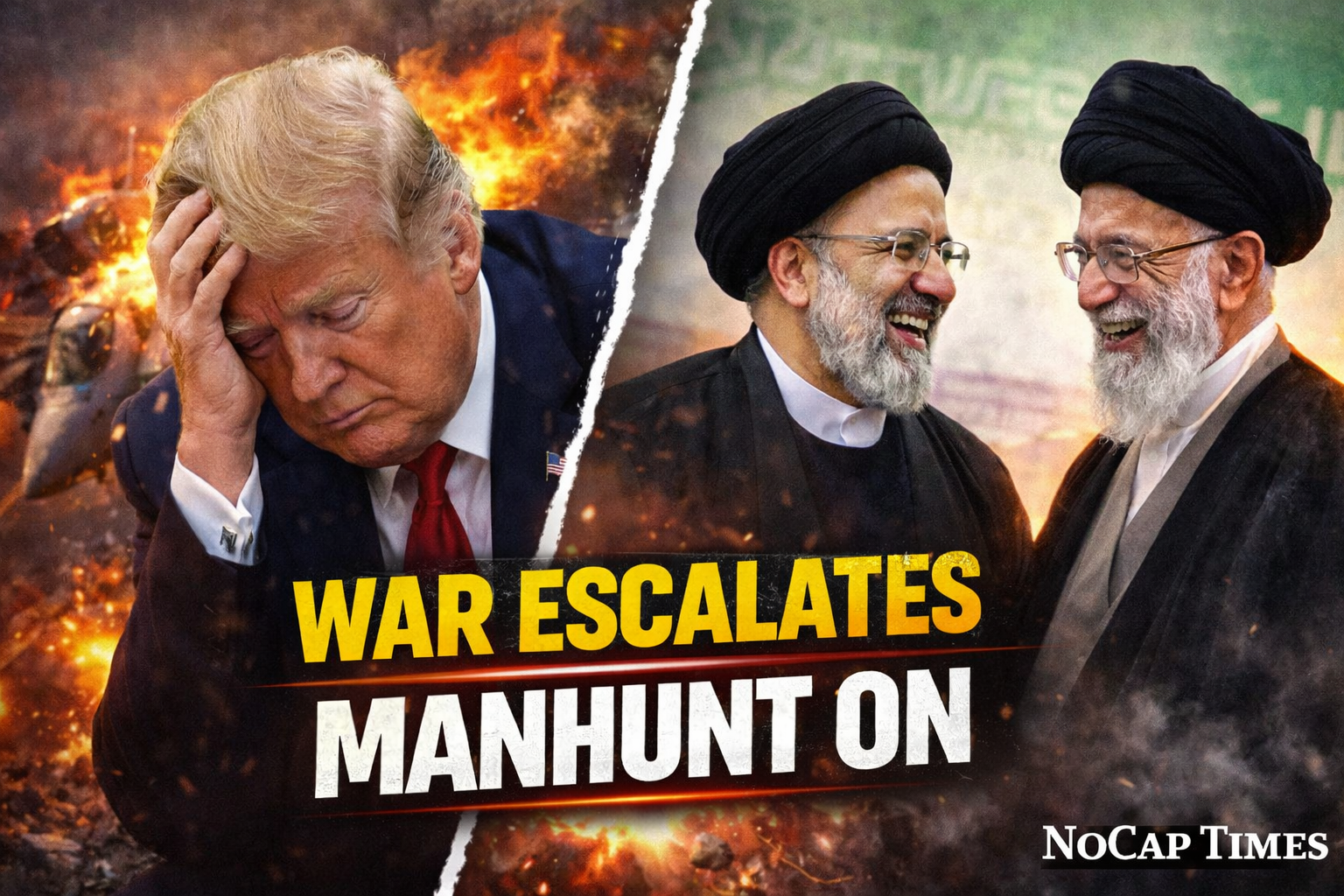
US-Iran War Escalates: Manhunt Intensifies After F-15E Strike Eagle Downing
US-Iran War Escalation – Missing Airman Sparks Global Concern
The US-Iran war has entered a dangerous new phase as tensions escalate following the downing of American military aircraft over Iranian territory. What began as a strategic military campaign has now transformed into a high-stakes humanitarian and geopolitical crisis, with a missing US airman at the center of global attention.
In a dramatic turn of events on April 3, 2026, Iranian air defenses successfully shot down a US Air Force F-15E Strike Eagle fighter jet during ongoing military operations. While one crew member was rescued in a daring mission, the second remains missing deep inside Iran, triggering an intense combat search-and-rescue operation. At the same time, an A-10 Thunderbolt II—widely known as the “Warthog”—was also struck during related operations, further compounding the crisis.
The situation has now escalated beyond military confrontation, evolving into a race against time to locate and safely recover the missing American service member.
F-15E Strike Eagle Downing – A Major Military Setback
What Happened to the F-15E?
The F-15E Strike Eagle, one of the most advanced fighter-bombers in the US arsenal, was operating over southwestern Iran as part of coordinated coalition strikes. These missions were aimed at targeting Iran’s strategic infrastructure, including nuclear facilities and missile systems.
During the operation, Iranian air defense systems engaged the aircraft, successfully bringing it down. The incident marks a significant milestone in the conflict, as it is the first confirmed loss of a US manned combat aircraft due to hostile Iranian fire since the escalation began.
Iranian media outlets, many linked to the Islamic Revolutionary Guard Corps, released visuals claiming to show the wreckage of the aircraft. These reports, although still under scrutiny, have amplified the narrative of Iran’s defensive capabilities.
Crew Ejection and Rescue Operation
Both crew members aboard the F-15E managed to eject before the aircraft crashed. In a high-risk special forces operation, US teams successfully located and rescued one of the airmen. He is currently receiving medical care and is reported to be in stable condition.
However, the second crew member—believed to be the weapons systems officer—remains unaccounted for. This has led to an urgent and complex rescue mission deep within hostile territory.
Iran Launches Public Manhunt for Missing Airman
Bounty Announcement Raises Global Concerns
In a controversial move, Iranian authorities have launched a public manhunt for the missing American airman. State media has broadcast appeals urging civilians to assist in locating the individual, even offering a “precious prize” or bounty for capturing him alive.
This development has raised serious concerns internationally, as it blurs the line between civilian involvement and military operations. Videos circulating online show civilians and security forces combing through mountainous regions in search of the downed pilot.
Legal and Humanitarian Implications
The bounty announcement has sparked debates around international humanitarian law. Under global conventions, captured military personnel must be treated humanely. However, the involvement of civilians in capturing a combatant introduces unpredictable risks.
Experts warn that such actions could escalate tensions further and complicate diplomatic efforts to manage the crisis.
A-10 Warthog Hit During Rescue Operations
Another Aircraft Downed
Adding to the escalating crisis, a US Air Force A-10 Thunderbolt II was also hit during operations linked to the F-15E rescue mission. Known for its durability and close air support capabilities, the A-10 was operating near the Strait of Hormuz when it came under fire.
Despite sustaining damage, the pilot managed to steer the aircraft toward safer airspace before ejecting. The pilot was later rescued without serious injuries, but the aircraft was lost.
Why the A-10 Is Still Vulnerable
Although the A-10 is heavily armored and designed to withstand damage, its operational role often requires flying at low altitudes. This makes it susceptible to ground-based threats, especially in regions with active air defense systems.
The incident highlights the inherent risks even for some of the most battle-hardened aircraft in the US military.
Black Hawk Helicopters Under Fire
Rescue Teams Face Intense Resistance
As part of the ongoing search-and-rescue mission, US forces deployed UH-60 Black Hawk helicopters into Iranian airspace. These helicopters play a crucial role in extracting personnel from hostile environments.
However, the helicopters reportedly came under fire during the mission. Despite sustaining damage and minor injuries among crew members, the pilots managed to return safely.
The Risks of Combat Search-and-Rescue Missions
Combat search-and-rescue (CSAR) missions are among the most dangerous military operations. Teams must operate in enemy territory, often under fire, while racing against time to locate missing personnel.
The current mission underscores the bravery and skill required to execute such operations under extreme conditions.
Broader Context of the US-Iran Conflict
How the War Escalated
The current conflict is part of a broader military campaign involving the United States and Israel against Iran. The operations initially focused on weakening Iran’s nuclear and missile capabilities but have since evolved into a wider confrontation.
Former US President Donald Trump has repeatedly emphasized a strong stance against Iran, stating that the country has been significantly weakened. However, recent developments suggest that Iran retains substantial defensive capabilities.
US-Iran War Escalates: Iran’s Defensive Strength
Despite sustained airstrikes, Iran’s layered air defense systems have proven effective in certain engagements. These systems, combined with challenging terrain, create significant obstacles for coalition forces.
Military analysts note that while the US maintains air superiority, operations deep inside Iranian territory remain highly risky.
Strategic and Global Implications
Impact on Military Operations
The loss of multiple aircraft in a short period represents a tactical setback for US forces. While the military has the capacity to recover, such incidents can influence strategy and operational planning.
US-Iran War Escalates: Economic and Regional Impact
The Strait of Hormuz, a vital route for global oil shipments, is now at increased risk. Any disruption in this region could have far-reaching consequences for global energy markets.
Countries across the world are closely monitoring the situation, as the potential for a wider regional conflict grows.
The Race to Find the Missing Airman
Ongoing Search Efforts
The search for the missing airman continues with full intensity. US Central Command (CENTCOM) is coordinating efforts involving air, ground, and intelligence assets to locate and rescue the individual.
Downed pilots are trained in survival and evasion techniques, increasing their chances of avoiding capture until rescue teams arrive.
A Human Story Amid War: US-Iran War Escalates
Beyond the military and political implications, this incident highlights the human cost of war. The missing airman’s fate has become a focal point, drawing global attention and concern.
Conclusion – A Defining Moment in the Conflict
The downing of US warplanes over Iran and the subsequent manhunt for a missing airman mark a critical turning point in the ongoing conflict. It underscores the risks of modern warfare, the resilience of defensive systems, and the human stakes involved.
As the situation continues to evolve, the world watches closely, hoping for a resolution that prevents further escalation while ensuring the safe return of all personnel.
Disclaimer
This article is based on official statements and publicly available information at the time of publication. The global energy situation is dynamic and may change with evolving geopolitical developments.
The content is intended for informational purposes only and should not be considered financial or policy advice. Readers are encouraged to refer to official sources for the latest updates.
NoCap Times does not independently verify all claims and shall not be held responsible for any inaccuracies or omissions.