

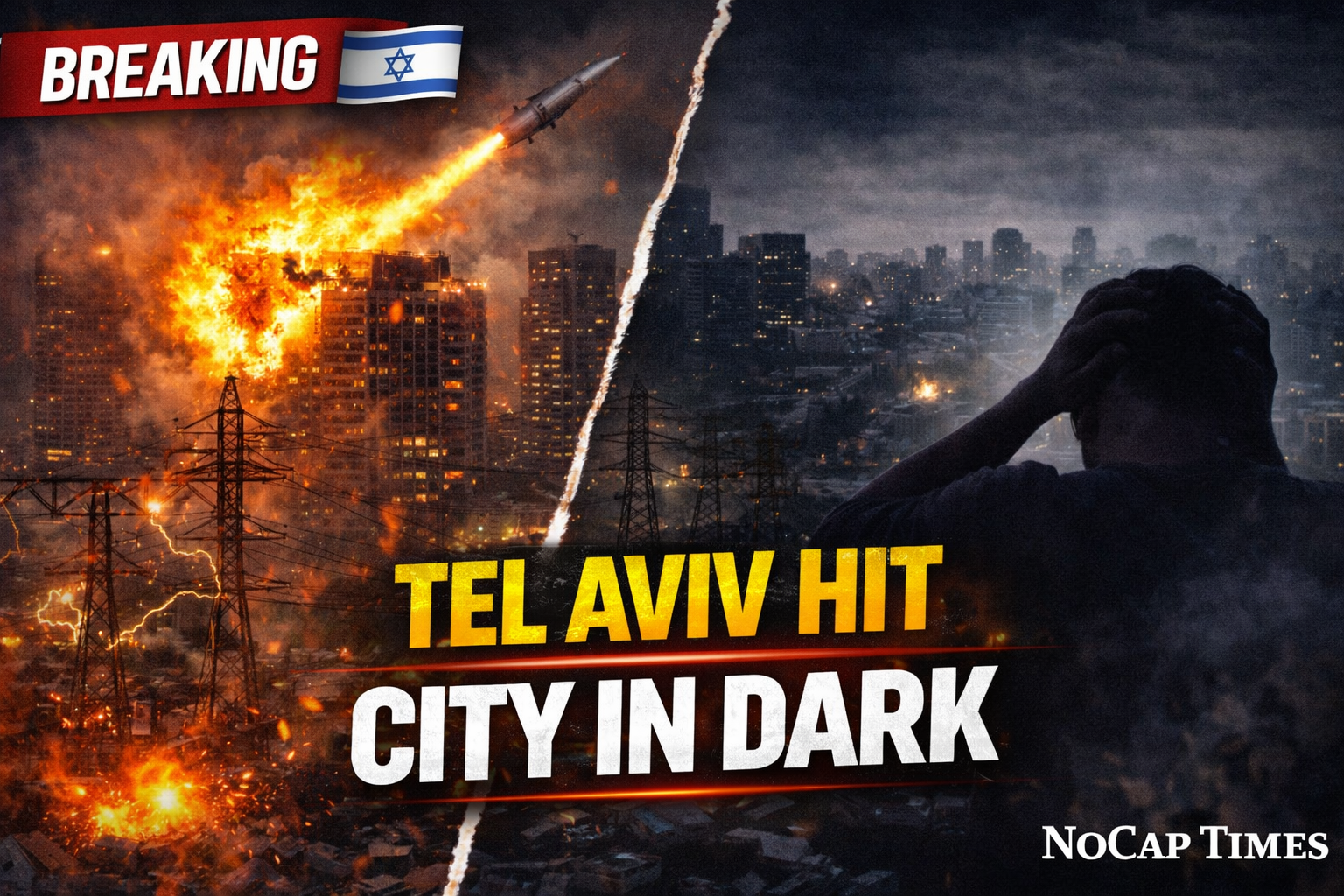
Tel Aviv Bombed: Iran Missile Strike Hits Power Supply, Flattens Building in Major Escalation
Tel Aviv was bombed as Iran missile strike damaged buildings, disrupted power, and raised tensions in the escalating Israel-Iran conflict.
Tel Aviv Bombed – Iran’s Missile Strike Intensifies Israel Conflict
The ongoing Middle East conflict has taken a dramatic and alarming turn as Tel Aviv was bombed during a fresh wave of Iranian missile strikes targeting central Israel. The attack, which reportedly flattened a building and disrupted power supply, marks one of the most intense retaliatory actions in recent weeks.
As tensions between Israel, the United States, and Iran continue to rise, this latest missile barrage highlights the growing risks for civilians and infrastructure in densely populated urban areas. With cluster munitions reportedly used in the strike, concerns over humanitarian impact and long-term damage have intensified globally.
Missile Strike on Tel Aviv – What Happened?
Sirens, Explosions, and Chaos
On April 3, 2026, air raid sirens echoed across Tel Aviv and nearby cities, warning residents of incoming Iranian ballistic missiles. Despite Israel’s advanced air defense systems, at least one missile managed to penetrate defenses and strike a central urban area.
Eyewitness accounts described massive explosions followed by thick plumes of smoke rising into the sky. Several videos circulating online show debris scattered across streets, damaged vehicles, and emergency responders rushing to the scene.
Building Flattened and Power Supply Hit
Initial reports indicate that the missile strike either flattened or severely damaged a building in the Tel Aviv metropolitan region. The blast also disrupted local power infrastructure, leading to outages in surrounding neighborhoods.
Critical infrastructure, including electrical lines and substations, appears to have been impacted either directly by the explosion or by falling debris. This has added further pressure on emergency services already dealing with the aftermath of the strike.
Cluster Missiles Raise Humanitarian Concerns
What Are Cluster Munitions?
One of the most alarming aspects of the attack is the reported use of cluster munitions. These weapons release multiple smaller bomblets over a wide area, increasing the likelihood of widespread damage.
In this case, submunitions reportedly scattered across residential zones, damaging roads, vehicles, and buildings. The presence of unexploded bomblets poses an ongoing risk to civilians, even after the initial attack.
Impact on Civilians
Although casualty figures remain limited as of now, injuries have been reported due to shrapnel and debris. In nearby areas like Petah Tikva, at least two individuals were lightly injured during the same wave of attacks.
The use of such weapons in populated areas has raised serious concerns under international humanitarian law, with experts warning about long-term dangers to civilians.
Iran’s Retaliation Strategy – Operation True Promise-4
Iranian officials described the missile barrage as part of a broader retaliatory campaign, signaling their intent to respond strongly to ongoing military actions against them.
The Islamic Revolutionary Guard Corps claimed that the strikes targeted key military and government locations in Israel, including areas in Tel Aviv and Haifa. However, Israeli assessments suggest that several missiles impacted civilian zones.
This strategy appears to be aimed at overwhelming Israel’s defense systems by launching large numbers of missiles simultaneously, increasing the chances of at least some reaching their targets.
Israel’s Air Defense Systems Tested
Interceptions and Breakthroughs
Israel’s multi-layered defense systems, including Arrow and David’s Sling, successfully intercepted many incoming threats. However, no system is foolproof, especially when faced with coordinated missile salvos.
The recent strike demonstrates that even the most advanced defense networks can be penetrated under sustained pressure.
Multiple Impact Sites Reported As Tel Aviv Bombed
Authorities confirmed several impact sites across central Israel, indicating that more than one missile or submunition caused damage. Emergency services were deployed across multiple locations to manage rescue and relief operations.
Broader Context – The Expanding Middle East War
Conflict Enters Fifth Week
The attack on Tel Aviv comes as the conflict enters its fifth week, with no signs of de-escalation. The war began with joint US-Israeli operations targeting Iranian nuclear and military infrastructure.
Since then, Iran has launched repeated missile and drone attacks in retaliation, escalating the conflict into a multi-front confrontation.
Leadership and Strategic Positions
Former US President Donald Trump has maintained a strong stance, asserting that Iran has been significantly weakened. Meanwhile, Israeli leadership continues to emphasize the need for sustained military pressure.
Iran, on the other hand, has vowed further retaliation, signaling that more strikes could follow.
Civilian Life Disrupted in Central Israel after Tel Aviv Bombed
Emergency Response and Rescue Efforts
Emergency teams, including medical responders and fire services, quickly mobilized to assist those affected. Rescue operations are ongoing as authorities assess structural damage and search for individuals who may be trapped.
Residents across central Israel were instructed to seek shelter during the attack, highlighting the constant threat faced by civilians in the region.
Infrastructure and Daily Life Impacted
The missile strike disrupted transportation and essential services, with power outages affecting multiple neighborhoods. Such disruptions not only impact daily life but also strain emergency response systems.
Strategic and Global Implications
Risk to Global Energy Markets
The conflict continues to threaten the stability of the Strait of Hormuz, a critical route for global oil shipments. Any escalation in attacks could lead to significant disruptions in energy supply and rising oil prices.
Rising International Concern after Tel Aviv Bombed
Global leaders and organizations are closely monitoring the situation, urging restraint from all sides. However, with both Iran and Israel showing no signs of backing down, the risk of further escalation remains high.
What Comes Next after Tel Aviv Bombed?
The bombing of Tel Aviv marks a significant escalation in the ongoing conflict, demonstrating Iran’s continued ability to strike deep into Israeli territory. At the same time, Israel’s response is expected to be swift and decisive, raising concerns about further retaliation.
As the situation unfolds, the focus remains on minimizing civilian casualties while navigating an increasingly complex geopolitical landscape.
Conclusion – A Region on Edge
The missile strike on Tel Aviv serves as a stark reminder of the dangers posed by modern warfare in densely populated areas. With advanced weapons, evolving strategies, and rising tensions, the human cost continues to grow.
As both sides prepare for potential further escalation, the world watches closely, hoping for a resolution that can prevent further destruction and loss of life.
Disclaimer
This article is based on official statements and publicly available information at the time of publication. The global energy situation is dynamic and may change with evolving geopolitical developments.
The content is intended for informational purposes only and should not be considered financial or policy advice. Readers are encouraged to refer to official sources for the latest updates.
NoCap Times does not independently verify all claims and shall not be held responsible for any inaccuracies or omissions.