

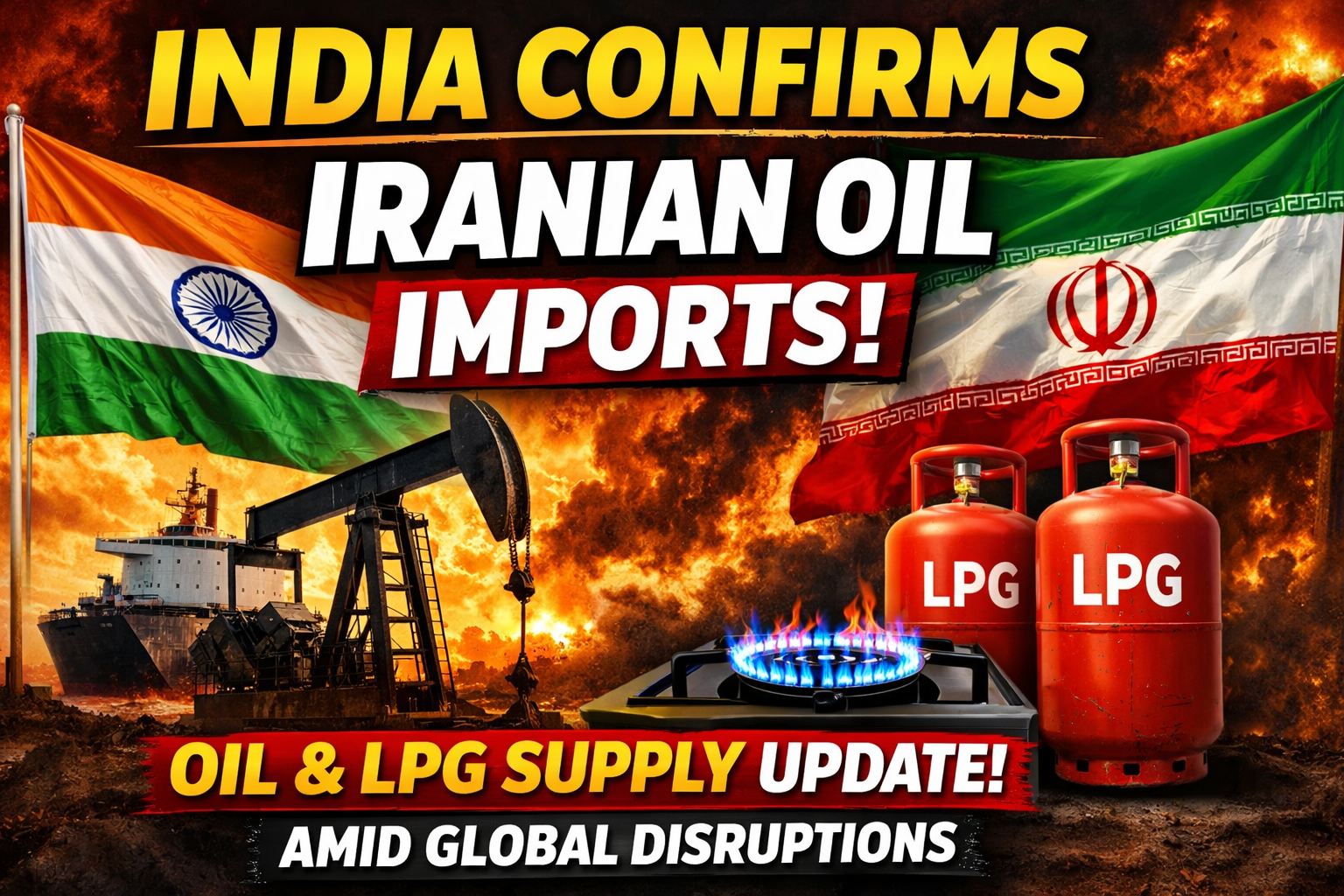
India Confirms Iranian Crude Oil Imports: Govt Clears Air on Oil & LPG Supply Amid Global Disruptions
India confirms importing Iranian crude oil and LPG, dismissing supply disruption rumors and ensuring stable energy supplies amid global tensions.
India Imports Iranian Crude Oil and LPG – Government Issues Official Clarification
In a significant development amid ongoing geopolitical tensions in West Asia, India has officially confirmed that it is importing crude oil and liquefied petroleum gas (LPG) from Iran. The announcement comes at a time when global energy markets are facing uncertainty due to disruptions caused by the escalating conflict in the Middle East.
The Ministry of Petroleum and Natural Gas issued a formal statement dismissing rumors of supply disruptions and payment issues, reassuring the nation that India’s energy needs remain secure. This confirmation also marks a notable shift, as India had largely halted Iranian oil imports in recent years due to international sanctions.
Government Denies Reports of Iranian Oil Cargo Diversion
Vadinar Port Rumours Declared False
The Indian government strongly refuted claims circulating in media and on social platforms suggesting that an Iranian crude shipment meant for India was diverted to China due to payment complications.
According to the official statement, these reports are “factually incorrect” and do not reflect the actual functioning of global oil trade. The cargo in question was allegedly linked to Vadinar Port, a key oil-handling terminal in Gujarat.
The ministry clarified that such claims misunderstand how international oil logistics operate.
How Oil Trade Actually Works
Officials emphasized that oil shipments are highly flexible in nature. Bills of lading often include tentative destinations, which can change during transit depending on commercial and operational factors.
This means that cargo diversions are not necessarily linked to payment issues but are part of standard global trade practices. The government urged stakeholders to avoid drawing premature conclusions from incomplete information.
India’s Energy Security Remains Strong
Diversified Import Strategy
India continues to maintain a diversified crude sourcing strategy, importing oil from over 40 countries. This approach ensures that supply disruptions in one region do not significantly impact overall energy availability.
The government reiterated that Indian refiners have the flexibility to procure crude oil based on market conditions, pricing, and strategic considerations.
No Payment Issues with Iran
A key highlight of the statement was the assurance that there are no payment hurdles in importing crude oil from Iran. This addresses one of the primary concerns raised in recent reports.
The clarification suggests that India has found workable mechanisms to facilitate trade with Iran despite the complex geopolitical environment.
LPG Imports from Iran Continue Smoothly
Sea Bird Vessel Successfully Docked
The government also addressed concerns regarding LPG imports. It confirmed that the vessel “Sea Bird,” carrying approximately 44 thousand metric tonnes (TMT) of Iranian LPG, successfully docked at Mangalore Port on April 2.
The cargo is currently being discharged, indicating that LPG supply chains remain uninterrupted.
No Disruption in Domestic Supply
By confirming the smooth arrival and unloading of LPG shipments, the government has reassured consumers and industries that there is no immediate threat to domestic fuel availability.
This is particularly important as LPG is widely used for cooking and industrial purposes across India.
A Shift in India-Iran Energy Relations
Iran’s Past Role in India’s Oil Imports
Before 2019, Iran was one of India’s key crude oil suppliers, contributing around 11–12% of the country’s total imports in certain years. The relationship was strategically important due to favorable pricing and logistical advantages.
Impact of US Sanctions
Imports from Iran came to a halt after the United States withdrew from the nuclear agreement and reimposed sanctions. The Joint Comprehensive Plan of Action (JCPOA) collapse led to the termination of sanction waivers that had previously allowed countries like India to continue limited trade with Iran.
As a result, India had to diversify its sourcing strategy, turning to other suppliers in the Middle East, the United States, and Russia.
Why India Is Turning Back to Iranian Energy
Global Supply Disruptions
The ongoing conflict in West Asia has disrupted traditional supply chains, prompting countries to explore alternative sources. Iran, with its vast reserves of oil and gas, presents a viable option.
Strategic and Economic Considerations
Importing oil from Iran can offer cost advantages, as well as logistical benefits due to proximity. Additionally, it strengthens India’s energy security by reducing overdependence on a limited set of suppliers.
Implications for Global Energy Markets
Market Stability and Price Impact
India’s decision to import Iranian crude could influence global oil markets, especially if other countries follow a similar path. Increased demand for Iranian oil may also affect pricing dynamics.
Geopolitical Repercussions
This move may have broader geopolitical implications, particularly in the context of ongoing sanctions and international relations. However, India’s focus appears to remain firmly on ensuring energy security and economic stability.
What Lies Ahead for India’s Energy Policy?
Continued Diversification
India is likely to continue its strategy of diversifying energy sources to mitigate risks associated with geopolitical tensions.
Balancing Diplomacy and Energy Needs
As global dynamics evolve, India will need to carefully balance its diplomatic relations with its energy requirements. The current decision reflects a pragmatic approach to safeguarding national interests.
Conclusion – A Strategic Move Amid Uncertainty
India’s confirmation of importing crude oil and LPG from Iran signals a pragmatic and strategic response to global energy disruptions. By dismissing rumors and reinforcing confidence in supply chains, the government has taken a crucial step in maintaining stability.
As the global energy landscape continues to shift, India’s flexible and diversified approach will play a key role in ensuring long-term energy security.
Summary
India has confirmed importing crude oil and LPG from Iran, dismissing rumors of supply disruptions and payment issues. The government clarified that oil trade allows flexible cargo destinations and assured that energy supplies remain secure. LPG shipments have also arrived successfully, reinforcing stability. This marks a significant shift in India-Iran energy ties, which had declined after US sanctions in 2019.
Disclaimer
This article is based on official statements and publicly available information at the time of publication. The global energy situation is dynamic and may change with evolving geopolitical developments.
The content is intended for informational purposes only and should not be considered financial or policy advice. Readers are encouraged to refer to official sources for the latest updates.
NoCap Times does not independently verify all claims and shall not be held responsible for any inaccuracies or omissions.