

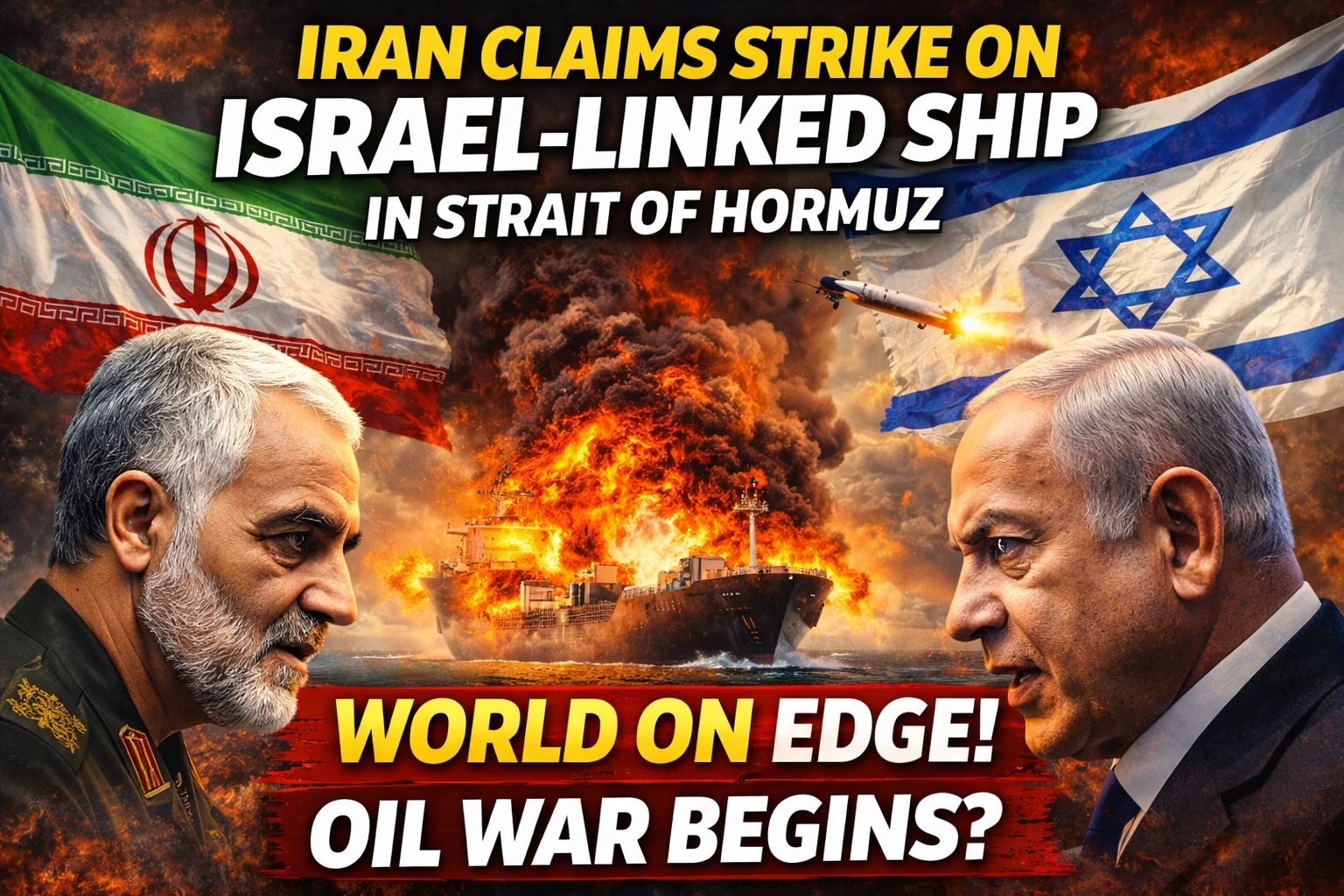
US-Israel-Iran War News Live Updates: Iran Claims Strike on Israel-Linked Ship in Strait of Hormuz; Warns Attack on Nuclear Sites Will ‘End Life’ in Gulf
US-Israel-Iran War News: As the US-Israel-Iran war enters its sixth week on April 4, 2026, tensions in the critical Strait of Hormuz have surged following Iranian claims of targeting an Israel-linked vessel. Iranian officials issued stark warnings that any further strikes on its nuclear facilities would trigger devastating retaliation capable of “ending life” across the Gulf region through attacks on energy, water, and desalination infrastructure. These developments come amid ongoing US aircraft losses over Iran, fresh Iranian missile barrages on Israel, including damage in Tel Aviv, and a high-stakes manhunt for a missing American airman deep inside Iranian territory.
The multi-front conflict, which began with surprise US-Israeli airstrikes on February 28, 2026, targeting Iranian leadership, nuclear sites, and military infrastructure, shows no immediate signs of de-escalation. President Donald Trump has reiterated that Iran has been significantly degraded but warned of further action if the Strait of Hormuz remains contested. Iranian leaders, meanwhile, project defiance while leveraging control over the vital waterway that carries roughly 20% of global oil trade.
Iran Claims Attack on Israel-Linked Ship in Hormuz during US-Israel-Iran War
On Friday, April 3, Iran’s Islamic Revolutionary Guard Corps (IRGC) announced it had targeted and struck a vessel in the Strait of Hormuz, describing it as “Israel-linked.” Reports indicate the ship was hit by a drone or missile, resulting in a fire on board. While details on the vessel’s exact identity, damage extent, or crew status remain limited and unverified by independent sources, Iranian state media released footage purportedly showing smoke rising from the target.
This incident fits into Iran’s broader strategy in the Strait of Hormuz crisis. Since early in the war, Iran has asserted greater control over the narrow chokepoint, demanding tolls on transiting ships (reportedly in Chinese yuan for oil sales) and declaring that vessels linked to the US, Israel, or “aggressor” nations do not qualify for “innocent passage.” Tehran has allowed some “non-hostile” shipping to continue but has threatened to block or target others, leaving thousands of vessels stranded or rerouted at great economic cost.
US and Israeli officials have not immediately confirmed the strike but expressed concerns over escalating maritime threats. The attack raises fears of wider disruptions to global energy supplies, already strained by the conflict. Shipping companies and insurers have hiked rates dramatically, while oil prices remain volatile amid uncertainty over the waterway’s future.
Iran’s move appears designed to pressure the coalition by highlighting its ability to disrupt maritime traffic despite sustained airstrikes on its naval and missile assets. However, analysts note that full closure of the Strait would also harm Iran’s own economy and could provoke direct military responses from the US and its allies to reopen the passage.
Dire Warnings Over Nuclear Site Attacks during US-Israel-Iran War
Iran issued its strongest rhetoric yet regarding its nuclear program, warning that any attack on remaining nuclear facilities would “end life” in the Gulf. Officials, including military spokesmen and parliament members, vowed to retaliate by targeting energy infrastructure, water desalination plants, and other critical systems across Gulf nations hosting US forces or aligned with the coalition.
The threats reference earlier US-Israeli strikes on Iranian nuclear-related sites, including reported hits on heavy-water and yellowcake production facilities. Iran has claimed these attacks risked radiation leaks, though no major incidents have been independently confirmed. Tehran argues that further strikes would cross a red line, justifying asymmetric responses against regional infrastructure.
Such warnings echo previous statements from Iranian leaders threatening to “irreversibly destroy” energy and water systems in retaliation for attacks on their power grid or nuclear assets. The Gulf region, home to major desalination plants that supply fresh water to millions, is particularly vulnerable. Disruption there could lead to humanitarian crises far beyond the battlefield.
US officials dismissed the threats as bluster but acknowledged the risks. President Trump has set deadlines related to reopening the Strait of Hormuz and has threatened extensive strikes on Iranian energy sites if demands are unmet. Backchannel diplomatic efforts reportedly continue, with proposals involving Iran halting nuclear enrichment in exchange for sanctions relief, though both sides publicly deny active negotiations or set tough conditions.
US-Israel-Iran War News Update: Ongoing Aircraft Losses and Manhunt in Iran
Compounding the day’s developments, Iranian forces downed a US F-15E Strike Eagle over southwestern Iran, with one crew member rescued by special operations forces and another still missing. A manhunt involving Iranian security forces and civilians continues, with state media offering rewards for the capture of the airman. Separately, an A-10 Thunderbolt II was struck during support operations, though its pilot ejected safely and was recovered near the Gulf.
US Black Hawk helicopters involved in rescue efforts also came under fire but returned to base. These incidents mark notable setbacks for coalition air operations, highlighting the persistence of Iranian air defenses despite weeks of degradation efforts. The search for the missing US service member remains a top priority, with risks heightened by rugged terrain and active Iranian pursuit.
Iranian Missile Strikes on Israel Continue
In parallel, Iran launched another wave of ballistic missiles toward Israel, with impacts reported in central areas including Tel Aviv. One strike reportedly flattened or damaged a building, caused power outages, and involved cluster munitions that scattered submunitions across urban zones. Israeli defenses intercepted most threats, but limited damage and injuries occurred, adding to the cumulative toll from previous barrages.
Israeli emergency services responded swiftly, while officials vowed a strong response to any successful hits. The use of cluster warheads has drawn criticism for potential indiscriminate effects in populated areas.
Broader War Context and Humanitarian Impact of US-Israel-Iran War
The conflict has caused significant casualties on all sides, with civilian populations bearing a heavy burden. In Iran, US-Israeli strikes have targeted military and strategic sites, leading to reports of destroyed infrastructure and displaced residents. In Israel, repeated missile attacks have disrupted daily life and caused deaths and injuries. Regional allies hosting US bases have also faced spillover attacks.
UN officials have warned that the US-Israel-Iran War disproportionately affects civilians, with economic ripple effects—including fuel shortages and supply chain disruptions—felt globally. Humanitarian organizations call for de-escalation and protection of critical infrastructure.
Strategically, the US maintains air superiority and continues pressure on Iranian capabilities, while Iran relies on asymmetric tactics, proxy networks, and control of the Strait of Hormuz to impose costs. The situation in Lebanon has also escalated with related strikes and bridge destructions reported.
As Saturday, April 4, progresses, live updates continue to emerge from multiple fronts. The Pentagon, Israeli Defense Forces, and Iranian state outlets provide competing narratives, making independent verification essential. Diplomatic efforts remain stalled amid mutual recriminations, with global leaders urging restraint to prevent wider regional or economic catastrophe.
The stakes in the Strait of Hormuz and around Iran’s nuclear sites could determine the war’s next phase. While coalition forces claim progress toward their objectives, Iranian resilience and threats of retaliation keep the conflict highly unpredictable. The fate of the missing US airman, maritime security in the Gulf, and the risk of infrastructure attacks underscore the human and strategic costs mounting daily.
This live situation is developing rapidly. Further updates are expected regarding the ship incident, rescue operations, and any retaliatory actions in the coming hours.
Disclaimer
This article is based on official statements and publicly available information at the time of publication. The global energy situation is dynamic and may change with evolving geopolitical developments.
The content is intended for informational purposes only and should not be considered financial or policy advice. Readers are encouraged to refer to official sources for the latest updates.
NoCap Times does not independently verify all claims and shall not be held responsible for any inaccuracies or omissions.