

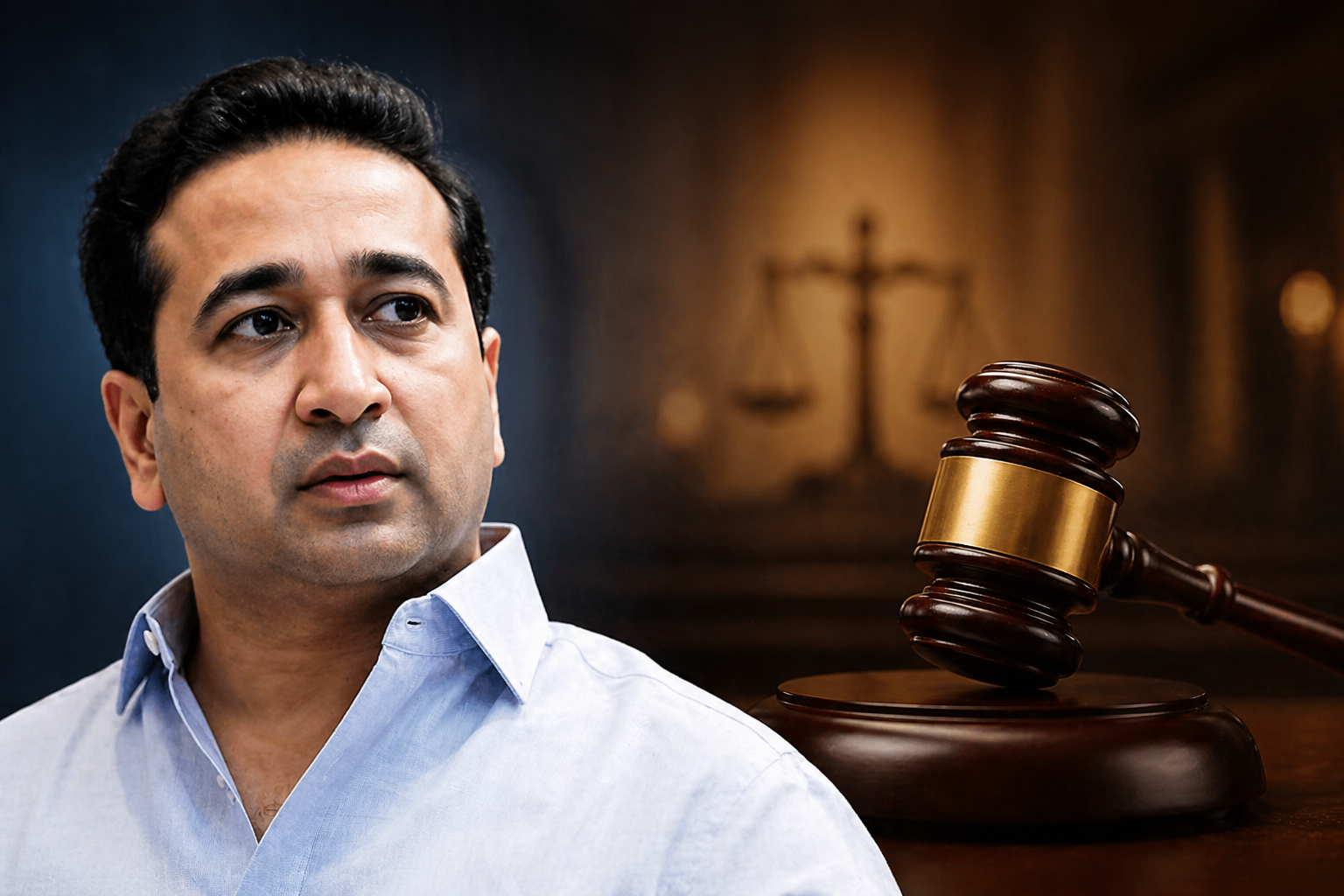
Nitesh Rane Convicted in 2019 Mud Attack Case: Court Awards One-Month Sentence, Suspended for Appeal
Nitesh Rane Convicted: In a noteworthy legal development that has drawn widespread political attention, a court in Sindhudurg, India, has convicted Maharashtra minister Nitesh Rane in connection with a 2019 incident involving the alleged public humiliation of a government engineer. The court sentenced him to one month of simple imprisonment under provisions of the Indian Penal Code, specifically Section 504, which deals with intentional insult intended to provoke a breach of peace.
However, the sentence was immediately suspended, allowing Rane to file an appeal in a higher court. The ruling has sparked discussions around political accountability, protest conduct, and the boundaries of lawful dissent in India.
Nitesh Rane Convicted News Update: Background of the 2019 Incident
The case dates back to July 4, 2019, when a protest was organized near Kankavli in Sindhudurg district. At the time, Nitesh Rane was serving as a Member of the Legislative Assembly and was part of the opposition.
The protest focused on the poor condition of the Mumbai–Goa Highway, a crucial route that connects major regions of Maharashtra to Goa. The highway has long been a subject of public dissatisfaction due to issues such as potholes, incomplete construction work, and safety concerns.
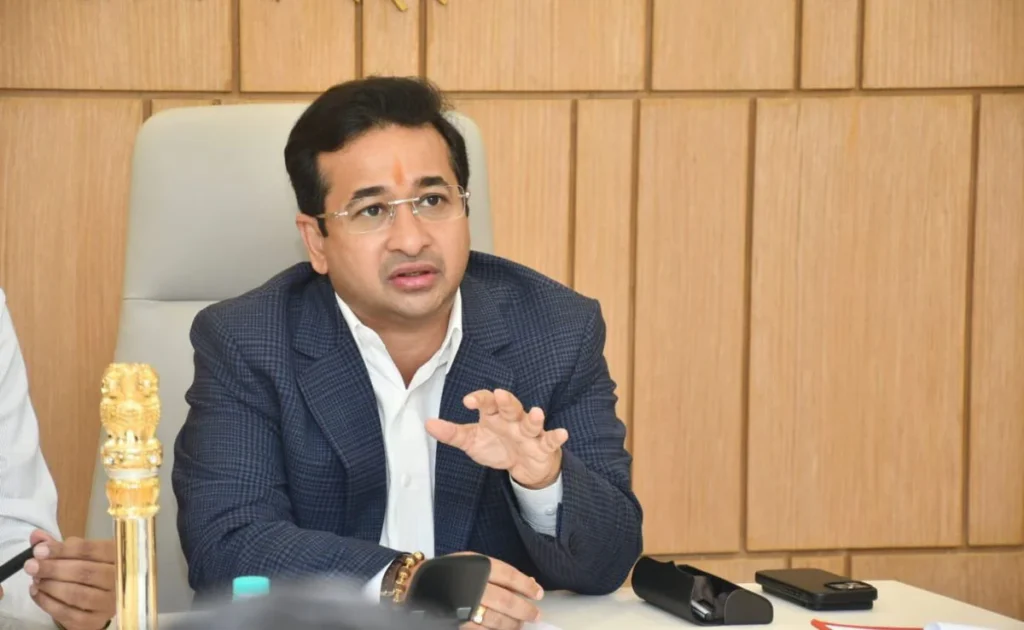
During the protest, Rane and his supporters allegedly confronted a National Highways Authority of India (NHAI) official—identified as a deputy engineer—and poured mud on him in public. The act was reportedly meant to symbolize the deteriorating condition of the road but was widely criticized as an act of humiliation against a public servant.
The incident gained significant media attention at the time, especially after video footage circulated widely, prompting debates about whether such methods of protest were justified.
Nitesh Rane Convicted News Update: Court Verdict and Legal Findings
After several years of legal proceedings, the additional sessions court in Sindhudurg delivered its judgment in April 2026. The court found Nitesh Rane guilty under Section 504 of the Indian Penal Code, which penalizes acts of intentional insult likely to provoke a breach of peace.
Importantly, the court did not convict him under more serious charges such as assault or use of criminal force against a public servant. This indicates that while the act was deemed unlawful, it did not meet the threshold for harsher penal provisions.
The judge emphasized that elected representatives have a responsibility to uphold the law and maintain decorum, even while addressing public grievances. While acknowledging that the protest raised genuine concerns about infrastructure, the court noted that the method adopted crossed acceptable legal limits.
The sentence—one month of simple imprisonment—was suspended immediately after being pronounced. This is a standard legal practice that allows the convicted individual to challenge the ruling in an appellate court without facing immediate incarceration.
Nitesh Rane Convicted News Update: Acquittal of Co-Accused
In the same case, 29 other individuals who had been named as co-accused were acquitted due to insufficient evidence. This highlights the court’s reliance on specific evidence linking actions directly to the accused rather than applying collective liability.
The acquittal also underscores the importance of individual accountability in criminal cases, particularly those arising from political protests or mass gatherings.
Legal Implications and What Happens Next
With the sentence suspended, Nitesh Rane is expected to file an appeal in the Bombay High Court or another appropriate judicial forum. The appellate process could take time, given the complexity and backlog of cases in higher courts.
From a legal standpoint, the conviction under Section 504 IPC does not immediately trigger disqualification from holding public office. Under the Representation of the People Act, disqualification typically applies to convictions involving longer prison terms (usually two years or more for certain offenses).
Therefore, unless the conviction is upheld and accompanied by a more severe penalty, the immediate political impact on Rane’s ministerial position is expected to remain limited.
Political Profile of Nitesh Rane
Nitesh Rane is a prominent political figure in Maharashtra and the son of veteran leader Narayan Rane, who has served as the Chief Minister of the state in the past.
Representing the Kankavli constituency, Nitesh Rane has built a reputation for his assertive political style and strong regional influence, particularly in the Konkan belt. He is currently associated with the Bharatiya Janata Party (BJP) and holds a ministerial role in the state government.
The 2019 incident occurred during a period when he was actively raising issues related to infrastructure and governance as part of the opposition.
Nitesh Rane Convicted News Update: Political Reactions and Public Discourse
The court’s verdict has triggered mixed reactions across the political spectrum.
Supporters of Nitesh Rane argue that the protest was driven by genuine public concerns and aimed at highlighting the poor condition of a critical highway. They view the case as an example of a leader taking a strong stand for local issues.
On the other hand, opposition parties have criticized the incident, describing it as an example of inappropriate conduct by a public representative. They argue that while protests are a legitimate democratic tool, they must be conducted within the framework of law and respect for individuals.
The case has also reignited broader debates about the standards of behavior expected from elected officials and the limits of political activism.
The Larger Issue: Protest vs. Public Decorum
This case brings into focus an important question in democratic societies: where should the line be drawn between protest and misconduct?
India has a long tradition of political protests, many of which have played a crucial role in shaping public policy. However, incidents involving personal humiliation or obstruction of officials often lead to legal consequences.
The judiciary has consistently emphasized that while freedom of expression and protest are fundamental rights, they must not infringe upon the dignity and rights of others.
The court’s observation in this case reinforces the principle that public representatives must set an example by adhering to legal and ethical standards.
Infrastructure Concerns: The Mumbai–Goa Highway
At the heart of the 2019 protest was the condition of the Mumbai–Goa Highway, which continues to be a matter of concern for residents and commuters.
The highway is a vital transportation corridor that supports trade, tourism, and regional connectivity. However, delays in construction, maintenance issues, and safety hazards have led to repeated complaints over the years.
The protest led by Nitesh Rane reflected widespread frustration among citizens, highlighting the need for timely completion and better quality control in infrastructure projects.
Nitesh Rane Convicted News Update: Broader Impact on Governance and Accountability
The verdict serves as a reminder that accountability applies to all individuals, regardless of their political position. It underscores the importance of maintaining institutional integrity and respecting the rule of law.
For public officials, the case illustrates the need to balance assertive leadership with responsible conduct. While raising issues is an essential part of democratic governance, the methods used must align with legal norms.
What Lies Ahead
As the legal process moves to the appellate stage, the case is likely to remain in public discourse. The outcome of the appeal will determine whether the conviction is upheld, modified, or overturned.
In the meantime, Nitesh Rane is expected to continue his political and administrative responsibilities. The case may also influence how future protests are conducted by political leaders across the country.
Conclusion: A Case That Raises Important Questions
The conviction of Nitesh Rane in the 2019 mud attack case is more than just a legal verdict—it is a reflection of the evolving standards of accountability in Indian politics.
It highlights the delicate balance between public protest and lawful conduct, emphasizing that even well-intentioned actions must adhere to established legal frameworks.
As India continues to strengthen its democratic institutions, such cases play a crucial role in defining the boundaries of acceptable political behavior. The focus now shifts to the appellate process and the broader lessons this case offers for governance, accountability, and public life.
Disclaimer
This article is based on publicly available information, official statements, and media reports available at the time of publication. The content is intended for informational purposes only and should not be considered financial or policy advice. Readers are encouraged to refer to official sources for the latest updates.
While efforts have been made to ensure accuracy, the information presented may change as new developments emerge. Readers are advised to conduct their own research and consult financial advisors before making any investment decisions.
NoCap Times does not independently verify all claims or statements and shall not be held responsible for any inaccuracies or omissions.