


India–New Zealand Free Trade Agreement 2026: A Transformational Deal Driving Trade, Investment, and Global Opportunities
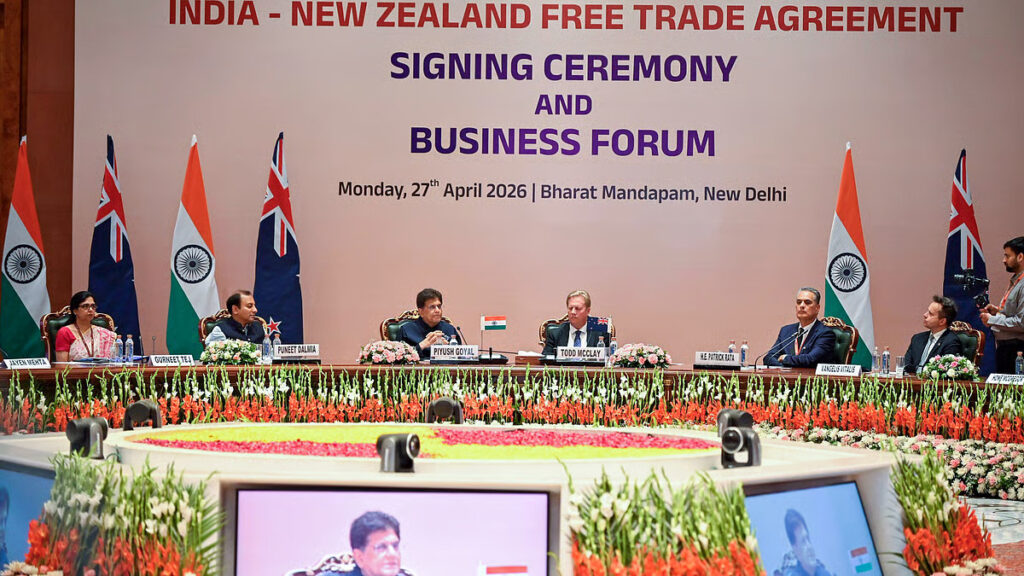
India–New Zealand Free Trade Agreement 2026: In a historic step toward strengthening bilateral relations, India and New Zealand officially signed a comprehensive Free Trade Agreement (FTA) on April 27, 2026, in New Delhi. This long-anticipated pact is being hailed as a transformative milestone that is set to redefine economic cooperation, boost trade volumes, and deepen strategic ties between the two nations.
The agreement, finalized in record time, is expected to unlock vast economic potential by facilitating investment flows, expanding market access, and promoting the movement of skilled professionals. Leaders and policymakers from both countries have described the FTA as a forward-looking partnership that aligns with evolving global trade dynamics.
A New Era in Bilateral Trade Relations
The India–New Zealand Free Trade Agreement 2026 marks the culmination of negotiations that began in March 2025 and were successfully concluded within just nine months—making it one of the fastest trade deals negotiated by India with a developed economy.
The agreement was formally signed by Piyush Goyal, India’s Commerce and Industry Minister, and Todd McClay, New Zealand’s Minister for Trade and Investment. The signing ceremony was attended by prominent business leaders, policymakers, and officials, reflecting strong institutional support for the partnership.
This comprehensive trade pact covers a wide range of sectors, including goods, services, investments, intellectual property, and labour mobility. It is designed to create a mutually beneficial economic framework that supports long-term growth.
Key Highlights of the India–New Zealand Free Trade Agreement 2026
1. Full Duty-Free Access for Indian Exports
One of the most significant features of the agreement is the elimination of tariffs on Indian goods entering the New Zealand market. Nearly all major export categories from India will now enjoy duty-free access, covering thousands of product lines.
This move is expected to benefit several key industries, including:
- Textiles and apparel
- Leather and footwear
- Gems and jewellery
- Pharmaceuticals
- Engineering goods
- Plastics and chemicals
For Indian exporters, particularly micro, small, and medium enterprises (MSMEs), this provides a valuable opportunity to expand into a high-income, quality-driven market.
2. Gradual Tariff Reduction for New Zealand Exports
In return, New Zealand will gain improved access to the Indian market. A significant portion of its exports will receive immediate tariff relief, while others will benefit from phased reductions over time.
Products likely to benefit include:
- Agricultural produce such as fruits
- Wool and forestry products
- Meat and seafood
- Natural resources like coal
However, India has taken a cautious approach by protecting sensitive sectors, particularly dairy and certain agricultural segments, ensuring that domestic producers are not adversely affected.
3. $20 Billion Investment Commitment During India–New Zealand Free Trade Agreement 2026
A major highlight of the agreement is New Zealand’s commitment to facilitate private sector investments worth approximately $20 billion in India over the next 15 years.
These investments are expected to be directed toward:
- Infrastructure development
- Manufacturing and industrial growth
- Renewable energy projects
- Agricultural modernization
- Technology and innovation sectors
Such capital inflow is likely to boost job creation, enhance productivity, and strengthen India’s position as a global manufacturing hub.
4. Mobility Opportunities: 5,000 Visas for Indian Professionals
The FTA introduces a structured mobility framework that will allow up to 5,000 skilled Indian professionals to work in New Zealand at any given time.
This initiative will benefit professionals in sectors such as:
- Information technology
- Healthcare
- Engineering
- Education
- Construction
- Hospitality and cultural professions
The inclusion of roles like yoga instructors and Indian chefs highlights the cultural dimension of the partnership, promoting deeper people-to-people connections.
Strategic Vision Highlighted by Narendra Modi Regarding India–New Zealand Free Trade Agreement 2026
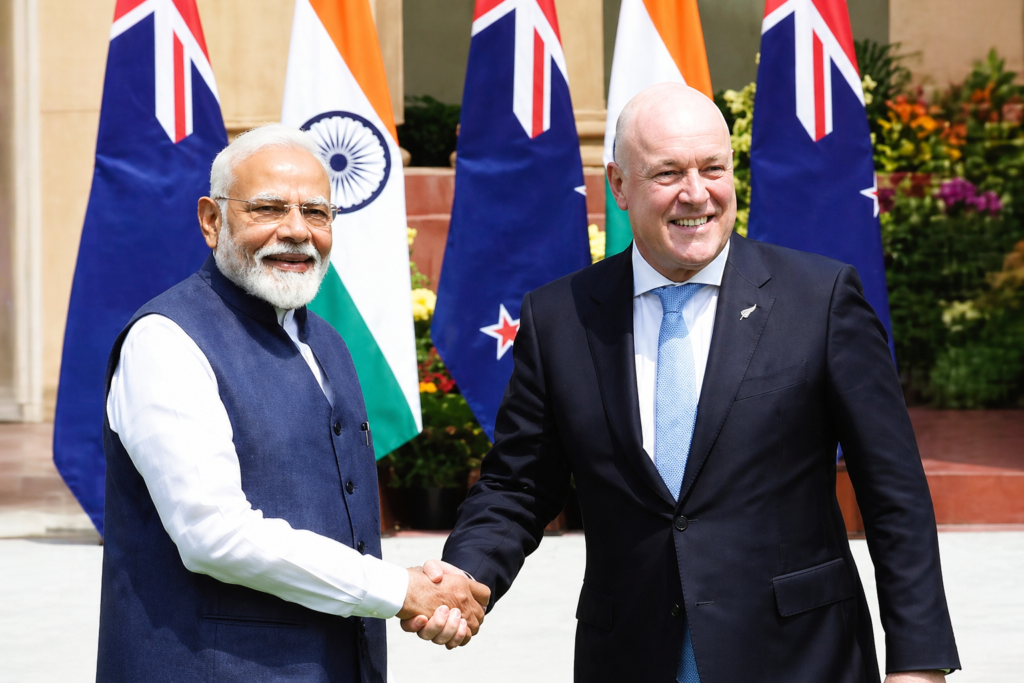
Prime Minister Narendra Modi described the agreement as a landmark achievement in India’s global trade strategy. He emphasized that the FTA reflects mutual trust, shared democratic values, and a commitment to inclusive growth.
According to him, the agreement will benefit a wide range of stakeholders, including:
- Farmers
- Entrepreneurs and startups
- Women and youth
- Skilled professionals
- Exporters and MSMEs
The Prime Minister also pointed out that the partnership leverages the complementary strengths of both economies—India’s scale and workforce, and New Zealand’s expertise in agriculture and innovation.
Economic Impact and Trade Expansion
Currently, bilateral trade between India and New Zealand is estimated at around $2.5–3 billion. With the implementation of the FTA, both countries aim to double this figure to nearly $5 billion within the next five years.
Benefits for India:
- Access to a developed, high-value market
- Increased exports from labour-intensive industries
- Integration into global value chains
- Growth in service exports
- Employment generation for skilled workers
Benefits for New Zealand:
- Entry into one of the world’s fastest-growing large economies
- Access to a massive consumer base
- Opportunities for long-term investments
- Expansion of agricultural and primary sector exports
Strengthening Beyond Trade: Education, Innovation, and Tourism
The FTA goes beyond traditional trade and includes provisions for collaboration in emerging sectors. Both countries have expressed interest in strengthening ties in:
- Higher education and student exchange programs
- Tourism development and travel facilitation
- Technology partnerships and research
- Skill development initiatives
These efforts are expected to foster innovation and build long-term institutional relationships.
Negotiation Journey: From Challenges to Breakthrough
Negotiations for a trade agreement between India and New Zealand have been ongoing for more than a decade. Earlier discussions faced hurdles due to differences over market access, particularly in agriculture and dairy.
However, renewed efforts in 2025, driven by changing global economic conditions and the need for diversified trade partnerships, led to rapid progress. The final agreement reflects a balanced approach that addresses past concerns while unlocking new opportunities.
India–New Zealand Free Trade Agreement 2026: Safeguards and Balanced Approach
While the agreement is ambitious, it also incorporates safeguards to protect domestic interests. India has ensured that sensitive sectors are shielded through:
- Phased tariff reductions
- Import quotas in specific categories
- Strict regulatory standards
Similarly, both countries have agreed on mechanisms for dispute resolution and periodic review to ensure smooth implementation.
Ratification and Implementation Timeline
Following the signing, the agreement will undergo ratification processes in both countries. In New Zealand, it will be reviewed by parliamentary committees, while India will complete its internal approval procedures.
Officials from both sides are optimistic that the FTA will come into effect later in 2026, allowing businesses to begin leveraging its benefits.
Industry bodies and trade organizations have already expressed strong support, anticipating increased collaboration, joint ventures, and market expansion opportunities.
Indo-Pacific Significance and Geopolitical Context
Beyond economic gains, the India–New Zealand FTA holds strategic importance in the Indo-Pacific region. It strengthens ties between two democratic nations committed to:
- Rule-based international trade
- Sustainable development
- Regional stability
The agreement aligns with India’s broader trade strategy and New Zealand’s efforts to deepen engagement with Asian economies. It also contributes to building resilient supply chains in a rapidly evolving global landscape.
Experts believe this partnership could pave the way for future cooperation in areas such as:
- Climate change initiatives
- Renewable energy collaboration
- Maritime security
- Defence cooperation
Conclusion: A Defining Trade Partnership for the Future
The India–New Zealand Free Trade Agreement 2026 represents a major milestone in international trade relations. With provisions for duty-free exports, significant investment commitments, and enhanced mobility opportunities, the agreement is poised to deliver substantial economic and strategic benefits.
For Indian businesses, entrepreneurs, and professionals, the FTA opens doors to new markets and global opportunities. For New Zealand, it offers access to one of the world’s most dynamic and rapidly growing economies.
As both nations move toward implementation, the focus will be on maximizing the benefits of this partnership while ensuring balanced growth. The agreement stands as a model for modern trade deals that prioritize inclusivity, sustainability, and mutual prosperity.
Disclaimer
This article is based on publicly available information, official statements, and media reports available at the time of publication. The content is intended for informational purposes only and should not be considered financial or policy advice. Readers are encouraged to refer to official sources for the latest updates.
While efforts have been made to ensure accuracy, the information presented may change as new developments emerge. Readers are advised to conduct their own research and consult financial advisors before making any investment decisions.
NoCap Times does not independently verify all claims or statements and shall not be held responsible for any inaccuracies or omissions.