

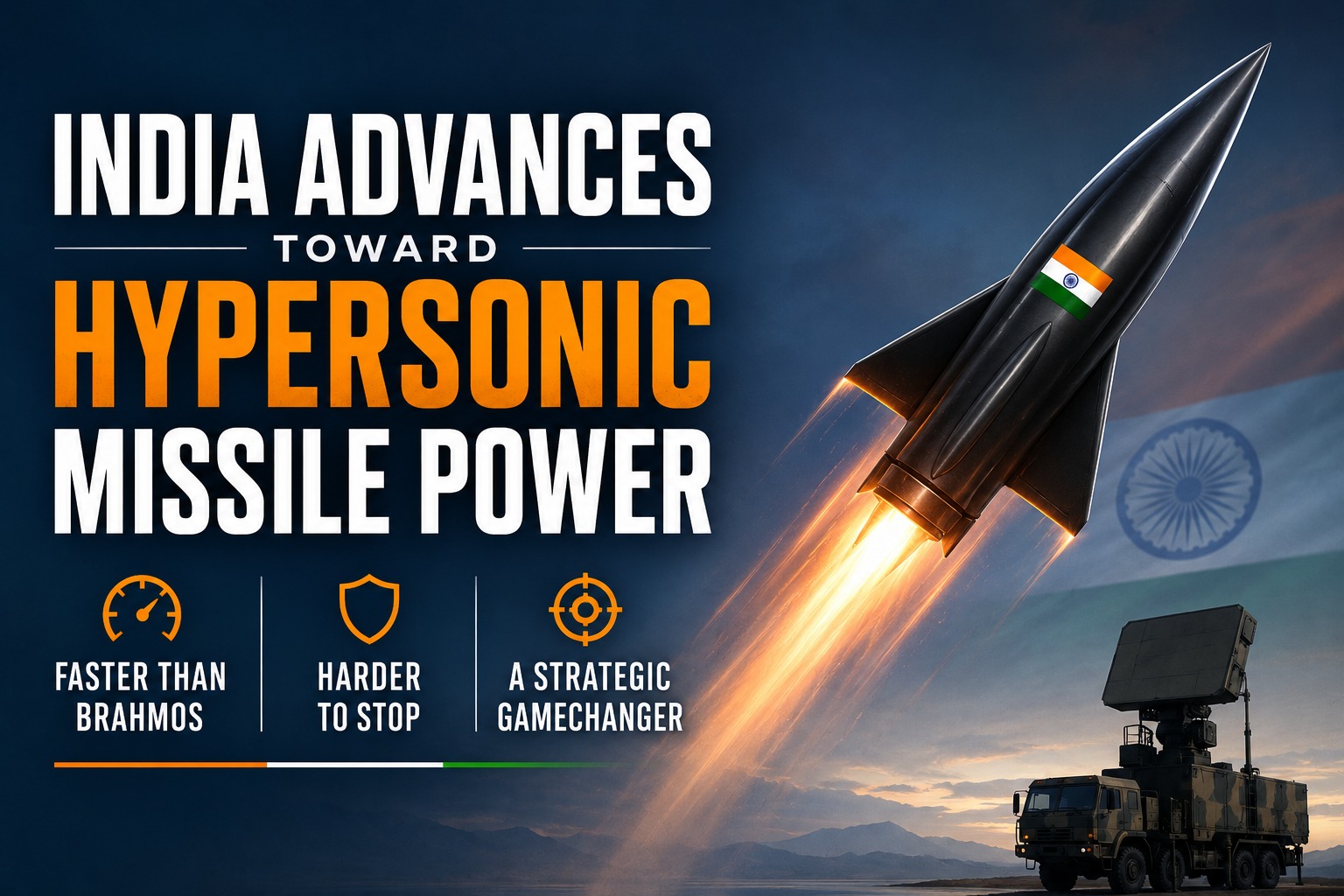
India Advances Toward Hypersonic Missile Power: Faster Than BrahMos, Harder to Stop, and a Strategic Gamechanger
India Advances Toward Hypersonic Missile Power: Faster Than BrahMos: India is stepping into a new era of military technology as it accelerates the development of hypersonic missile systems—cutting-edge weapons capable of traveling at speeds far beyond current platforms. According to Samir V. Kamat, chief of the Defence Research and Development Organisation, the country is actively working on both hypersonic glide missiles and hypersonic cruise missiles, marking a major leap in India’s strategic and defence capabilities.
These next-generation systems are expected to be significantly faster and more advanced than India’s existing supersonic missile, the BrahMos, positioning India among the few nations pursuing operational hypersonic weapons.
(Source: Zee News)
India Advances Toward Hypersonic Missile Power: What Makes Hypersonic Missiles a Game-Changer?
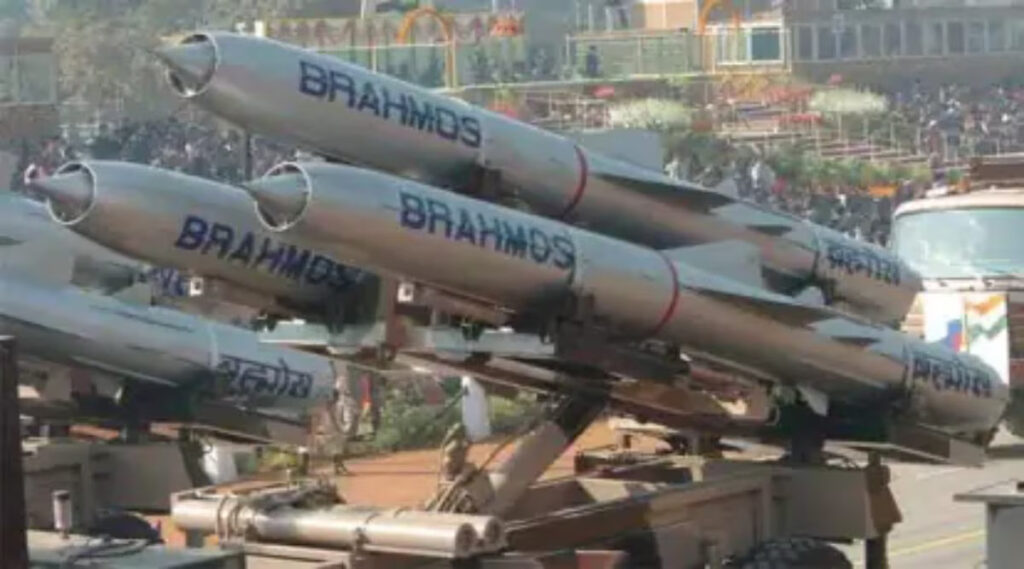
The defining feature of hypersonic missiles is their extraordinary speed. These weapons travel at speeds exceeding Mach 5—more than five times the speed of sound.
To put this into perspective:
- BrahMos operates at around Mach 2.8–3
- Hypersonic missiles exceed Mach 5 (and can go much higher)
This means hypersonic missiles are at least twice as fast as BrahMos, drastically reducing reaction time for enemy defence systems.
But speed alone isn’t the only advantage.
Hypersonic missiles combine velocity, manoeuvrability, and unpredictability, making them extremely difficult—if not nearly impossible—to intercept with current defence technologies.
Hypersonic vs Cruise Missiles: Understanding the Difference
To understand the significance of India’s progress, it’s important to differentiate between traditional cruise missiles and hypersonic systems.
Cruise Missiles (e.g., BrahMos)
- Fly at relatively lower altitudes
- Follow a predefined guided path
- Use propulsion systems like ramjets
- Can be tracked and intercepted by advanced defence systems
Hypersonic Missiles
- Travel at extreme speeds (Mach 5+)
- Can change direction mid-flight
- Fly at varying altitudes, often unpredictably
- Are much harder to detect and intercept
This combination of speed and manoeuvrability makes hypersonic missiles a next-level threat in modern warfare.
Understanding Two Types of Hypersonic Weapons India Is Developing As India Advances Toward Hypersonic Missile Power
India’s hypersonic programme focuses on two major categories:
1. Hypersonic Glide Vehicles (HGVs)
These are launched using a rocket booster. After reaching high altitude, the glide vehicle separates and travels toward its target at hypersonic speeds, gliding through the atmosphere.
2. Hypersonic Cruise Missiles (HCMs)
Unlike glide vehicles, these missiles are powered throughout their flight using advanced propulsion systems like scramjets, allowing sustained hypersonic speeds.
Both systems have unique advantages and are being developed globally to enhance strategic capabilities.
India’s Breakthrough in Scramjet Technology: India Advances Toward Hypersonic Missile Power
A key milestone in India’s hypersonic journey has been its progress in scramjet propulsion technology—a critical component for hypersonic cruise missiles.
The DRDO recently conducted a successful scramjet test that ran for over 1,000 seconds, demonstrating the feasibility of sustained hypersonic flight.
This achievement is significant because:
- Scramjets enable continuous high-speed propulsion
- They are essential for operational hypersonic cruise missiles
- Only a handful of countries have mastered this technology
Officials indicate that once formal approvals are granted, India could move toward deployable hypersonic cruise missile systems in the near future.
Faster Than BrahMos: The Next Generation of Strike Power
While BrahMos has long been considered one of the fastest cruise missiles in the world, India is now pushing beyond that benchmark.
In addition to hypersonic systems, India is also developing an advanced anti-ship missile that is expected to surpass BrahMos in speed. The third phase of testing for this system is scheduled soon, indicating rapid progress.
These developments signal a clear shift: India is no longer just competing—it is aiming to lead in next-generation missile technology.
Why Hypersonic Missiles Are Hard to Stop: India Advances Toward Hypersonic Missile Power
One of the most talked-about aspects of hypersonic weapons is their ability to evade defence systems.
Here’s why:
1. Extreme Speed
At Mach 5+, detection and interception windows shrink drastically.
2. Unpredictable Trajectory
Unlike ballistic missiles, hypersonic weapons can change direction mid-flight.
3. Low Altitude Flight
They can fly closer to the Earth’s surface, avoiding radar detection.
4. Advanced Materials and Design
Heat-resistant materials allow sustained high-speed travel without structural failure.
Together, these factors make hypersonic missiles a formidable challenge for even the most advanced missile defence systems.
Global Race: Where India Stands As India Advances Toward Hypersonic Missile Power
India’s push into hypersonic technology comes amid a global race involving major powers.
Leading Nations:
- Russia – Operational systems like Kinzhal and Zircon
- China – DF-ZF hypersonic glide vehicle
- United States – Multiple ongoing programmes, though facing delays
While Russia and China currently lead in deployment, India’s recent advancements indicate it is closing the gap rapidly.
Agni-6: Expanding India’s Strategic Reach
Alongside hypersonic development, India is also preparing to launch the next phase of its strategic missile programme with the Agni-6.
Key expected features:
- Range of 10,000–12,000 km
- Capability to carry multiple warheads (MIRVs)
- Ability to strike multiple targets simultaneously
This system, once approved and deployed, will significantly enhance India’s long-range deterrence capability.
A Shift Toward Integrated Military Capability
What makes India’s current progress particularly noteworthy is the simultaneous development of speed, range, and precision.
Rather than focusing on a single dimension, India is building a comprehensive missile ecosystem that includes:
- Supersonic systems (BrahMos)
- Hypersonic weapons
- Intercontinental ballistic missiles (Agni series)
This integrated approach ensures a balanced and future-ready defence strategy.
Strategic Implications for India
The development of hypersonic missiles has far-reaching implications:
1. Enhanced Deterrence
Stronger capabilities discourage potential adversaries.
2. Faster Response
High-speed weapons enable rapid strike capabilities.
3. Technological Leadership
Advances in propulsion and materials science boost overall defence innovation.
4. Regional Balance of Power
Strengthens India’s position in a rapidly evolving geopolitical environment.
Challenges Ahead As India Advances Toward Hypersonic Missile Power
Despite the progress, several challenges remain:
- High development costs
- Complex testing requirements
- Need for advanced materials and infrastructure
- Integration with existing defence systems
However, India’s steady advancements suggest that these challenges are being addressed effectively.
The Future of Warfare As India Advances Toward Hypersonic Missile Power
Hypersonic weapons are widely seen as the future of warfare. As nations invest heavily in these systems, the nature of military conflict is expected to change dramatically.
Speed, precision, and unpredictability will define the next generation of strategic capabilities—and India is positioning itself at the forefront of this transformation.
Conclusion
India’s move toward hypersonic missile development marks a decisive shift in its defence strategy. With systems that are faster than BrahMos and significantly harder to intercept, the country is entering an elite league of nations shaping the future of military technology.
From successful scramjet tests to upcoming advanced missile systems and the anticipated Agni-6 programme, India is building a powerful and modern missile arsenal.
As global competition intensifies, these developments not only strengthen national security but also signal India’s growing role as a major technological and strategic power on the world stage.
Disclaimer:
This article is based on publicly available information, official statements, and media reports available at the time of publication. The content is intended for informational purposes only and should not be considered financial or policy advice. Readers are encouraged to refer to official sources for the latest updates.
The content is solely for educational and informational purposes. Whether it is global news, indian news, political news or any other sort of content, we do not independently verify the content or claims.
While efforts have been made to ensure accuracy, the information presented may change as new developments emerge. Readers are advised to conduct their own research and consult financial advisors before making any investment decisions.
NoCap Times does not independently verify all claims or statements and shall not be held responsible for any inaccuracies or omissions.
Stay updated with the latest and breaking news on NoCap Times. Get the latest India News, World News, Business News, Sports News, Viral News and Research Articles for various competitive Exams & UPSC Aspirants.