

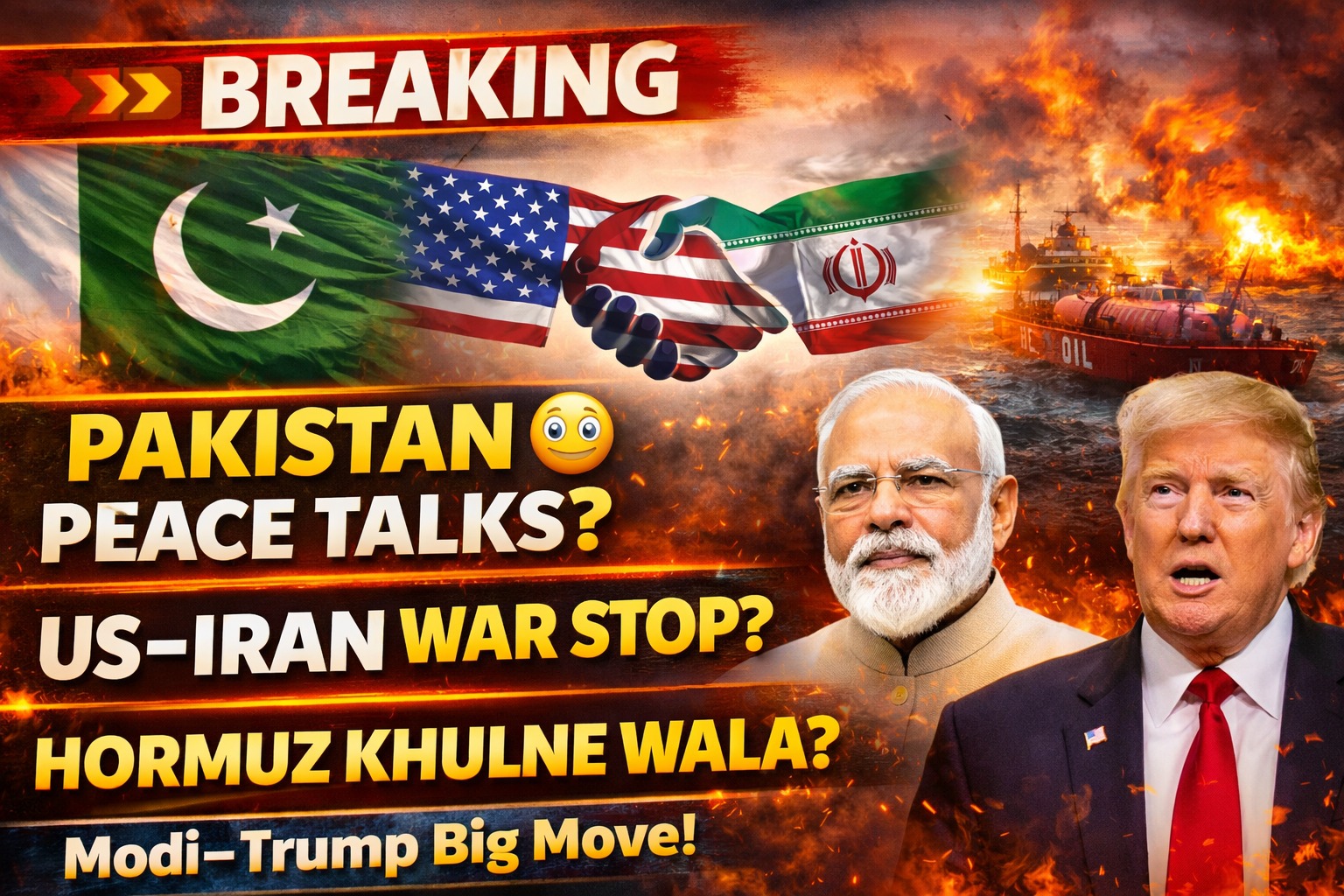
Pakistan Offers to Host US-Iran Peace Talks as Modi and Trump Stress Need for Open, Secure Strait of Hormuz Amid West Asia Crisis
New Delhi/Islamabad, March 25, 2026: In a rapidly evolving diplomatic landscape surrounding the four-week-old West Asia conflict, Pakistan Prime Minister Shehbaz Sharif on Tuesday offered Islamabad as a neutral venue to host formal negotiations aimed at ending the hostilities between the United States, Israel, and Iran. The offer comes as US President Donald Trump announced a five-day pause in planned strikes on Iranian energy infrastructure following what he described as “very good and productive conversations” with Tehran, while India and the US have jointly emphasised the critical importance of keeping the Strait of Hormuz fully open and accessible for global energy flows.
Prime Minister Sharif took to X (formerly Twitter) to signal Pakistan’s readiness to play a constructive mediating role. “Pakistan welcomes and fully supports ongoing efforts to pursue dialogue to end the WAR in Middle East, in the interest of peace and stability in the region and beyond,” he posted. He added that, subject to concurrence by both Washington and Tehran, “Pakistan stands ready and honoured to be the host to facilitate meaningful and conclusive talks for a comprehensive settlement of the ongoing conflict.”
The Pakistani offer builds on behind-the-scenes shuttle diplomacy already underway, with Islamabad reportedly passing multiple messages between the two sides in recent days. Pakistani Army Chief General Asim Munir is understood to have leveraged close contacts with the Trump administration to keep communication channels open. If accepted, high-level talks could involve US Vice President JD Vance, special envoys Steve Witkoff and Jared Kushner, Secretary of State Marco Rubio, and senior Iranian representatives, possibly as early as this week.
Modi-Trump Call Underscores Hormuz Security
The Pakistani initiative coincides with heightened diplomatic engagement between key stakeholders. On Tuesday, US President Donald Trump held a telephone conversation with Indian Prime Minister Narendra Modi — their first direct engagement since the conflict erupted on February 28. US Ambassador to India Sergio Gor confirmed the substance of the call, tweeting: “President Donald Trump just spoke with Prime Minister Modi. They discussed the ongoing situation in the Middle East, including the importance of keeping the Strait of Hormuz open.”
Prime Minister Modi echoed the emphasis on maritime security in his own post on X: “Received a call from President Trump and had a useful exchange of views on the situation in West Asia. India supports de-escalation and restoration of peace at the earliest. Ensuring that the Strait of Hormuz remains open, secure and accessible is essential for the whole world. We agreed to stay in touch regarding efforts towards peace and stability.”
The Modi-Trump conversation comes at a sensitive moment. Trump had earlier issued a 48-hour ultimatum to Iran to reopen the Strait of Hormuz or face devastating strikes on its power plants. Instead of escalation, he announced a five-day pause, citing productive backchannel talks and a detailed 15-point ceasefire proposal being conveyed through Pakistani channels. The proposal reportedly includes demands for Iran’s nuclear dismantlement, limits on ballistic missiles, cessation of support to proxy groups, and guaranteed safe passage for all vessels through the strait.
Iranian officials, however, have pushed back publicly. Parliament Speaker Mohammad Bagher Ghalibaf and Foreign Minister Abbas Araghchi have denied any direct negotiations, calling reports of talks “fake news” designed to calm markets. Despite the denials, Iran has allowed some “non-hostile” vessels through the strait in recent days, providing a sliver of hope for de-escalation.
Hormuz: The Lifeline Under Threat
The narrow Strait of Hormuz, located between Iran and Oman, remains the epicentre of global concern. It carries approximately one-fifth of the world’s seaborne crude oil and a substantial share of liquefied natural gas (LNG). Any prolonged disruption has immediate consequences for energy prices, inflation, and supply chains worldwide.
For energy-import-dependent India — the world’s third-largest oil consumer — uninterrupted access to the strait is vital. In Parliament on Tuesday, Prime Minister Modi provided a detailed reassurance on India’s preparedness. He informed the Rajya Sabha that strategic petroleum reserves have been built up to more than 53 lakh metric tonnes, with work underway to expand capacity to over 65 lakh metric tonnes. India’s refining capacity has also grown significantly over the past decade.
Modi highlighted successful arrivals of crude oil and LPG carriers from multiple countries in recent days and assured lawmakers that efforts to diversify sourcing from over 40 nations would continue. “Our endeavour is to ensure that oil and gas supplies reach India from wherever possible. The country is witnessing the results of such efforts,” he said. He also warned against black-marketing and hoarding, directing state governments to act firmly.
The government has already constituted seven empowered groups of ministers and officials to manage fuel supplies, fertiliser availability for the kharif season, supply chain resilience, and price stabilisation. An all-party meeting convened for 5 PM today, expected to be chaired by Defence Minister Rajnath Singh with External Affairs Minister S Jaishankar in attendance, will further deliberate on the crisis.
Shipping Updates: Indian Vessels and Crew Safety
The shipping ministry separately confirmed that five India-flagged LPG tankers carrying nearly 2.3 lakh tonnes of cooking gas remain west of the Strait of Hormuz, with one more vessel currently loading. However, two carriers — Pine Gas and Jag Vasant — successfully transited on Monday and are expected to reach New Mangalore and Kandla ports this week. Overall, around 20 Indian-flagged vessels with over 500 Indian seafarers are still positioned in the Persian Gulf. The government has prioritised their safety, with the Indian Navy maintaining a watchful presence in the Gulf of Oman and ready to provide escorts.
Special Secretary Rajesh Kumar Sinha reiterated that the Strait of Hormuz is an international waterway where freedom of navigation is a recognised right under international law. “No permission is needed to cross it,” he stated, while advising shipping companies to assess safety and timing carefully in the current environment.
Broader Diplomatic and Market Context
The flurry of diplomatic activity — Pakistan’s hosting offer, the Modi-Trump call, and the US five-day pause — has already eased some market pressure. Global oil prices slipped below $100 per barrel on hopes of de-escalation, providing temporary relief to import-dependent economies.
Analysts caution that the situation remains fluid. Trust between the parties is low, and any breakthrough will require careful sequencing, possibly beginning with a one-month ceasefire focused on reopening the strait and freezing nuclear activities. Israel has expressed reservations about premature concessions, while Gulf states have welcomed the diplomatic track to avoid wider regional fallout.
For India, the crisis tests its carefully calibrated foreign policy. New Delhi maintains strong strategic partnerships with the US and Israel while preserving historical and economic ties with Iran and the Gulf countries. The emphasis on de-escalation, open sea lanes, and citizen safety (nearly one crore Indians live and work in the Gulf) reflects a pragmatic approach that prioritises national interest and regional stability.
As the clock ticks on the five-day window and Pakistan positions itself as a potential mediator, the coming days could prove decisive. Whether backchannel efforts translate into face-to-face talks in Islamabad or elsewhere will determine if the current pause becomes a genuine off-ramp or merely a temporary breather in one of the most dangerous confrontations in recent West Asian history.
India, for its part, continues to prepare for all scenarios while actively supporting diplomatic solutions that ensure energy security and peace. The unified message from Modi and Trump on the Strait of Hormuz sends a clear signal: uninterrupted maritime commerce through this vital chokepoint is not negotiable for global stability