

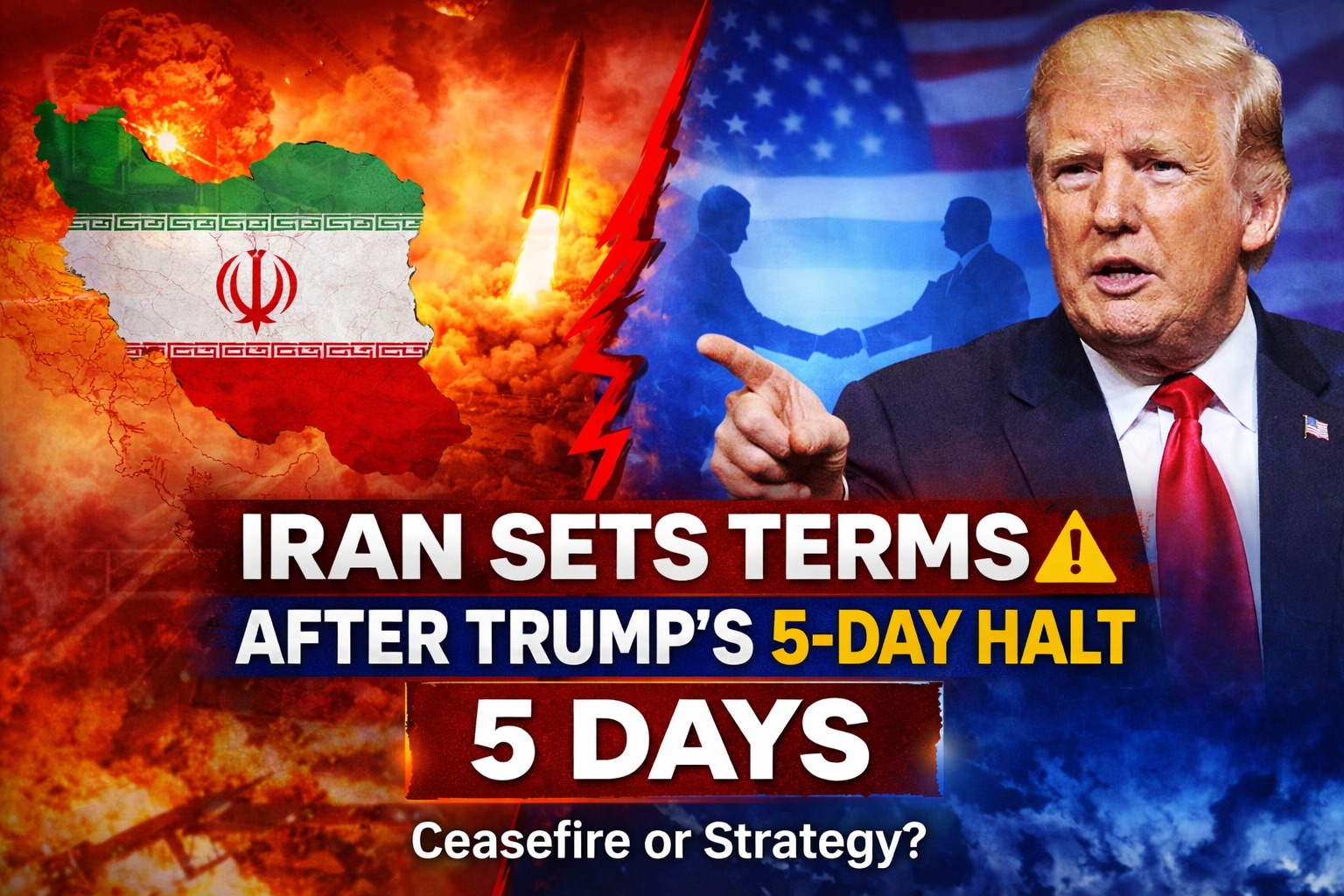
Iran Sets Ceasefire Conditions After Trump Announces 5-Day Halt on Military Strikes
Tensions in West Asia have taken a diplomatic turn after Donald Trump announced a temporary five-day halt on planned US military strikes against Iran.
The pause in hostilities has opened a narrow window for dialogue between Washington and Tehran, with both sides reportedly engaging in indirect discussions. However, reports suggest that Iran has outlined a set of stringent conditions for any potential ceasefire agreement.
Trump Announces Temporary Halt in Military Action
In a surprising move, Donald Trump declared a five-day suspension of planned military strikes targeting Iran’s energy infrastructure and power facilities.
The announcement came amid escalating tensions that had threatened to disrupt global trade routes and energy supplies. Trump described ongoing communications with Iranian representatives as “constructive,” though he did not disclose the identities of those involved in the discussions.
The decision to pause military operations is being seen as an attempt to create diplomatic space and avoid further escalation in an already volatile region.
Iran’s Key Conditions for Ceasefire
According to multiple reports, Iran has presented a detailed list of demands as part of its ceasefire proposal.
These conditions reflect both security concerns and long-term strategic objectives:
- Security Guarantees
Iran has demanded a firm assurance that the United States will never carry out military strikes against it in the future.
- Control Over Strategic Waterways
A significant demand includes the establishment of a new maritime framework that would place the Strait of Hormuz under Iran’s control.
This waterway is one of the most critical global oil transit routes, making this demand particularly significant for international trade and energy markets.
- Closure of US Military Bases
Iran has called for the shutdown of all US military bases across the Gulf region, a demand that directly challenges America’s strategic presence in West Asia.
- Financial Compensation
Tehran has also sought financial reparations proportional to the damage it claims to have suffered during the conflict.
- Nuclear and Missile Commitments
In return, Iran has reportedly indicated willingness to:
- Halt ballistic missile development for five years
- Reduce uranium enrichment levels
- Engage in discussions to adjust its stockpile of highly enriched uranium
- International Oversight
Iran has expressed readiness to allow inspections by the International Atomic Energy Agency, particularly concerning its centrifuge operations.
- Regional De-escalation
Another major commitment includes halting financial support for proxy forces operating across the region.
Conflicting Signals on Nuclear Negotiations
Trump has also claimed that the United States and Iran have reached a preliminary understanding involving multiple points, including Iran’s agreement to not pursue nuclear weapons.
However, these claims remain unverified, and there has been no official confirmation from Iranian authorities regarding such an agreement.
The situation is further complicated by earlier statements from Iranian officials who had ruled out negotiations with the United States.
Iran’s Leadership Sets Broader Preconditions
Masoud Pezeshkian had earlier outlined three fundamental conditions for ending the conflict:
- Recognition of Iran’s legitimate rights
- Payment of reparations
- Strong international guarantees against future aggression
These broader demands align with the more detailed conditions now being reported, indicating a consistent negotiating position from Tehran.
Breakdown of Previous Diplomatic Efforts
Diplomatic tensions intensified after Iran accused the United States of acting in bad faith.
Iranian leaders claimed that military actions occurred during ongoing nuclear negotiations, leading to a breakdown in trust.
Abbas Araghchi and other senior officials had previously stated that talks with the US were no longer possible under such circumstances.
This backdrop makes the current discussions particularly fragile.
Strategic Importance of the Strait of Hormuz
The Strait of Hormuz remains central to the conflict.
A significant portion of the world’s oil supply passes through this narrow channel, making it a critical chokepoint for global energy markets.
Any change in control or disruption in this region could have:
- Severe implications for global oil prices
- Disruptions in international trade
- Economic consequences for multiple countries
Iran’s demand for greater control over this route highlights its strategic priorities.
Global Implications of the Ceasefire Talks
The ongoing developments have far-reaching consequences beyond the immediate conflict.
Impact on Energy Markets
Stability in the region is crucial for maintaining steady energy supplies. Any escalation could lead to price volatility and supply disruptions.
Geopolitical Balance
The outcome of these negotiations could reshape power dynamics in West Asia, particularly regarding US influence and Iran’s regional role.
International Diplomacy
The involvement of global institutions like the IAEA indicates that any agreement will likely require multilateral oversight.
Challenges to Reaching an Agreement
Despite the temporary halt in military action, significant obstacles remain:
- Deep mistrust between the US and Iran
- Diverging strategic interests
- Complex regional alliances
- High-stakes demands on both sides
The scale and nature of Iran’s conditions may make it difficult for both parties to reach a mutually acceptable agreement.
The Road Ahead
The five-day pause announced by Trump provides a limited but critical window for diplomacy.
Key developments to watch include:
- Progress in ongoing discussions
- Responses from US allies and regional powers
- Any formal agreements or confidence-building measures
Whether this pause leads to a lasting ceasefire or merely delays further conflict remains uncertain.
Summary
US President Donald Trump has announced a five-day halt on military strikes against Iran, opening the door for diplomatic talks. Iran has reportedly set several conditions for a ceasefire, including security guarantees, closure of US bases in the Gulf, control over the Strait of Hormuz, and financial compensation.
In return, Iran has indicated willingness to limit its nuclear and missile programs and allow international inspections. However, deep mistrust and complex geopolitical factors continue to pose challenges to reaching a lasting agreement.
Disclaimer
This article is based on publicly available reports and media sources at the time of publication. The information reflects ongoing developments in a rapidly evolving geopolitical situation and may change as new details emerge.
The content is intended for informational purposes only and should not be interpreted as official diplomatic or policy guidance. Readers are advised to refer to official government statements and verified sources for confirmed updates.
NoCap Times does not independently verify all claims and shall not be held responsible for any inaccuracies or omissions.