

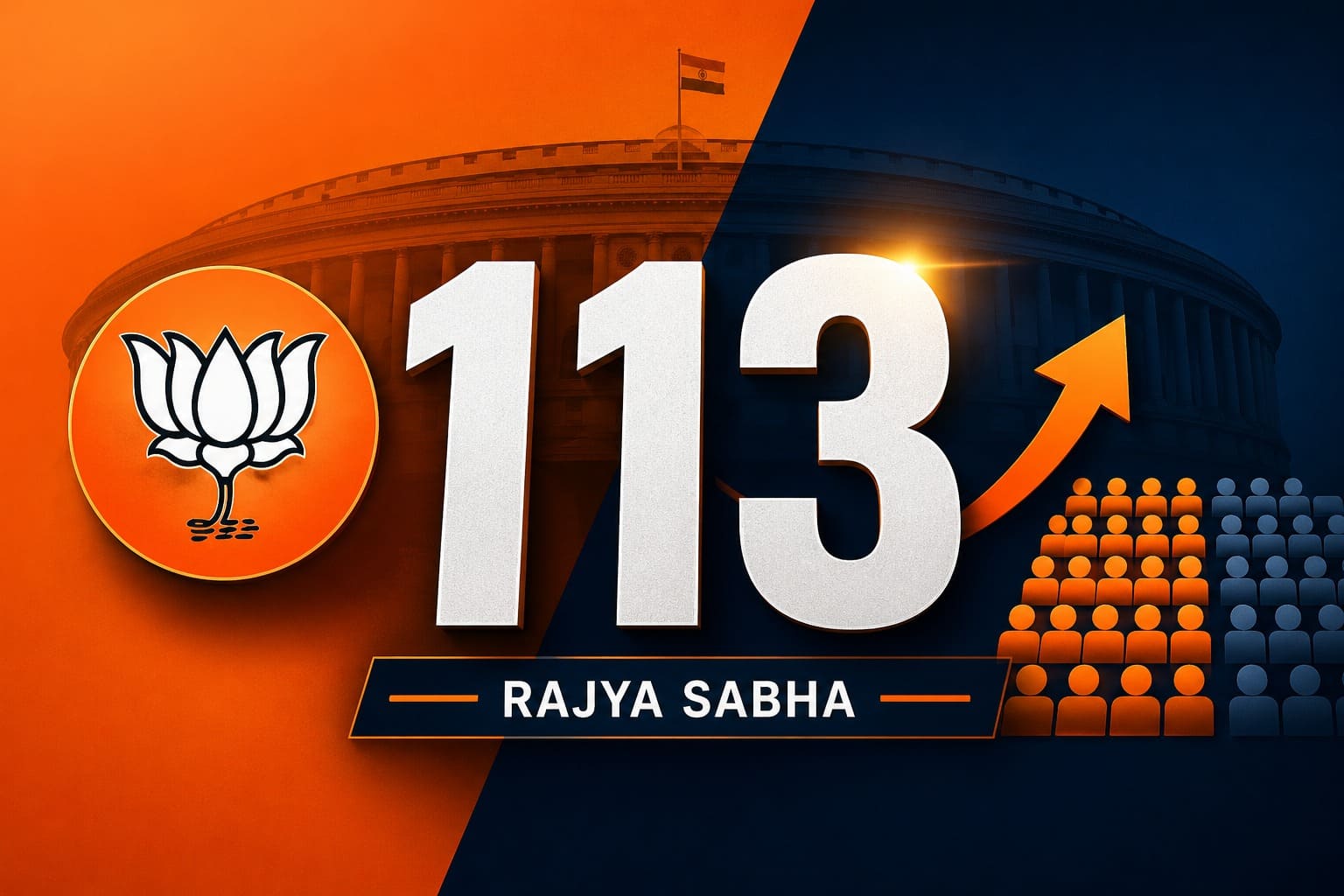
BJP Strength in Rajya Sabha Rises to 113 After Approval of AAP MPs’ Merger: Political and Legal Debate Intensifies
BJP Strength in Rajya Sabha Rises to 113: In a major political development that could reshape parliamentary dynamics, the strength of the Bharatiya Janata Party (BJP) in the Rajya Sabha has increased to 113 members following the approval of a controversial merger involving members from the Aam Aadmi Party (AAP). The decision, sanctioned by the Chairman of the Upper House, has triggered intense debate over constitutional provisions, anti-defection laws, and political ethics.
With this development, the BJP-led National Democratic Alliance (NDA) now commands a significantly stronger position in the 245-member House, taking its combined tally to 149. This shift brings the ruling alliance closer to a crucial two-thirds majority, which can have far-reaching implications for legislative decision-making.
What Led to the Increase in BJP’s Rajya Sabha Strength?
BJP Strength in Rajya Sabha Rises to 113: The change in numbers comes after seven AAP Members of Parliament (MPs) announced their decision to merge with the BJP. The move was subsequently reflected in official records after approval by the Rajya Sabha Chairman, C. P. Radhakrishnan.
The MPs involved in the merger include:
- Raghav Chadha
- Sandeep Pathak
- Ashok Mittal
- Harbhajan Singh
- Vikramjit Sahney
- Rajinder Gupta
- Swati Maliwal
These seven MPs constituted two-thirds of AAP’s total strength of 10 members in the Rajya Sabha. Based on this numerical threshold, they claimed protection under the anti-defection law, arguing that their merger was legally valid.
Understanding the Anti-Defection Law and the Controversy
The controversy surrounding this merger primarily revolves around the interpretation of the Tenth Schedule of the Constitution of India, commonly known as the anti-defection law.
According to this provision:
- A group of MPs can avoid disqualification if at least two-thirds of a party’s legislators agree to merge with another party.
- However, there is debate over whether “party” refers to the legislative wing (MPs in Parliament) or the original political party structure.
The MPs who joined the BJP argue that their action meets the legal requirement since they represent two-thirds of AAP’s parliamentary strength in the Rajya Sabha.
On the other hand, AAP leaders claim that the law requires two-thirds support from the “original political party,” not just the legislative group in Parliament. This difference in interpretation lies at the heart of the ongoing dispute.
AAP’s Response and Legal Challenge
The Aam Aadmi Party has strongly opposed the merger and has taken legal steps to challenge it. Senior AAP leader Sanjay Singh, who is among the remaining MPs of the party in the Rajya Sabha, has formally raised objections.
He submitted a petition to the Chairman seeking disqualification of the seven MPs, arguing that the merger does not meet constitutional requirements. The petition reportedly follows consultations with legal experts, including senior advocate Kapil Sibal.
In addition, Sanjay Singh has written to the Rajya Sabha Secretariat seeking clarity on:
- The official change in party strength records
- The date when the change was made
- The authority responsible for approving the merger
As of now, there has been no formal response to AAP’s complaint, leaving the matter open for further legal and procedural examination.
Role of the Rajya Sabha Chairman
The Chairman of the Rajya Sabha plays a crucial role in deciding matters related to disqualification and recognition of party mergers under the anti-defection law.
In this case, the revised party position published by the Rajya Sabha Secretariat is being interpreted as implicit approval of the merger. However, officials have indicated that the Chairman’s decision on disqualification petitions is not bound by strict timelines.
This means that while the merger has been recognized administratively, the legal challenge raised by AAP could still be examined in due course.
Political Reactions Across Parties
The development has sparked strong reactions from various political parties.
BJP and NDA Perspective
For the BJP and its allies, the merger is being seen as a major political gain. It strengthens their presence in the Upper House and improves their ability to pass key legislation.
AAP’s Stand
AAP has termed the move unconstitutional and politically motivated. The party maintains that the merger violates the spirit of the anti-defection law.
Congress Reaction
The Indian National Congress has also reacted sharply. Senior leader Jairam Ramesh stated that the approval of the merger was “not surprising,” suggesting that it aligns with broader political trends.
Changing Power Dynamics in the Rajya Sabha
The increase in BJP’s strength to 113 members significantly alters the balance of power in the Rajya Sabha.
Current Party Positions (Approximate):
- BJP: 113
- Congress: 29
- All India Trinamool Congress: 13
- Dravida Munnetra Kazhagam: 8
- YSR Congress Party: 7
- Biju Janata Dal: 6
- All India Anna Dravida Munnetra Kazhagam: 5
- Janata Dal (United), Samajwadi Party, and Nationalist Congress Party: 4 each
With the NDA reaching 149 seats, the alliance is inching closer to the two-thirds mark, which is critical for passing constitutional amendments and major legislative reforms.
Why the Two-Thirds Majority Matters
In India’s parliamentary system, a two-thirds majority in the Rajya Sabha is crucial for:
- Passing constitutional amendments
- Enacting significant policy changes
- Strengthening legislative efficiency
The BJP has historically faced challenges in the Upper House due to lack of numbers. This latest development significantly improves its position.
Additionally, with around 30 seats expected to fall vacant later in the year, the BJP is optimistic about further increasing its strength.
Legal and Constitutional Implications
The case raises important questions about the interpretation of the anti-defection law:
- Should mergers be judged based on legislative numbers or party structure?
- How should the balance between political freedom and party discipline be maintained?
- What role should constitutional authorities play in resolving such disputes?
Legal experts believe that the issue could eventually reach the courts if disagreements persist, potentially leading to a landmark judgment.
Impact on Indian Politics
This development is not just about numbers—it reflects broader trends in Indian politics:
1. Increasing Party Realignments
Political shifts and mergers are becoming more common, especially in a fragmented political landscape.
2. Strengthening of National Parties
The BJP’s growing presence in the Rajya Sabha indicates a consolidation of power at the national level.
3. Challenges for Regional Parties
For parties like AAP, the episode highlights the difficulty of maintaining unity and influence in Parliament.
What Lies Ahead?
The immediate future will depend on how the legal challenge unfolds. Key possibilities include:
- The Chairman may take a decision on AAP’s disqualification petition
- The matter could be taken to the judiciary
- Political negotiations may influence the final outcome
Until then, the seven MPs who joined the BJP are likely to continue functioning as part of the ruling party in the Rajya Sabha.
Conclusion: A Turning Point in Parliamentary Politics
The rise of the BJP’s tally to 113 in the Rajya Sabha marks a significant moment in India’s parliamentary history. While it strengthens the ruling alliance’s legislative position, it also raises critical questions about constitutional interpretation and political ethics.
As the situation evolves, the focus will remain on how institutions handle the dispute and whether clarity emerges on the application of the anti-defection law.
This episode serves as a reminder that in a vibrant democracy like India, political developments are often accompanied by legal scrutiny and public debate—both of which are essential for maintaining institutional balance.
Disclaimer:
This article is based on publicly available information, official statements, and media reports available at the time of publication. The content is intended for informational purposes only and should not be considered financial or policy advice. Readers are encouraged to refer to official sources for the latest updates.
While efforts have been made to ensure accuracy, the information presented may change as new developments emerge. Readers are advised to conduct their own research and consult financial advisors before making any investment decisions.
NoCap Times does not independently verify all claims or statements and shall not be held responsible for any inaccuracies or omissions.