

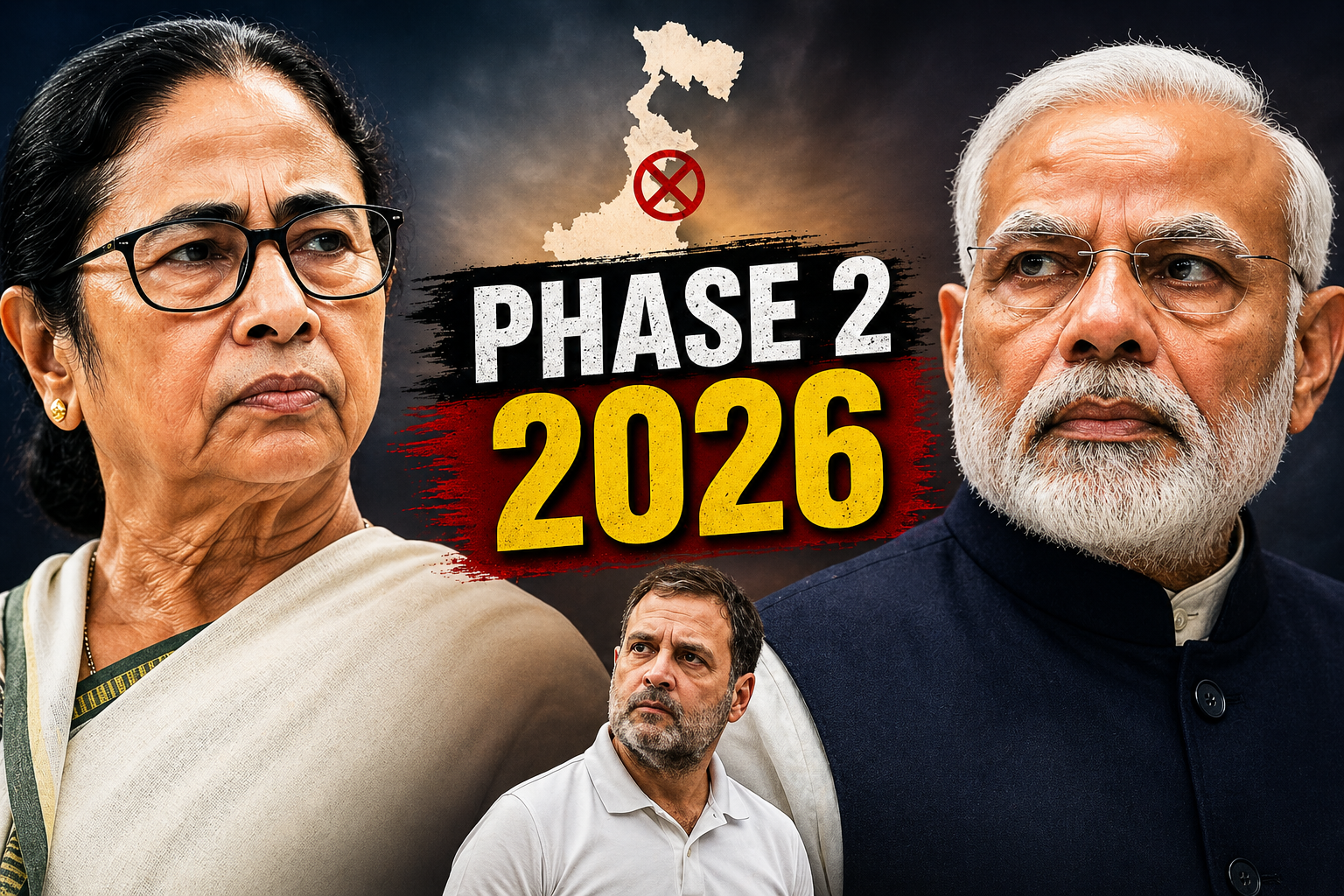
West Bengal Assembly Elections 2026 Phase 2: Intense Campaigning Ends Amid Tight Security and Political Showdown
The West Bengal Assembly Elections 2026 have reached a crucial turning point as campaigning for the second and final phase officially concluded on April 27, 2026. With voting scheduled for April 29 across 142 constituencies, this phase is being closely watched as it could determine the future political landscape of the state. The battle is primarily between the ruling Trinamool Congress (TMC) and the Bharatiya Janata Party (BJP), both of whom have invested immense effort in securing voter support.
This election is not just a state contest—it carries significant national importance. With high-voltage campaigning, allegations, counter-allegations, and unprecedented security arrangements, West Bengal is witnessing one of its most intense electoral battles in recent years.
West Bengal Assembly Elections 2026 Phase 2: Why It Matters
West Bengal’s legislative assembly consists of 294 seats, and the 2026 elections are being conducted in two phases. The first phase, held on April 23, covered 152 constituencies and witnessed a strong voter turnout. Analysts believe that this high participation was driven by several factors, including dissatisfaction with governance, controversies surrounding voter list revisions, and heavy security presence.
The second phase, which includes 142 seats, is particularly significant because it covers key districts in South Bengal. Areas like North 24 Parganas, South 24 Parganas, Howrah, and Hooghly have traditionally been strongholds of the TMC. However, the BJP is making aggressive efforts to penetrate these regions and shift the electoral balance.
This phase will likely decide whether the ruling party retains control or if the opposition succeeds in creating a historic political shift.
Security Measures and Election Preparedness
Given the history of political violence in the state, the Election Commission has implemented strict security measures for Phase 2. Thousands of personnel from central armed forces have been deployed across sensitive and vulnerable constituencies. These forces are conducting area domination exercises, especially in regions identified as high-risk.
Authorities have also taken steps to ensure that polling remains free and fair. Surveillance has been intensified, and security agencies are closely monitoring both urban and rural areas. In addition, central forces are expected to remain stationed in the state even after polling concludes to maintain stability.
These measures reflect the seriousness of the election and the need to prevent any disruption during the voting process.
West Bengal Assembly Elections 2026: BJP’s Campaign Strategy and Key Messages
The BJP has launched an aggressive campaign, positioning itself as a strong alternative to the current government. Its leadership has conducted multiple rallies and roadshows, aiming to connect with voters across different demographics.
The party has raised several issues during its campaign, including:
- Allegations of corruption and administrative inefficiency
- Concerns over law and order
- Economic challenges and lack of industrial growth
- Safety of women and justice delivery mechanisms
The BJP has also focused on promising development through a “double-engine government,” where coordination between state and central governments would accelerate progress. Key promises include job creation, infrastructure development, and improved governance.
Another significant aspect of BJP’s campaign is its outreach to specific communities, including refugees and migrant populations. By addressing their concerns, the party aims to consolidate support in closely contested constituencies.
TMC’s Response and Grassroots Strength
The Trinamool Congress, led by Chief Minister Mamata Banerjee, has responded with equal intensity. The party has relied heavily on its grassroots network and welfare-based governance model to connect with voters.
TMC’s campaign has highlighted:
- Social welfare schemes benefiting women and marginalized communities
- Financial assistance programs and subsidies
- Development initiatives in rural and urban areas
- Protection of regional identity and culture
The party has also accused the opposition of promoting divisive politics and interfering in the state’s social fabric. By focusing on inclusivity and local identity, TMC aims to retain its traditional voter base.
Public outreach has been a key part of its strategy, with leaders engaging directly with citizens through padyatras, market visits, and small gatherings. This approach is designed to reinforce trust and strengthen voter loyalty.
Rising Security Concerns and Law & Order Issues During West Bengal Assembly Elections 2026
One of the major concerns ahead of Phase 2 voting is the recovery of crude explosives in certain areas of South Bengal. This incident has raised questions about security and the overall law-and-order situation during elections.
Authorities have initiated investigations and increased vigilance in sensitive regions. Special drives are being conducted to prevent illegal activities, and strict action is being taken against any violations.
This development has also become a political issue, with opposition parties highlighting it as evidence of deteriorating governance, while the ruling party has assured voters that all necessary steps are being taken to maintain safety.
Anti-Incumbency and Key Electoral Issues
After three consecutive terms in power, the TMC is facing a degree of anti-incumbency. Several issues have contributed to voter sentiment, including:
- Allegations of corruption in recruitment processes
- Rising unemployment concerns
- Governance challenges in certain sectors
- Controversies related to voter list revisions
The Special Intensive Revision (SIR) of electoral rolls has been particularly debated. While some see it as a necessary step to clean up voter data, others believe it may have affected genuine voters.
These factors have made the election more competitive compared to previous years.
Key Voter Segments That Could Decide the Outcome in West Bengal Assembly Elections 2026
Several voter groups are expected to play a decisive role in Phase 2:
- Women Voters
Women have traditionally supported TMC due to welfare schemes. However, opposition parties are trying to shift this support by raising concerns about safety and empowerment.
- Minority Communities
Minority voters, particularly in certain districts, are likely to influence results significantly. Their voting pattern could impact multiple constituencies.
- Youth and First-Time Voters
Young voters are focusing on employment opportunities, education, and future prospects. Their participation could shape the final outcome.
- Migrant and Refugee Populations
Communities affected by citizenship and migration issues are also key stakeholders in this election.
Major Promises and Campaign Themes
Both major parties have presented contrasting visions for the state’s future:
BJP’s Key Promises:
- Implementation of uniform civil policies
- Salary benefits aligned with central pay commissions
- Free transport facilities for women
- Strong action against corruption and illegal activities
TMC’s Focus Areas:
- Expansion of welfare schemes
- Continued support for rural development
- Protection of regional identity
- Resistance to central interference
The campaign has revolved around development, governance, identity, and security, making it a multi-dimensional electoral battle.
What to Expect on Voting Day
Polling for Phase 2 will take place on April 29 under tight security arrangements. Special attention is being given to sensitive areas, including riverine zones like the Sundarbans, to prevent any irregularities.
Election officials are expecting a high voter turnout, similar to Phase 1. The enthusiasm among voters reflects the importance of this election and its potential impact on the state’s future.
Results and Political Implications
The results of the West Bengal Assembly Elections 2026 will be announced on May 4. The outcome will determine whether the TMC continues its शासन or if the BJP manages to secure a breakthrough victory.
A win for the ruling party would reinforce its dominance in state politics, while a victory for the opposition would mark a major political shift with national implications.
Conclusion: A Defining Moment for West Bengal
The 2026 West Bengal Assembly Elections represent a critical moment in the state’s political journey. With intense campaigning, heightened security, and strong voter engagement, the election highlights both the strength and challenges of democratic processes in India.
As voters prepare to cast their ballots, the focus remains on ensuring a peaceful and transparent election. The final outcome will not only shape the future of West Bengal but also influence broader political narratives across the country.
Disclaimer
This article is based on publicly available information, official statements, and media reports available at the time of publication. The content is intended for informational purposes only and should not be considered financial or policy advice. Readers are encouraged to refer to official sources for the latest updates.
While efforts have been made to ensure accuracy, the information presented may change as new developments emerge. Readers are advised to conduct their own research and consult financial advisors before making any investment decisions.
NoCap Times does not independently verify all claims or statements and shall not be held responsible for any inaccuracies or omissions.