

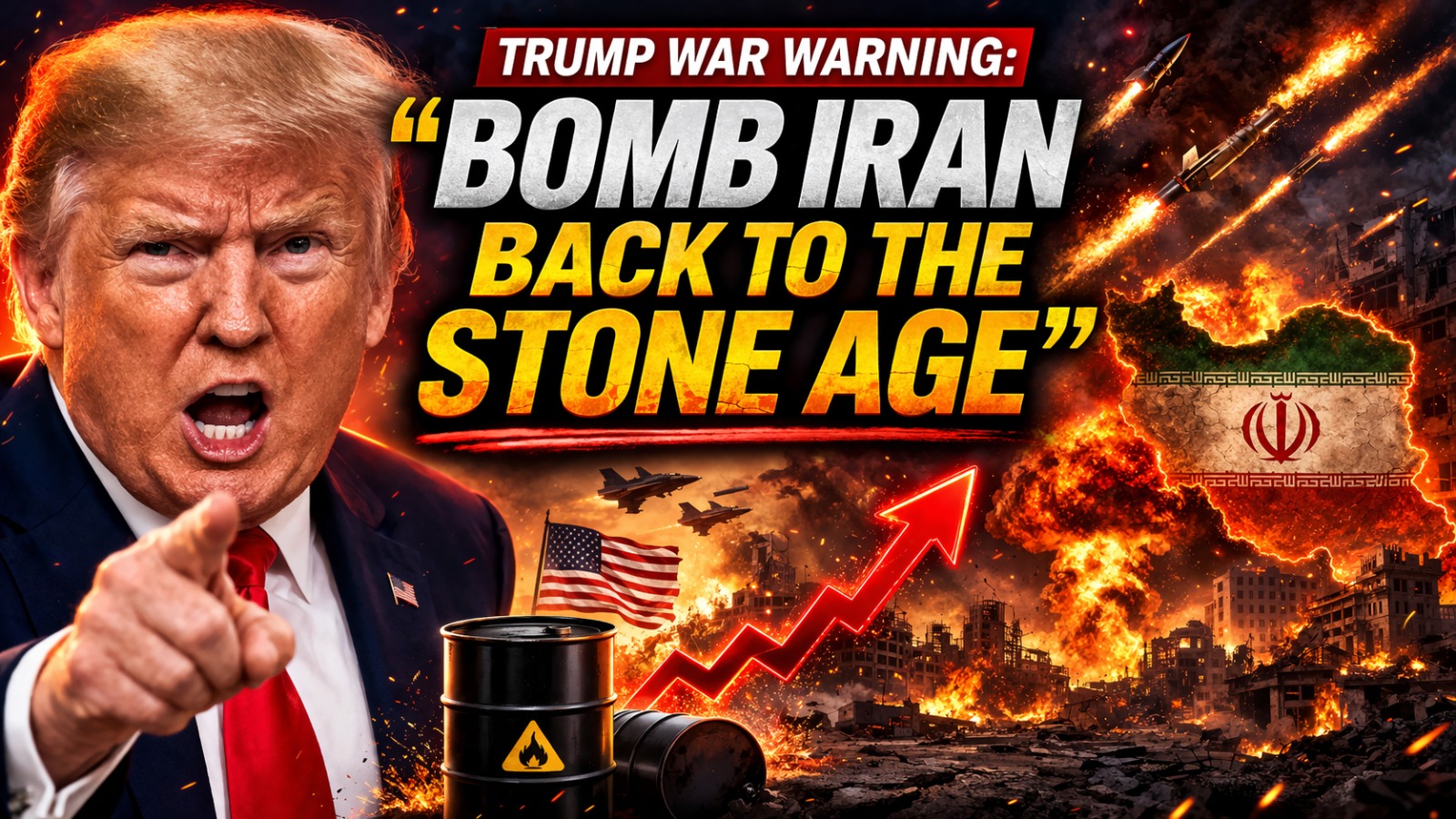
West Asia Conflict Update: Oil Prices Surge as U.S. Escalates West Asia War Strategy
West Asia Conflict Sparks Global Market Shock
The Trump Iran Conflict has entered a critical phase after Donald Trump delivered a powerful primetime address from the White House, signaling that U.S. military objectives against Iran are nearing completion. However, his aggressive tone and warning of intensified strikes over the next few weeks have triggered global uncertainty.
The most immediate impact was seen in the global oil markets, where Brent Crude Oil prices surged past $106 per barrel. This spike reflects deep concerns about potential disruptions in the Strait of Hormuz, a vital route through which nearly one-fifth of the world’s oil supply flows.
As tensions rise in the West Asia, the world watches closely, anticipating whether the coming weeks will bring resolution—or further escalation.
Trump’s Address: Victory Claims Mixed with Escalation Warnings
During his 20-minute speech, Donald Trump projected confidence, stating that the United States is “very close” to completing its military objectives in Iran. These objectives include dismantling Iran’s nuclear capabilities, weakening its naval power, and neutralizing missile infrastructure.
However, the address took a dramatic turn when Trump warned of intensified military action over the next two to three weeks, emphasizing that the U.S. would respond forcefully if Iran failed to comply with demands.
“Stone Age” Warning Intensifies Conflict Narrative
One of the most controversial moments came when Trump used strong language to describe potential U.S. actions against Iran. The statement quickly gained traction globally, reinforcing fears that the conflict could escalate into a broader regional war.
This rhetoric signals a shift from controlled military operations to a potentially more aggressive phase, raising questions about long-term geopolitical stability.
Why the Strait of Hormuz Is at the Center of the Crisis
The Strait of Hormuz has become the focal point of the West Asia Conflict due to its immense strategic importance.
Global Energy Lifeline Under Threat Amid West Asia Conflict
- Handles nearly 20% of the global oil supply
- Critical for energy imports to India, Japan, South Korea, and Europe
- Any disruption leads to immediate price volatility
Iran’s threats to block or disrupt this route have already caused shipping reroutes, higher insurance costs, and supply chain disruptions.
Trump has urged global allies to take more responsibility in securing the passage, signaling a shift in U.S. foreign policy priorities.
Oil Prices Surge Amid West Asia Conflict: Global Economic Ripple Effects
Following Trump’s speech, oil markets reacted instantly:
- Brent Crude Oil jumped to ~$106 per barrel
- U.S. crude prices crossed $103 per barrel
- Market volatility increased across global exchanges
Impact of West Asia Conflict on Global Economies
The surge in oil prices has far-reaching consequences:
1. Rising Inflation
Higher fuel costs increase transportation and production expenses, leading to inflation worldwide.
2. Pressure on Import-Dependent Nations
Countries like India face increased fiscal pressure due to higher import bills.
3. Slower Economic Growth
Economists warn that sustained oil prices above $100 could slow global GDP growth.
Stock Markets React to West Asia Conflict
Global equity markets showed immediate signs of stress:
- Asian markets in Tokyo, Hong Kong, and Seoul declined
- European futures indicated downward trends
- Energy sector volatility increased significantly
Investors are now pricing in the risk of a prolonged conflict rather than a short-term military operation.
Background of the West Asia Conflict
The roots of the West Asia Conflict lie in long-standing geopolitical tensions.
Key Triggers of the War
- Disputes over Iran’s nuclear program
- Regional proxy conflicts involving Hezbollah and other groups
- Israeli strikes on Iranian nuclear facilities
- Iranian retaliation targeting U.S. and allied assets
The U.S. launched a large-scale military campaign aimed at crippling Iran’s defense capabilities, significantly altering the regional balance of power.
Military Progress vs Ground Reality
While the U.S. claims major successes, the situation remains complex.
Reported U.S. Achievements
- Significant damage to Iran’s naval fleet
- Degradation of missile launch systems
- Weakening of air defense infrastructure
Iran’s Countermeasures
- Disrupting oil shipping routes
- Launching retaliatory strikes
- Expanding regional proxy conflicts
Iran has denied claims of weakness and warned that continued aggression could deepen the conflict further.
Humanitarian Impact of the West Asia Conflict
Beyond geopolitics and economics, the humanitarian cost is rising:
- Civilian casualties in affected regions
- Damage to infrastructure in Iranian cities
- Shortages of food, fuel, and medical supplies
Aid organizations warn that a prolonged war could lead to a severe humanitarian crisis.
Global Reactions to Trump’s Strategy
Trump’s aggressive rhetoric has sparked mixed international responses.
Criticism from Global Leaders
Micheál Martin criticized the language used in the speech, calling it unacceptable and dangerous.
Concerns Among Allies
- European nations worry about energy security
- Asian economies fear prolonged supply disruptions
- Calls for diplomatic intervention are increasing
Role of Global Powers
Countries like China and Russia have expressed opposition to escalation, though their involvement remains limited for now.
Domestic Political Impact in the United States
The conflict is also shaping domestic politics in the U.S.
- Rising fuel prices are affecting public sentiment
- Anti-war protests are gaining momentum
- Political opposition is questioning the strategy
At the same time, Trump’s supporters view his stance as strong and decisive leadership.
Geopolitical Implications of the West Asia Conflict
The ongoing conflict could reshape global power dynamics.
Shift in U.S. Energy Strategy
The United States, now less dependent on Middle Eastern oil, is adopting a more assertive stance in the region.
Winners and Losers
- Oil-producing nations may benefit from higher prices
- Import-dependent countries face economic strain
- Renewable energy investments may accelerate
What Lies Ahead: Critical Weeks for Global Stability
The next two to three weeks, as outlined by Trump, will be crucial.
Possible Scenarios
- Rapid De-escalation – If Iran complies with demands
- Prolonged Conflict – Continued military escalation
- Diplomatic Breakthrough – Backchannel negotiations
Markets and governments worldwide are preparing for all possibilities.
Conclusion: A Defining Moment in Global Geopolitics
The Trump Iran Conflict has become one of the most significant geopolitical crises in recent years. While the U.S. claims it is close to achieving its objectives, the aggressive tone of recent developments suggests that the situation remains volatile.
With oil prices surging, global markets under pressure, and geopolitical tensions escalating, the coming weeks will determine whether this conflict moves toward resolution or spirals into a prolonged crisis.
Summary
The Trump Iran Conflict has intensified after President Donald Trump announced that U.S. military objectives are nearly complete while warning of further escalation. His remarks triggered a surge in oil prices, with Brent crude crossing $106 per barrel, due to fears of disruption in the Strait of Hormuz. Global markets reacted negatively, and concerns about inflation, economic slowdown, and energy security have risen. While the U.S. claims military success, Iran continues to retaliate, keeping the conflict active. The next few weeks are critical and could determine the future of global stability and energy markets.