

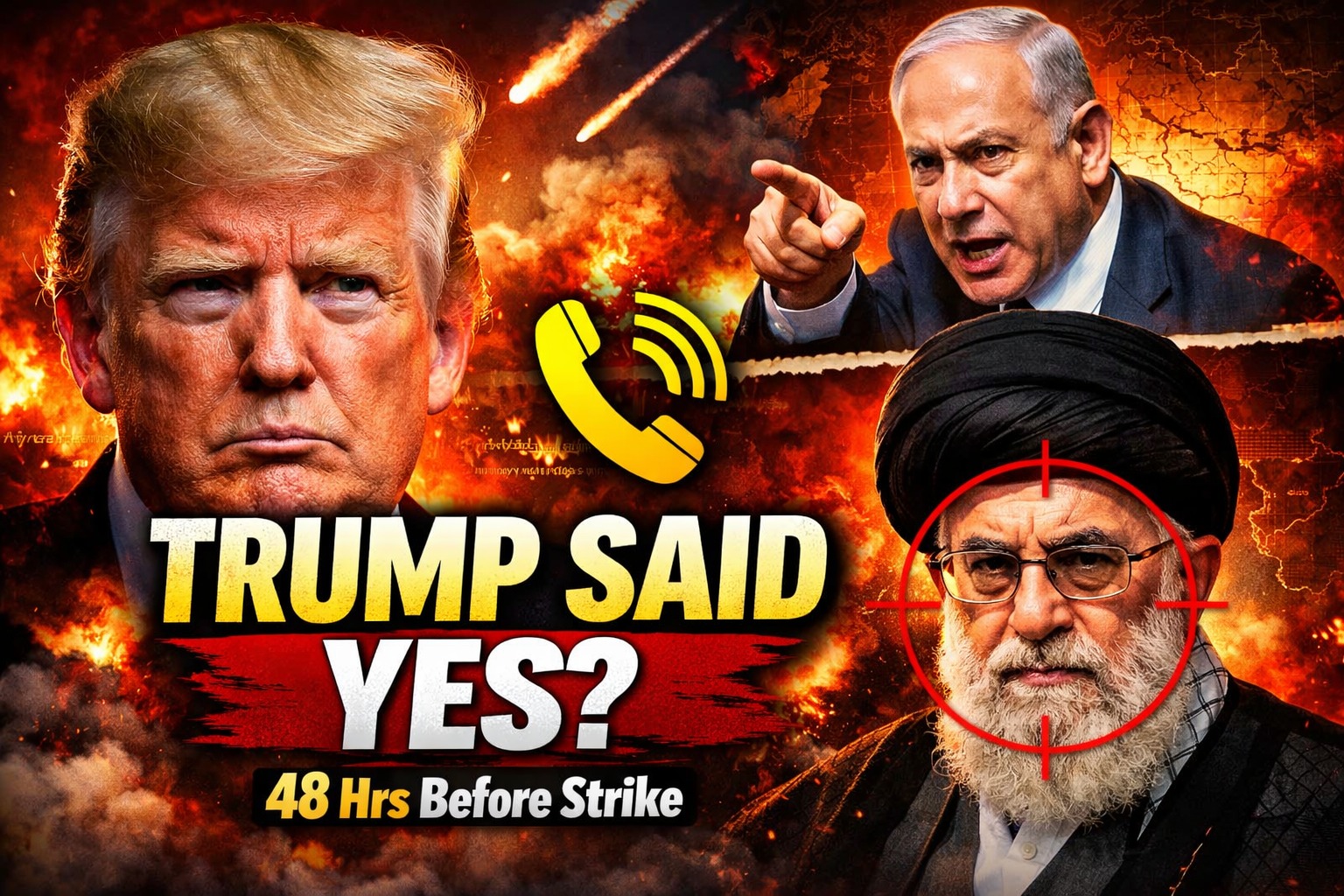
Trump Cleared Iran Strike After Netanyahu Pushed for Decisive Action Against Khamenei: Inside the High-Stakes Call
In one of the most consequential geopolitical decisions of recent times, Donald Trump approved a major military operation against Iran following intense strategic discussions with Benjamin Netanyahu. According to sources familiar with the matter, a critical phone call between the two leaders—held less than 48 hours before the attack—played a pivotal role in shaping the course of events that would ultimately redefine the Middle East conflict.
The operation, later known as a decisive escalation against Iran’s leadership and military capabilities, was influenced by intelligence inputs, long-standing geopolitical tensions, and a rare window of opportunity that Israeli leadership believed could not be missed.
A Critical Window: Intelligence Sparks Urgency
In the days leading up to the strike, U.S. and Israeli intelligence agencies reportedly identified a high-value opportunity. Iran’s Supreme Leader, Ali Khamenei, along with several top military and political aides, was expected to convene at a secured compound in Tehran.
Such gatherings are typically rare and heavily protected, making them difficult targets. However, new intelligence indicated that the timing of the meeting had been unexpectedly advanced, creating what officials described as a narrow but highly significant window for a potential “decapitation strike”—a targeted attack aimed at eliminating top leadership.
This development added urgency to an already tense situation. For Netanyahu, who had long advocated for aggressive action against Iran’s leadership, the moment represented a strategic breakthrough.
The Phone Call That Shaped History
During the high-stakes call, Netanyahu reportedly made a compelling case to Trump for immediate action. He argued that such an opportunity to strike at the heart of Iran’s leadership might never arise again.
Sources suggest that Netanyahu framed the situation not only as a military necessity but also as a moment of historic significance. Eliminating Khamenei, he argued, could alter the balance of power in the region and potentially weaken Iran’s influence over proxy groups.
He also highlighted past threats allegedly linked to Iran, including claims of assassination attempts targeting Trump during his political career. These arguments were intended to underscore both strategic and personal stakes involved in the decision.
While Trump had already approved the concept of a military operation against Iran, the timing and scale were still under consideration. The call with Netanyahu is believed to have served as a final push, reinforcing the urgency of acting swiftly.
Operation Epic Fury: The Strike Begins
Following the discussions, Trump authorized the military to proceed with what was later referred to as Operation Epic Fury. The operation commenced in the early hours of February 28, with coordinated airstrikes targeting key Iranian locations.
Initial strikes reportedly focused on strategic sites, including missile installations, naval assets, and facilities linked to Iran’s defense infrastructure. The objective, according to U.S. officials, was to significantly degrade Iran’s ability to project military power and support regional proxies.
Later that evening, Trump publicly announced that Khamenei had been killed in the operation—a declaration that sent shockwaves across the globe.
Official U.S. Position: Strategic Goals Over Personal Motives
In response to inquiries, U.S. officials emphasized that the operation was driven by national security objectives rather than personal vendettas.
Statements from the administration outlined clear goals: dismantling Iran’s ballistic missile capabilities, neutralizing its naval strength, curbing its support for proxy groups, and preventing it from acquiring nuclear weapons.
Pete Hegseth later acknowledged that Iran’s alleged attempts to target Trump may have contributed to the broader context of the decision. However, he maintained that the primary focus remained strategic.
Similarly, Marco Rubio had earlier warned lawmakers that escalating tensions with Iran could lead to direct confrontation, regardless of U.S. intentions.
Israel’s Long-Term Strategy Against Iran
For Israel, the operation was part of a broader and long-standing strategy to counter Iran’s regional influence. Netanyahu has consistently viewed Iran as the most significant threat to Israel’s security, particularly due to its missile program and support for militant groups.
These include organizations such as Hamas and Hezbollah, both of which have been involved in conflicts with Israel.
Israeli leadership has repeatedly argued that Iran’s growing capabilities could eventually pose a direct threat not only to Israel but also to Western nations.
Netanyahu’s engagement with Trump on this issue reflects years of diplomatic and strategic alignment between the two countries.
From Diplomacy to Military Action
Interestingly, Trump had initially positioned himself as a leader who preferred diplomacy over military intervention, particularly during his 2024 campaign. His “America First” policy emphasized avoiding prolonged foreign conflicts.
However, as negotiations over Iran’s nuclear program stalled, the administration began exploring alternative approaches.
A previous joint U.S.-Israel operation in June had already targeted Iranian nuclear and missile facilities, achieving significant tactical success. Yet, both nations reportedly believed that further action was necessary to fully neutralize the threat.
By early 2026, discussions about a second wave of strikes had gained momentum. Intelligence reports, combined with regional developments—including widespread protests within Iran—further influenced the decision-making process.
Internal Debate and Intelligence Assessments
Despite the push for action, there were differing views within the U.S. intelligence community. The Central Intelligence Agency (CIA) reportedly assessed that eliminating Khamenei might not lead to a more moderate government.
Instead, there were concerns that a hardline successor could take power, potentially intensifying anti-Western policies.
This prediction appears to have materialized, as Khamenei’s son, Mojtaba Khamenei, has reportedly assumed leadership. Known for his strict stance, Mojtaba is considered even more uncompromising in his views toward the United States.
Escalation and Global Impact
The aftermath of the strikes has been marked by significant escalation. Iran launched retaliatory attacks targeting U.S. military assets and allied positions in the region.
The conflict has resulted in substantial casualties, including both military personnel and civilians. Additionally, tensions have disrupted critical global supply chains, particularly in energy markets.
The closure of key shipping routes and rising oil prices have had immediate economic repercussions worldwide, affecting consumers and governments alike.
The Regime Change Debate
One of the most controversial aspects of the operation is the idea of regime change in Iran. Netanyahu reportedly argued that eliminating Iran’s top leadership could trigger internal unrest and potentially lead to a new government more open to negotiations.
However, this perspective was not universally shared. Critics argue that such outcomes are unpredictable and often lead to prolonged instability.
Recent developments suggest that, rather than weakening the regime, the strikes may have consolidated power among hardliners, reducing the likelihood of diplomatic engagement.
A Region on Edge
As the conflict continues into its fourth week, the Middle East remains in a highly volatile state. Military activity persists, and the risk of further escalation remains high.
Iran’s Revolutionary Guard continues to maintain a strong presence domestically, while millions of civilians remain caught in the uncertainty of an ongoing conflict.
The situation underscores the complexities of modern warfare, where military action, intelligence operations, and diplomatic efforts intersect in unpredictable ways.
Summary
The decision by U.S. President Donald Trump to approve a military operation against Iran was shaped by a combination of intelligence insights, strategic considerations, and persuasive arguments from Israeli Prime Minister Benjamin Netanyahu. A critical phone call between the two leaders highlighted a rare opportunity to target Iran’s top leadership, ultimately influencing the timing of the strike.
The operation, which reportedly resulted in the death of Supreme Leader Ali Khamenei, has had far-reaching consequences. While the U.S. and Israel aimed to weaken Iran’s military capabilities and regional influence, the aftermath has led to increased tensions, retaliatory attacks, and global economic disruptions.
With Mojtaba Khamenei now in power and the region facing continued instability, the long-term impact of the decision remains uncertain. The events illustrate the high stakes and complex dynamics involved in modern geopolitical conflicts.
Disclaimer:
This article is based on publicly available information, official statements, and media reports available at the time of publication. The content is intended solely for informational and educational purposes.
While efforts have been made to ensure accuracy, NoCap Times does not independently verify all claims, statements, or allegations made by individuals, witnesses, or investigative sources mentioned in the report.
NoCap Times shall not be held responsible for any inaccuracies, omissions, or changes that may arise as new verified information becomes available.