

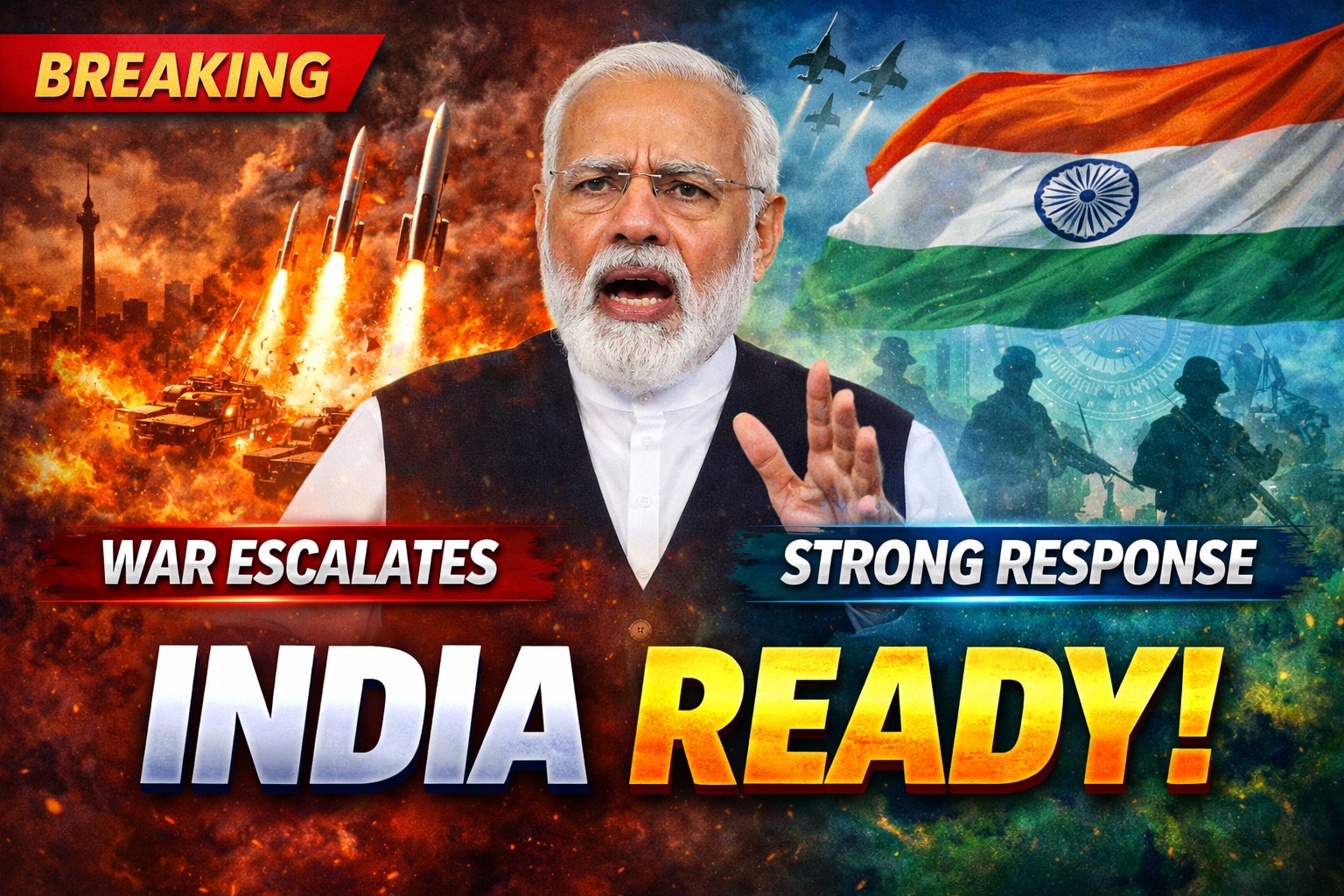
PM Modi Assures India of Strong Response Amid US-Iran War, Urges Unity and Preparedness
As global tensions escalate due to the ongoing conflict between the United States and Iran, Narendra Modi addressed the nation with a message of reassurance, caution, and preparedness. Speaking in the Lok Sabha for the first time since the outbreak of hostilities, the Prime Minister emphasized that the government is making continuous efforts to shield India from the far-reaching consequences of the war.
Highlighting the seriousness of the situation, Modi warned that the global environment could remain unstable for an extended period. At the same time, he urged citizens to remain united and resilient—drawing parallels with the collective strength demonstrated during the COVID-19 pandemic.
A Call for Unity in Challenging Times
In his address, Prime Minister Modi stressed that India must once again come together to face a global crisis. Referring to the resilience shown during the pandemic, he encouraged citizens to adopt a similar mindset of patience and cooperation.
“This conflict has created difficult global conditions that may persist for a long time,” he said. “We must remain prepared and united. Just as we overcame the challenges during COVID-19, we must now face this situation with calmness and determination.”
Modi also cautioned against misinformation, warning that certain elements might attempt to exploit the crisis by spreading false narratives. He urged people to stay vigilant and rely on verified information.
India’s Firm Stand on Global Peace
Reaffirming India’s long-standing commitment to peace and diplomacy, Modi made it clear that the country opposes violence and disruption in any form.
He strongly condemned attacks on commercial shipping and the obstruction of critical maritime routes, particularly the Strait of Hormuz—a vital passage for global energy supplies.
“Attacks on commercial vessels and disruptions in the Strait of Hormuz are unacceptable,” he stated. “India believes that dialogue and diplomacy are the only sustainable solutions to this conflict.”
The Prime Minister revealed that he had personally spoken with several leaders across West Asia, urging them to de-escalate tensions and work toward a peaceful resolution.
Protecting India’s Economic Interests
The ongoing conflict has significant implications for India’s economy, particularly in the energy sector. A substantial portion of India’s oil and gas imports originates from West Asia, making the region critical to the country’s energy security.
To address potential disruptions, Modi highlighted the government’s proactive measures. He informed Parliament that India currently holds over 53 lakh metric tonnes of crude oil in its strategic reserves, with plans to expand this capacity to 65 lakh metric tonnes.
These reserves act as a buffer against supply shocks, ensuring that the country can maintain stability even during periods of global uncertainty.
In addition, the government is actively exploring alternative sources of energy imports and strengthening diplomatic ties with other supplier nations to ensure uninterrupted supply.
Ensuring Energy and Fuel Stability
Recognizing that energy is the backbone of the economy, the Prime Minister assured citizens that steps are being taken to maintain stable supplies of essential fuels such as petrol, diesel, and cooking gas.
India imports nearly 60% of its LPG requirements, making it vulnerable to disruptions in international supply chains. In response, the government has prioritized domestic distribution and increased local production of LPG.
Efforts are also underway to monitor shipping routes closely, particularly those passing through the Gulf region, to ensure the safe arrival of critical supplies including oil, gas, and fertilizers.
“Our focus is to ensure that essential commodities reach India without disruption,” Modi said.
Impact on Agriculture and Farmers
The Prime Minister acknowledged concerns about the potential impact of the conflict on agriculture, particularly due to rising fertilizer costs and supply uncertainties.
He reassured farmers that the government is committed to protecting them from the financial burden of the global crisis.
“Our farmers will not be allowed to bear the impact of this situation,” Modi stated. “We have sufficient fertilizer stocks to manage any emergency, and we are working to ensure a successful Kharif harvest.”
India’s strong food reserves, built through consistent agricultural output, provide an additional layer of security during uncertain times.
National Security and Indian Citizens Abroad
Beyond economic concerns, the Prime Minister also addressed issues related to national security and the safety of Indian citizens abroad.
Approximately one crore Indians live and work in the Gulf region, making their well-being a top priority for the government.
Modi informed Parliament that he has been in direct communication with regional leaders to secure assurances regarding the safety of Indian nationals.
He also highlighted ongoing evacuation efforts, noting that around 3.75 lakh Indians have already returned home safely since the conflict began. This includes over 1,000 individuals evacuated from Iran, among them a significant number of students.
The government continues to monitor the situation closely and is prepared to take further action if necessary.
Navigating Global Economic Uncertainty
The war has triggered widespread economic uncertainty, affecting global markets, trade routes, and supply chains.
Modi acknowledged that the conflict has created unexpected challenges for India, impacting everything from energy prices to trade relationships.
“India has strong trade ties with countries involved in the conflict,” he said. “This situation has implications not only for our economy but also for global stability.”
Despite these challenges, the Prime Minister expressed confidence in the strength of India’s economic fundamentals. He noted that the government is implementing short-term, medium-term, and long-term strategies to mitigate the impact of the crisis.
Power Demand and Infrastructure Preparedness
With summer approaching, India is expected to see a surge in electricity demand. Addressing this concern, Modi assured that the country’s power infrastructure is well-prepared.
“All power plants have sufficient coal reserves,” he said, emphasizing that there will be no major disruptions in electricity supply.
This assurance is particularly important as increased temperatures typically lead to higher energy consumption, placing additional pressure on the power sector.
Political Reactions and Criticism
While the Prime Minister’s address focused on unity and preparedness, it also drew criticism from opposition leaders.
Jairam Ramesh questioned the tone and content of the speech, accusing the government of not taking a strong enough stance on international military actions.
In a statement, he criticized the Prime Minister for not explicitly condemning ongoing airstrikes by the United States and Israel on Iran.
Such political reactions highlight the broader debate within India on how the country should position itself in a complex and evolving geopolitical landscape.
A Balanced Approach to Crisis Management
Overall, the government’s approach reflects a careful balancing act—addressing immediate concerns while preparing for long-term challenges.
By focusing on diplomacy, economic stability, and national security, India aims to navigate the crisis without becoming directly entangled in the conflict.
The emphasis on unity and preparedness serves as a reminder that global events can have far-reaching consequences, requiring collective effort and resilience.
Summary
Prime Minister Narendra Modi addressed the nation amid the ongoing US-Iran conflict, assuring that the government is taking continuous steps to minimize its impact on India. He urged citizens to remain united and prepared, drawing parallels with the COVID-19 crisis.
Modi emphasized India’s commitment to peace and diplomacy while condemning attacks on commercial shipping and disruptions in the Strait of Hormuz. He outlined measures to ensure energy security, protect farmers, maintain fuel supplies, and safeguard Indian citizens abroad.
With strong economic fundamentals and strategic planning in place, the government aims to navigate the challenges posed by the global crisis, even as political debates continue within the country.
Disclaimer:
This article is based on publicly available information, official statements, and media reports available at the time of publication. The content is intended solely for informational and educational purposes.
While efforts have been made to ensure accuracy, NoCap Times does not independently verify all claims, statements, or allegations made by individuals, witnesses, or investigative sources mentioned in the report.
NoCap Times shall not be held responsible for any inaccuracies, omissions, or changes that may arise as new verified information becomes available.