

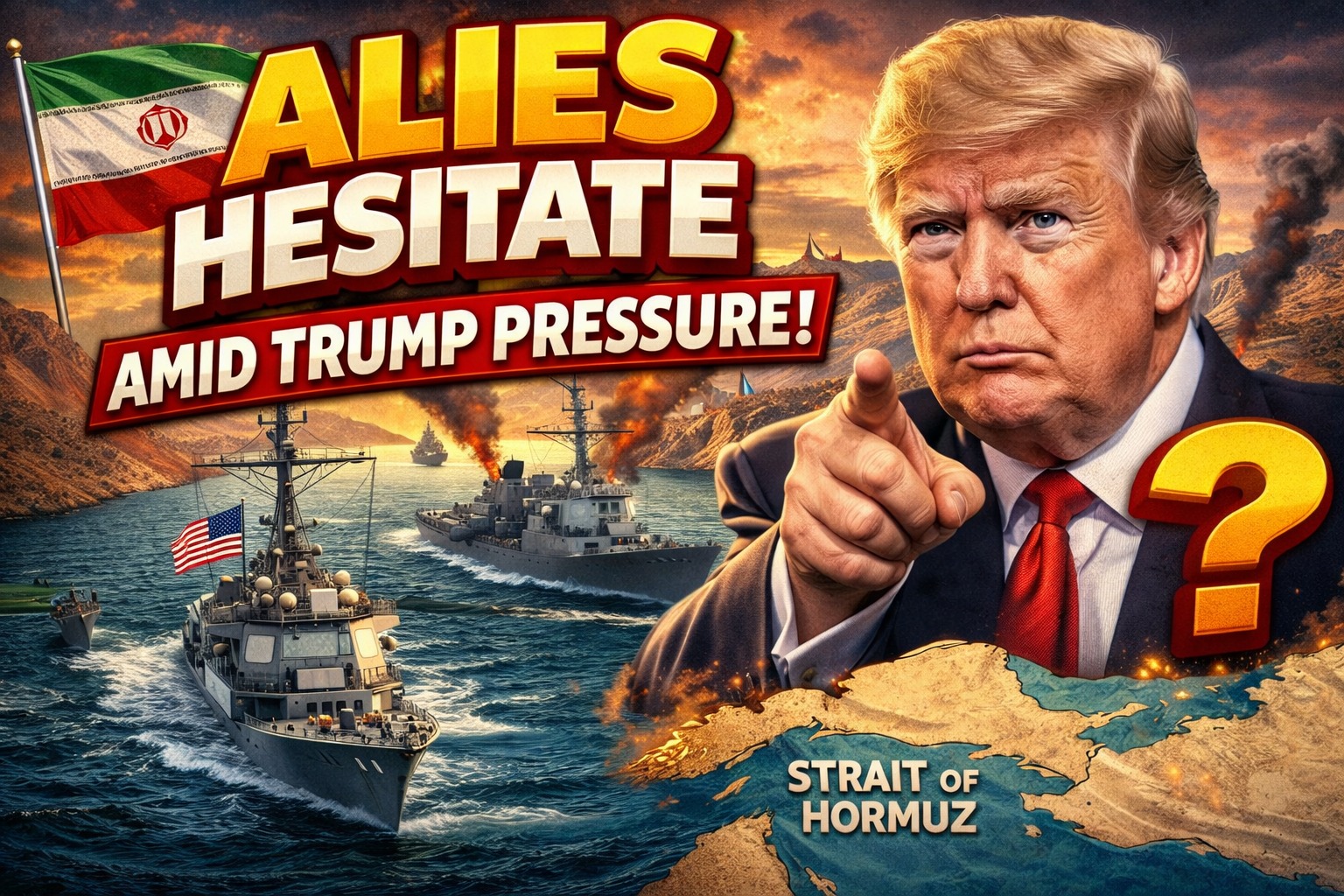
US Allies Hesitate to Deploy Warships in Strait of Hormuz Despite Pressure from Donald Trump
Several key allies of the United States, including the United Kingdom, Australia, and Japan, have shown reluctance to deploy naval forces to the Strait of Hormuz, a crucial global oil shipping route. The hesitation comes despite repeated appeals from former US President Donald Trump to support efforts aimed at securing the strategic waterway amid rising tensions in West Asia.
Australia Says No Plans to Send Warships
According to reports from ABC News, the Australian government clarified that it has no immediate plans to send naval vessels to the region.
Australian Cabinet Minister Catherine King stated that Canberra has not received any formal request from Washington and currently does not intend to deploy troops or ships.
“We won’t be sending a ship to the Strait of Hormuz. We know how incredibly important it is, but that’s not something we’ve been asked or are contributing to,” King said.
Meanwhile, opposition defence spokesperson James Paterson indicated that Australia would also need to assess whether it possesses the necessary naval capability for such a mission before making any commitment.
Japan Weighs Options Within Legal Limits
The government of Japan has adopted a more cautious approach. Instead of rejecting the request outright, Tokyo said it is studying possible actions within its legal and constitutional framework.
Japanese Prime Minister Sanae Takaichi said that no decision has been made regarding sending escort ships.
“We have not made any decisions whatsoever about dispatching escort ships. We are continuing to examine what Japan can do independently and what can be done within the legal framework,” she said.
South Korea Still Reviewing the Situation
South Korea has also not committed to sending naval support. Officials stated that consultations with Washington are ongoing, and any decision will be taken after careful review of the situation.
Mixed Signals from the United Kingdom
The United Kingdom initially suggested it was considering deploying mine-sweeping vessels to the region. However, later statements from officials indicated growing concern that additional military deployments could escalate the already volatile situation in the Gulf.
Trump Calls for International Support
In a post on Truth Social, Donald Trump claimed that his administration had reached out to seven countries seeking support for the mission to secure the Strait of Hormuz, though he did not reveal all the names.
He mentioned countries such as China, France, Japan, South Korea, and Britain among those he hoped would participate in the operation.
Trump also warned that NATO could face an uncertain future if allies do not support the US in safeguarding the strategic route.
Speaking to reporters aboard Air Force One, Trump argued that the US itself does not heavily depend on the Strait of Hormuz because it is one of the world’s largest oil producers. He suggested that countries more reliant on the route should take the lead in protecting it.
Strategic Importance of the Strait of Hormuz
The Strait of Hormuz is one of the world’s most critical energy chokepoints, through which a large share of global oil and liquefied natural gas shipments pass every day. Any disruption to shipping in this narrow waterway can significantly impact global energy markets and trade flows.
Summary
Several US allies—including the United Kingdom, Australia, Japan, and South Korea—have shown hesitation in deploying warships to the Strait of Hormuz despite pressure from Donald Trump. Australia has stated it has no plans to send ships, while Japan is reviewing options within its legal framework and South Korea is still consulting with Washington. The UK initially considered sending mine-sweepers but later suggested such a move could escalate tensions. Trump has urged multiple countries to support the operation and warned that NATO allies should help secure the vital global shipping route.
Disclaimer:
This article is based on publicly available information, official statements, and media reports available at the time of publication. The content is intended solely for informational and journalistic purposes.
While efforts have been made to ensure accuracy, NoCap Times does not independently verify all claims, statements, or allegations made by individuals, witnesses, or investigative sources mentioned in the report.
As investigations are ongoing, certain details may change as authorities release further updates. Readers are advised to treat the information as part of a developing news story. NoCap Times shall not be held responsible for any inaccuracies, omissions, or changes that may arise as new verified information becomes available.