

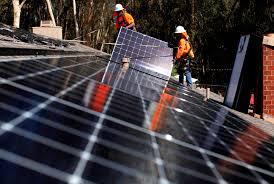
US Solar Power Growth Slows in 2025 as Policy Changes and Costs Weigh on Industry
The pace of solar power expansion in the United States slowed in 2025 as regulatory changes, reduced incentives, and rising industry costs impacted investment in the renewable energy sector.
Solar Installations Drop Compared to 2024
According to a joint report released by the Solar Energy Industries Association and research firm Wood Mackenzie, the United States added about 43 gigawatts (GW) of new solar capacity in 2025.
This represents a decline from nearly 50 GW installed in 2024, highlighting a noticeable slowdown in the sector’s rapid expansion.
The report links the reduced growth partly to policy adjustments introduced during the administration of Donald Trump. Several renewable energy subsidies and tax incentives that previously supported solar projects were scaled back, leading to weaker investment momentum across the industry.
Another major factor was the implementation of the One Big Beautiful Bill Act, which the report says caused disruptions in the solar market.
As a result:
- Utility-scale solar installations declined by around 16%
- Community solar deployments dropped by roughly 25%
Regulatory and Cost Challenges for Solar Developers
Apart from policy shifts, the solar sector also faced other hurdles, including tariffs on imported solar equipment and delays in project approvals for large-scale installations.
These developments reflect a broader shift in US energy priorities. The administration has placed greater emphasis on conventional and alternative sources such as oil, natural gas, coal, and nuclear energy, marking a departure from the renewable-focused policies pursued during the presidency of Joe Biden.
Solar Still Dominates New Power Capacity
Despite the slowdown in growth, solar energy remains a key contributor to America’s expanding power capacity.
The report noted that solar power and energy storage together accounted for about 79% of newly added electricity generation capacity during the first year of the Trump administration.
Rising electricity demand—particularly from artificial intelligence-driven data centres—has also helped maintain the competitiveness of solar energy within the overall power mix.
Texas Leads Solar Expansion
At the state level, Texas recorded the largest increase in solar installations, adding roughly 11 GW of capacity in 2025.
Other states contributing significantly to solar development included:
- Indiana
- Florida
- Arizona
- Ohio
- Utah
- Arkansas
Interestingly, the report highlighted that over two-thirds of new solar capacity was installed in states that supported Trump during the election, suggesting that demand for renewable energy remains strong across politically diverse regions.
Key Takeaway
Solar energy growth in the United States moderated in 2025, with new installations dropping to 43 GW from nearly 50 GW in 2024. Policy changes, reduced incentives, tariffs, and regulatory challenges have slowed the sector’s momentum. However, solar power and energy storage still dominate new electricity capacity additions, reaffirming the sector’s continued importance in the US energy landscape.
Disclaimer
This article is based on publicly available information and official statements. The content is intended for informational purposes only. The publication does not independently verify third-party claims or geopolitical assertions mentioned in international developments.