

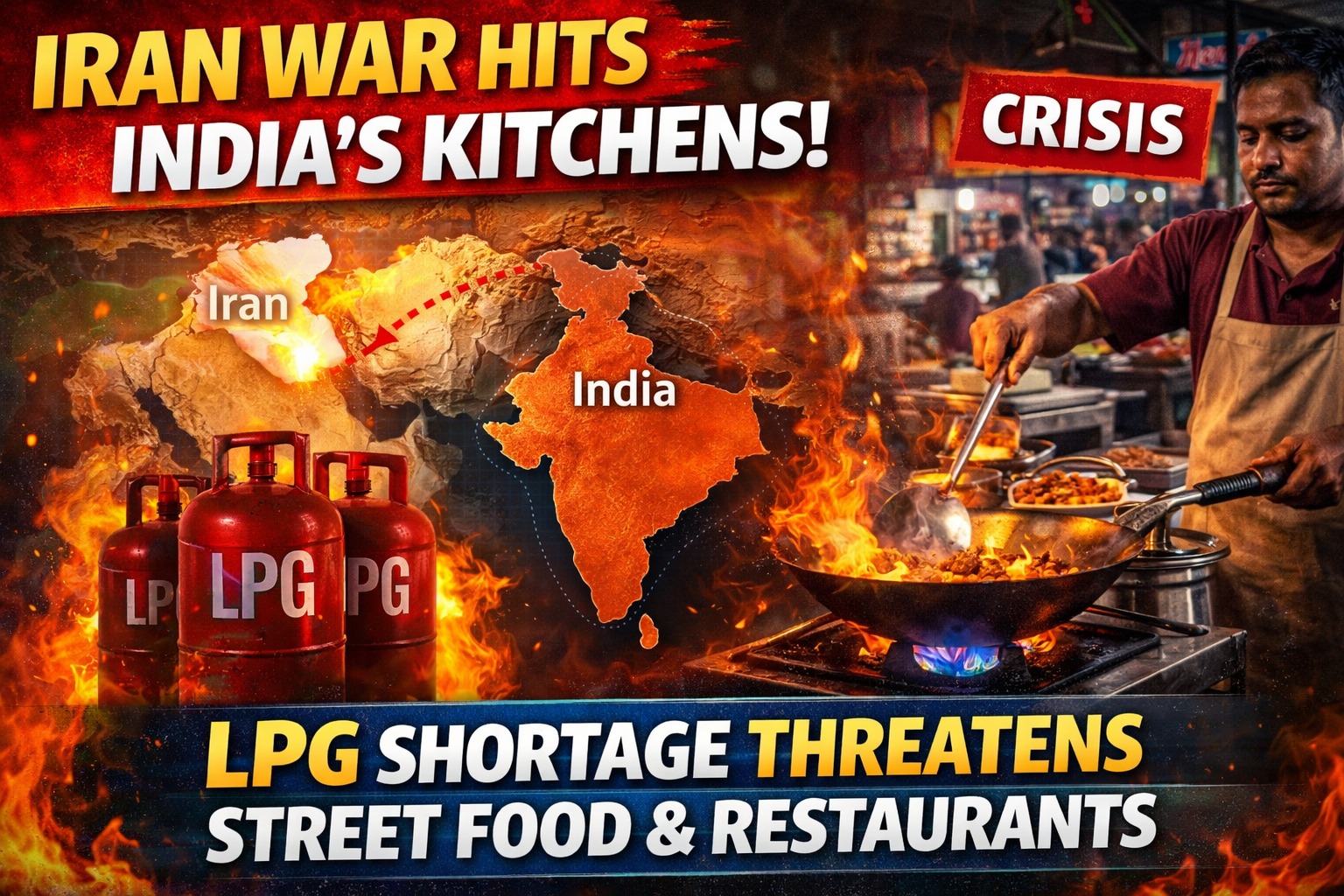
Iran Conflict Sparks LPG Shortage in India, Threatening Street Food and Restaurant Operations
The impact of the ongoing conflict involving Iran is beginning to ripple across India’s food and hospitality sector. A disruption in global energy supply routes—particularly around the strategically important Strait of Hormuz—has led to shortages of commercial LPG cylinders in several Indian cities.
The supply crunch is now affecting restaurants, hotels, and street food vendors who depend heavily on commercial cooking gas. As the crisis continues into its second week, industry groups warn that popular food items such as Vada Pav and Masala Dosa could soon become more expensive or temporarily unavailable if gas supplies do not stabilise.
India’s Dependence on Imported LPG
India relies significantly on imports to meet its LPG demand. More than 60% of the country’s domestic LPG consumption is sourced from international markets, and nearly 85–90% of those shipments pass through the Strait of Hormuz, one of the world’s most critical energy transit routes.
With geopolitical tensions affecting shipping and logistics in the region, supplies of commercial LPG cylinders have begun tightening across major Indian cities.
Restaurants in Mumbai Facing Shutdown Risk
The situation appears particularly serious in Mumbai, where the hospitality industry is already feeling the impact of the supply shortage.
According to the AHAR – Indian Hotel and Restaurant Association, nearly 20% of restaurants and hotels in the city have already suspended operations due to a lack of cooking gas. The association has warned that as many as half of the establishments could shut down within the next few days if supplies are not restored.
Several eateries in busy areas such as Dadar and Andheri have started reducing menu items and shortening operating hours in order to conserve their limited gas stock.
Supply Prioritised for Households
One factor contributing to the shortage faced by restaurants could be the government’s move to prioritise domestic cooking gas supplies for households. The central government recently invoked provisions under the Essential Commodities Act to ensure uninterrupted LPG availability for home consumers.
Restaurant owners claim that after the order was issued, supplies of commercial cylinders declined sharply, with many distributors reportedly halting deliveries.
Bengaluru Restaurants Also Hit
The impact is also being felt in Bengaluru, where industry representatives say restaurants may soon face operational disruptions.
The Bangalore Hotels Association has warned that many establishments could be forced to scale down or halt operations if the supply situation does not improve quickly.
One of the city’s most iconic eateries, Vidyarthi Bhavan, is also reportedly facing a possible shutdown due to dwindling gas reserves.
The restaurant’s owner stated that only a few cylinders remained in stock and that operations might have to stop once the remaining supply runs out.
Chennai Restaurants Also Struggling
Restaurants in Chennai are facing similar challenges. The Chennai Hotel Association has reported that several eateries have already closed temporarily because distributors are unable to provide commercial LPG cylinders.
In a communication addressed to Union Petroleum Minister Hardeep Singh Puri, the association said suppliers had informed them that stocks were exhausted, leaving many restaurants without cooking gas.
Growing Concerns for Food Prices and Supply
If the LPG supply disruption continues, industry experts warn that restaurants may be forced to increase food prices or further reduce menu options. Smaller eateries and street vendors could be hit the hardest, as they depend heavily on daily LPG supplies to keep their businesses running.
For now, the hospitality sector is hoping for a quick resolution to the geopolitical tensions affecting global energy routes, as prolonged disruptions could significantly impact both food businesses and consumers across India.
Disclaimer
This article is based on publicly available information and official statements. The content is intended for informational purposes only. The publication does not independently verify third-party claims or geopolitical assertions mentioned in international developments.