
US-Israel-Iran Conflict: Hezbollah Urges India to Intervene in Escalating Lebanon War
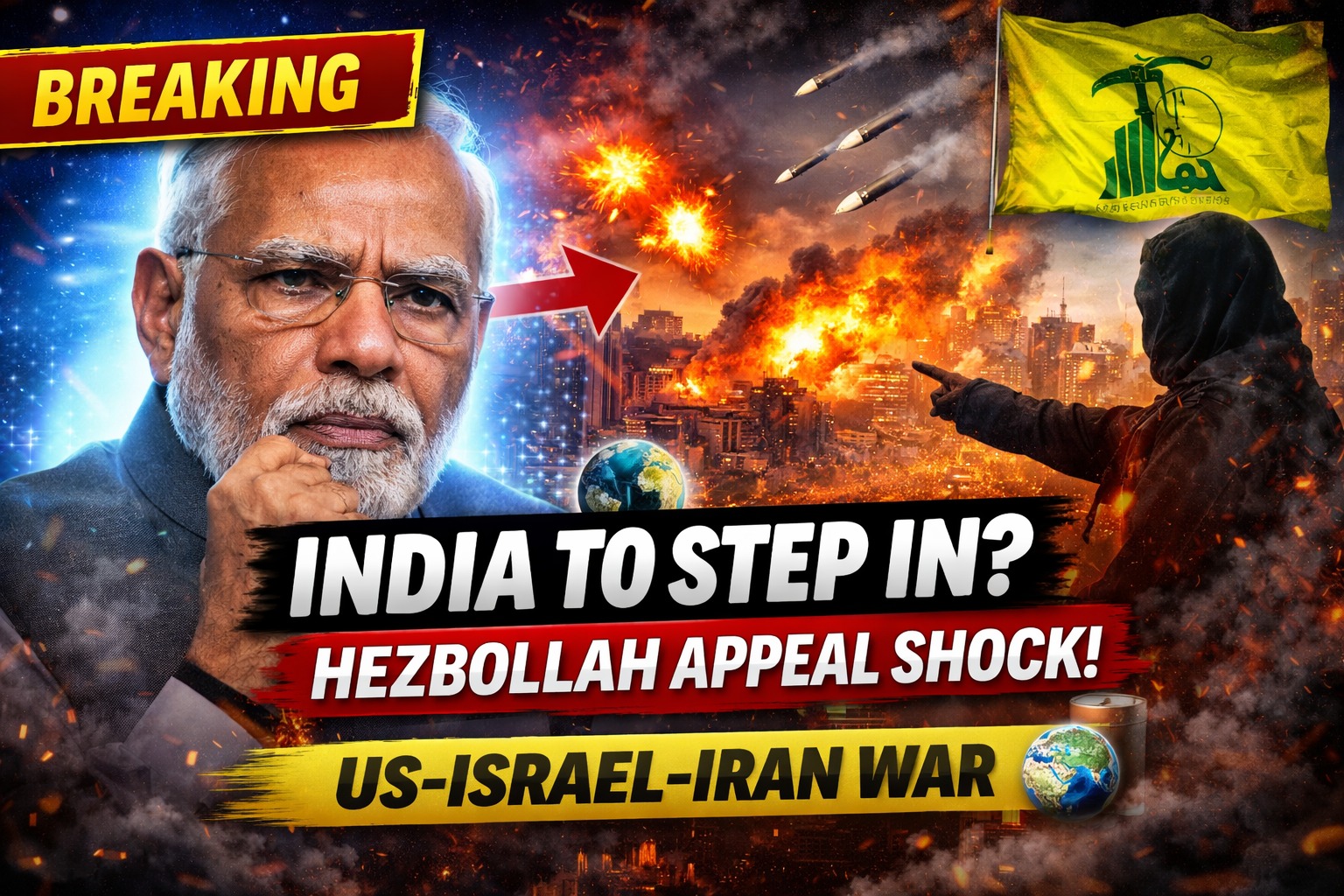
The ongoing US-Israel-Iran Conflict has rapidly expanded beyond a direct military confrontation into a wider regional crisis, drawing in multiple actors and intensifying instability across the Middle East. In a significant diplomatic development, Hezbollah has called on India to play a constructive role in halting the escalating war between Israel and Lebanon. This appeal highlights how the conflict is no longer confined to traditional battle lines but is evolving into a complex geopolitical crisis with global implications.
Hezbollah Calls for India’s Intervention Amid US-Israel-Iran Conflict
According to the report, as the US-Israel-Iran Conflict deepens, Hezbollah—a powerful Iran-backed group based in Lebanon—has urged the international community to step in and pressure Israel to stop its military operations. Among the nations mentioned, India has emerged as a key potential mediator due to its growing diplomatic influence.
In a recent interaction, Ibrahim Mosvi stated that countries like India, along with global institutions, could play a decisive role in ensuring that Israel adheres to the ceasefire agreement reached in November 2024.
According to Mosvi, Hezbollah is open to negotiations and does not seek further escalation. However, he emphasized that peace can only be achieved if Israel respects international agreements and halts its military campaign in Lebanon.
How the US-Israel-Iran Conflict Escalated
The roots of the current crisis lie in the initial U.S. and Israeli airstrikes on Iran, which marked the beginning of the US-Israel-Iran Conflict. These strikes triggered a series of retaliatory actions, transforming the situation into a multi-front war across the Middle East.
Following these developments, Hezbollah entered the conflict on March 2 by launching rocket attacks on Israel. The group described this move as retaliation for the killing of Iran’s supreme leadership during the early phase of the war.
Israel responded with widespread airstrikes across Lebanon and expanded its ground operations, particularly in southern regions. The escalation has led to a prolonged and deadly confrontation, with both sides unwilling to back down.
Israel Expands Military Operations in Lebanon
Under the leadership of Benjamin Netanyahu, Israel has intensified its military offensive against Hezbollah. The Israeli government has directed its armed forces to expand operations in southern Lebanon, aiming to establish a broader security buffer zone.
Recent developments indicate that Israeli troops are advancing deeper into Lebanese territory, targeting Hezbollah strongholds and attempting to neutralize rocket-launching capabilities.
Netanyahu has stated that these actions are necessary to ensure Israel’s long-term security and to counter threats posed by Iran-backed groups in the region.
Humanitarian Crisis in Lebanon
The US-Israel-Iran Conflict has had devastating consequences for civilians, particularly in Lebanon. According to reports, over 1,100 people have been killed, and more than 1.2 million have been displaced due to ongoing hostilities.
Entire towns and villages in southern Lebanon have been severely damaged or destroyed. The scale of displacement and destruction has raised serious humanitarian concerns, with international organizations calling for immediate intervention and relief efforts.
The conflict has also strained Lebanon’s already fragile infrastructure, leaving many without access to basic necessities such as food, water, and medical care.
Hezbollah’s Stand: Defensive or Aggressive?
Hezbollah maintains that its actions are purely defensive and aimed at protecting Lebanese sovereignty. The group argues that Israel has consistently violated ceasefire agreements and continued military operations even during periods of supposed peace.
Mosvi rejected claims that Hezbollah initiated the current war, asserting that hostilities never truly ceased after the November 2024 agreement. He accused Israel of continuing attacks during the ceasefire period, resulting in significant casualties and destruction.
Hezbollah also claims that its resistance is part of a broader struggle against occupation and expansionism, rather than an attempt to provoke conflict.
Iran’s Role and Regional Spillover Amid US-Israel-Iran Conflict
Iran remains a central player in the US-Israel-Iran Conflict, providing support to Hezbollah and other allied groups across the region. The involvement of Iran has transformed the conflict into a broader geopolitical struggle, with multiple fronts emerging simultaneously.
The war has already spread beyond Iran and Lebanon, affecting countries across the Gulf region. Missile and drone attacks, maritime tensions, and disruptions to global trade routes have all been reported.
Additionally, other Iran-backed groups, such as the Houthis in Yemen, have joined the conflict, further escalating tensions and expanding the scope of the war.
Global Economic Impact
One of the most significant consequences of the US-Israel-Iran Conflict is its impact on the global economy. The conflict has disrupted key energy supply routes, particularly in the Strait of Hormuz, leading to volatility in oil prices.
Countries like India, which rely heavily on oil imports, are particularly vulnerable to these disruptions. Rising fuel prices and supply uncertainties could have far-reaching effects on inflation and economic stability.
Protests have already been reported in India highlighting concerns over rising fuel costs and economic strain linked to the conflict.
India’s Strategic Position
India has so far maintained a balanced and cautious approach to the US-Israel-Iran Conflict. While it has called for de-escalation and dialogue, it has avoided taking sides in the conflict.
India’s diplomatic stance reflects its strategic interests in maintaining relations with all major players involved, including the United States, Israel, and Iran.
However, Hezbollah’s call for India to intervene places New Delhi in a delicate position. While India has the diplomatic credibility to act as a mediator, direct involvement in such a complex conflict carries significant risks.
Diplomatic Challenges and the Role of the International Community
The ongoing crisis highlights the limitations of the international community in managing large-scale conflicts. Despite calls for ceasefire and negotiations, the situation continues to deteriorate.
Hezbollah has criticized global institutions, including the United Nations, for failing to enforce ceasefire agreements and hold parties accountable.
The group argues that stronger diplomatic pressure is needed to bring about a resolution and prevent further loss of life.
What Lies Ahead?
The US-Israel-Iran Conflict shows no immediate signs of resolution. With multiple actors involved and military operations continuing across different fronts, the risk of further escalation remains high.
The situation in Lebanon is particularly concerning, as it represents a key battleground in the broader regional conflict. The involvement of Hezbollah, backed by Iran, and Israel’s aggressive military response have created a volatile and unpredictable environment.
India’s potential role as a mediator could be crucial in shaping the future trajectory of the conflict. However, any meaningful progress will require coordinated efforts from multiple global powers and a willingness from all parties to engage in dialogue.
Summary
The US-Israel-Iran Conflict has expanded into a wider regional crisis, drawing in Hezbollah and escalating tensions between Israel and Lebanon. Hezbollah has called on India and the international community to pressure Israel into adhering to the November 2024 ceasefire agreement. With over 1,100 deaths and more than 1.2 million displaced in Lebanon, the humanitarian situation is worsening. Israel continues to expand its military operations under Prime Minister Benjamin Netanyahu, while Hezbollah maintains that its actions are defensive. As the conflict spreads across the Middle East, global economic and security concerns are rising, making diplomatic intervention more critical than ever.
Disclaimer
This article is based on official statements and publicly available information at the time of publication. The global energy situation is dynamic and may change with evolving geopolitical developments.
The content is intended for informational purposes only and should not be considered financial or policy advice. Readers are encouraged to refer to official sources for the latest updates.
NoCap Times does not independently verify all claims and shall not be held responsible for any inaccuracies or omissions.