

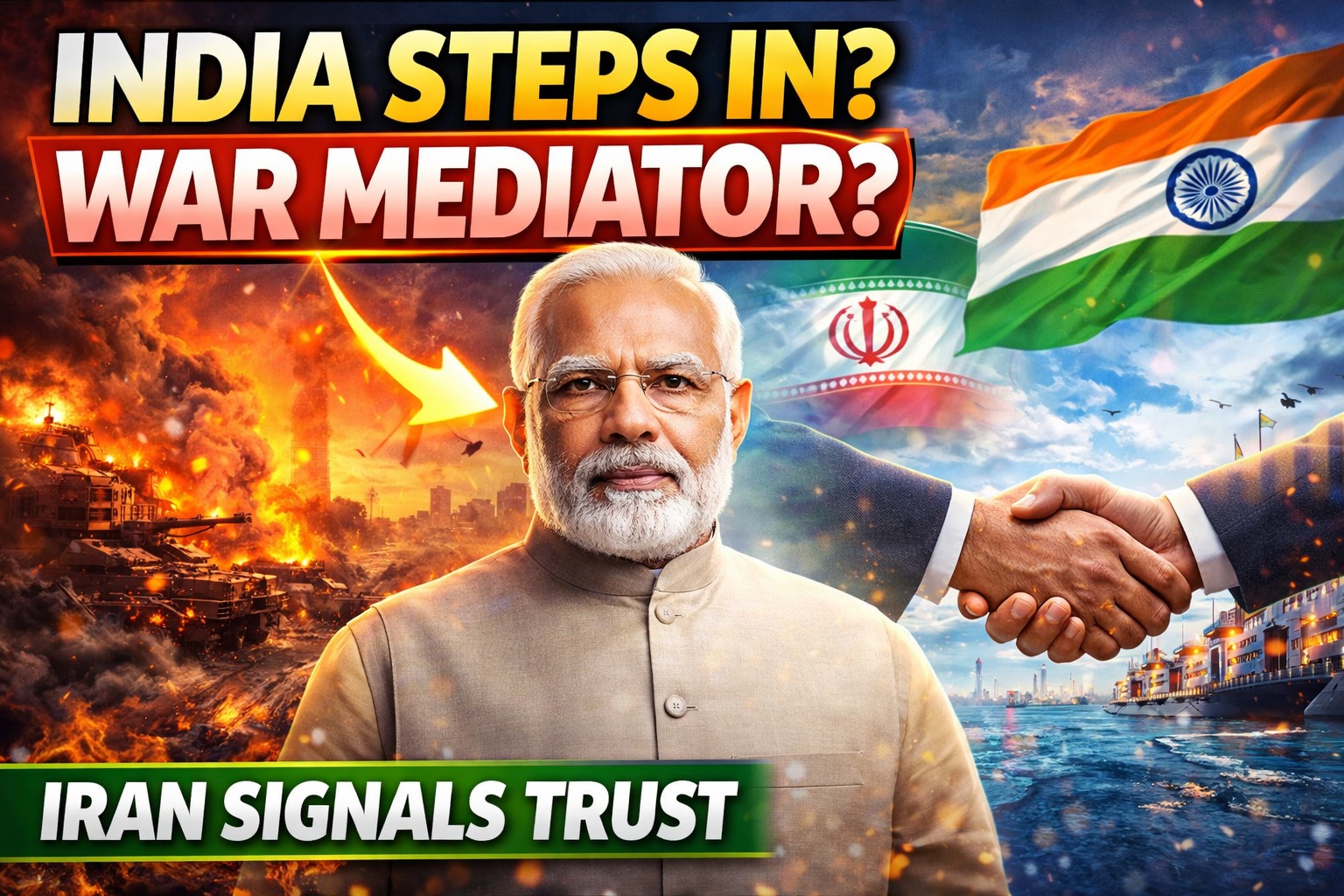
India Emerges as a Potential Mediator in Middle East Tensions, Says Iran Envoy
Amid escalating Middle East Tensions, India is increasingly being seen as a credible and balanced global actor capable of contributing to peace efforts. As Middle East Tensions continue to shape global geopolitics, New Delhi’s diplomatic positioning has drawn growing international attention. In a significant statement, Iran’s Ambassador to India, Mohammad Fathali, expressed confidence in India’s ability to play a constructive role in easing Middle East Tensions, particularly between Iran and the United States. With Middle East Tensions showing little sign of easing, India’s role as a potential mediator is becoming more crucial than ever.
As the region grapples with escalating conflict involving multiple stakeholders, including Iran, the United States, and Israel, the call for neutral and trusted intermediaries has grown louder. In this context, India’s unique diplomatic positioning and historical relationships with all sides have placed it in a potentially influential role amid rising Middle East Tensions.
India’s Strategic Diplomatic Position
India’s foreign policy has long been guided by principles of strategic autonomy, non-alignment, and balanced engagement with global powers. Unlike many countries that are closely aligned with one bloc or another, India has maintained strong and independent ties with a wide range of nations, including those currently at odds in the Middle East.
Iran’s envoy highlighted this very aspect, noting that India shares long-standing historical, cultural, and strategic relationships with Iran, while also maintaining robust partnerships with the United States and Israel. This rare diplomatic balance allows India to engage with all parties without being perceived as biased.
Over the years, India has carefully navigated complex geopolitical landscapes, ensuring that its interests are protected while also contributing to regional stability. This approach has earned the country credibility and trust on the global stage.
Iran’s Perspective on India’s Role Amid Middle East Tensions
Ambassador Mohammad Fathali’s remarks reflect Tehran’s belief that India can act as a stabilizing force in the current crisis. According to him, India is well-positioned to play an “effective and positive” role in reducing tensions due to its neutral stance and constructive engagement with all involved nations.
Iran’s confidence in India stems from decades of cooperation in areas such as energy, trade, and connectivity. Despite international sanctions and political challenges, India has continued to maintain dialogue and engagement with Iran, demonstrating its commitment to long-term partnerships.
At the same time, India’s deepening strategic and economic ties with the United States and its growing defense cooperation with Israel further strengthen its credibility as a bridge between opposing sides.
The Broader Middle East Crisis
The Middle East has once again become a focal point of global concern, with escalating tensions threatening regional stability and international security. The ongoing conflict has implications far beyond the region, affecting global energy markets, trade routes, and geopolitical alliances.
The involvement of major powers such as the United States and regional players like Israel and Iran has added complexity to the situation. Any escalation could have far-reaching consequences, including disruptions in oil supply and increased volatility in global markets.
In such a scenario, the need for diplomatic intervention and conflict resolution becomes critical. Countries that can maintain open lines of communication with all parties are essential for de-escalation efforts.
Why India Stands Out as a Mediator Amid Middle East Tensions (Iran-US-Israel War)
India’s potential role as a mediator is not accidental—it is the result of decades of consistent diplomatic engagement and a carefully calibrated foreign policy.
- Strong Relations with All Stakeholders
India enjoys strong bilateral relations with Iran, the United States, and Israel. This unique position allows it to communicate effectively with each country and understand their perspectives.
With Iran, India shares historical ties and has collaborated on key infrastructure projects such as the Chabahar Port, which serves as a strategic gateway to Afghanistan and Central Asia. With the United States, India has developed a comprehensive global partnership encompassing trade, defense, and technology. Meanwhile, its relationship with Israel has strengthened significantly in areas such as defense, agriculture, and innovation.
- Credibility as a Neutral Actor
India’s consistent emphasis on dialogue and peaceful resolution of conflicts has enhanced its reputation as a neutral and responsible global actor. It has avoided taking extreme positions and has instead advocated for diplomacy and multilateral engagement.
This neutrality is particularly valuable in a polarized geopolitical environment, where trust deficits often hinder meaningful negotiations.
- Experience in Multilateral Diplomacy
India has actively participated in various international forums, including the United Nations, where it has consistently supported peacekeeping and conflict resolution efforts. Its experience in multilateral diplomacy equips it with the skills and institutional knowledge required to mediate complex disputes.
- Economic and Strategic Interests
India’s interest in maintaining stability in the Middle East is also driven by economic considerations. The region is a major source of energy imports for India, and any disruption can have significant implications for its economy.
Additionally, millions of Indians live and work in the Middle East, making regional stability a matter of national importance.
Challenges in Playing a Mediator Role
While India’s credentials as a mediator are strong, the path to playing an active role in conflict resolution is not without challenges.
One of the primary challenges is the complexity of the Middle East conflict itself. The region’s geopolitical dynamics are influenced by historical grievances, ideological differences, and competing strategic interests.
Another challenge is the involvement of multiple global powers, each with its own agenda. Navigating these competing interests requires careful diplomacy and a nuanced understanding of the situation.
Moreover, India must balance its own strategic partnerships while engaging in mediation efforts. Maintaining neutrality without jeopardizing key relationships will be crucial.
Opportunities for India on the Global Stage
If India successfully contributes to de-escalation efforts, it could significantly enhance its standing as a global leader. Playing a constructive role in resolving international conflicts would reinforce India’s image as a responsible and influential power.
Such a role would also align with India’s aspirations of having a greater voice in global governance, including its long-standing bid for a permanent seat on the United Nations Security Council.
Furthermore, active involvement in peace efforts could open new avenues for diplomatic and economic cooperation, strengthening India’s position in the international arena.
The Way Forward
For India to effectively contribute to reducing tensions, a multi-pronged approach will be necessary:
- Diplomatic Engagement: Maintaining continuous dialogue with all parties involved to facilitate communication and build trust.
- Multilateral Cooperation: Working with international organizations and like-minded countries to support peace initiatives.
- Strategic Neutrality: Ensuring that its actions are perceived as unbiased and focused on conflict resolution.
- Economic Diplomacy: Leveraging trade and economic ties to encourage cooperation and stability.
India’s ability to balance these elements will determine the extent of its impact on the situation.
Read Related News- Escalation in Gulf as Iranian Drones Strike Kuwait Airport Fuel Tanks Sparking Fire
Conclusion
Iran’s endorsement of India as a potential mediator in the Middle East highlights the country’s growing influence in global diplomacy. With its strong relationships across geopolitical divides, commitment to peaceful engagement, and strategic importance, India is uniquely positioned to contribute to de-escalation efforts.
While challenges remain, the opportunity for India to play a meaningful role in shaping global peace is significant. As tensions continue to rise, the world will be watching closely to see whether India steps forward as a bridge between conflicting powers.
Summary
Iran’s Ambassador to India, Mohammad Fathali, has expressed confidence that India can play a constructive role in reducing tensions between Iran, the United States, and Israel amid the ongoing Middle East crisis. Highlighting India’s balanced relationships with all parties, he described the country as a credible and neutral actor capable of facilitating dialogue. With its strategic diplomacy and global standing, India is seen as a potential mediator in efforts to de-escalate regional tensions.
Disclaimer
This article is based on official statements and publicly available information at the time of publication. The global energy situation is dynamic and may change with evolving geopolitical developments.
The content is intended for informational purposes only and should not be considered financial or policy advice. Readers are encouraged to refer to official sources for the latest updates.
NoCap Times does not independently verify all claims and shall not be held responsible for any inaccuracies or omissions.