

India–Israel Defence Partnership Set to Expand: PM Narendra Modi Visit to Boost Anti-Ballistic Missile, Laser Weapons and Advanced Strike Capabilities
India is set to significantly elevate its defence partnership with Israel as Prime Minister Narendra Modi prepares for a two-day visit to the country from February 25–26. The visit is expected to reinforce the already robust strategic relationship between the two nations, with particular focus on advanced defence technologies, joint research, and long-term security cooperation.
Although no major defence contracts are likely to be formally signed during the visit, officials indicate that the engagement will lay the groundwork for deeper collaboration in cutting-edge military systems. India and Israel share an expanding defence partnership that is projected to be worth nearly USD 10 billion in the coming years. Rather than isolated agreements, defence cooperation between the two countries has evolved into a continuous and structured engagement, reflecting the high level of trust between the two strategic partners.
A central element of the discussions is expected to be the joint development of anti-ballistic missile (ABM) defence systems. For India, strengthening missile defence has become a strategic priority under its broader national security vision, often referred to as Mission Sudershan. The objective is to shield critical Indian territories and urban centres from potential long-range missile threats. Israel’s expertise in multi-layered missile defence architecture makes it a natural partner in this domain.
Israel has developed one of the world’s most sophisticated missile defence networks, including the long-range Arrow system, the medium-range David’s Sling, and the short-range Iron Dome. These systems have demonstrated operational effectiveness under real combat conditions. In particular, Israel’s interception capabilities were widely noted following large-scale missile attacks in the region, where its defence shield achieved a high interception rate. India is keen to draw from this technological experience to enhance its own layered missile defence framework.
Beyond missile defence, New Delhi is also exploring cooperation in high-technology domains such as directed-energy (laser) weapons and advanced stand-off systems. Reports suggest that Israel may be more forthcoming in sharing critical defence technologies than in previous years, signalling a new phase of openness and strategic alignment between the two nations.
India is simultaneously expanding its arsenal of long-range stand-off weapons and loitering munitions capable of being launched from land, air, and sea platforms. These systems are designed to strike targets deep within hostile territory while remaining beyond the reach of adversary air defence networks. During recent cross-border operations, including Operation Sindoor, Indian forces reportedly deployed precision-guided munitions and loitering drones to neutralise strategic targets and suppress advanced air defence installations. The use of systems such as the Rampage air-to-surface missile and kamikaze drones underscored the growing importance of stand-off precision strike capabilities in modern warfare.
Looking ahead, India is expected to consider procuring advanced systems such as the Spice 1000 precision-guided bomb kit, the Air LORA air-launched ballistic missile, and the Ice Breaker long-range missile platform. In the maritime domain, the Indian Navy is also evaluating the extended-range Barak 8 surface-to-air missile system to enhance protection for its warships against aerial and missile threats.
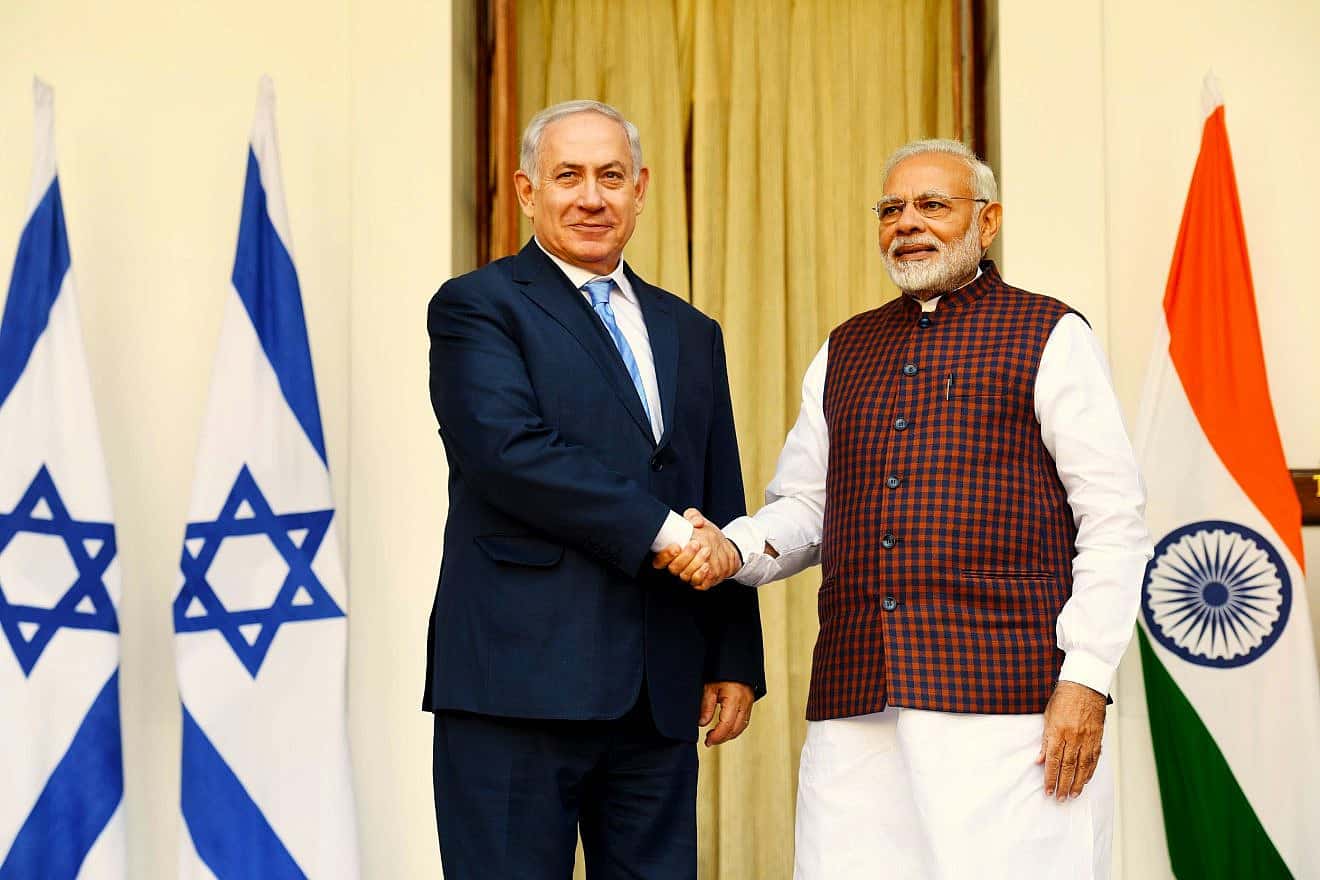
The strategic convergence between Prime Minister Modi and his Israeli counterpart, Benjamin Netanyahu, has played a significant role in accelerating bilateral ties. Both leaders share common positions on counter-terrorism and regional security challenges, often voicing unified stances in international forums.
In addition to defence cooperation, the upcoming visit will also feature discussions on collaboration in science and technology, agriculture innovation, water management, and emerging fields such as quantum computing. This multidimensional engagement highlights the broadening scope of India-Israel relations, extending beyond security to encompass technological and developmental partnerships.
As geopolitical uncertainties continue to shape global security dynamics, India’s outreach to Israel underscores its commitment to building advanced defence capabilities through trusted international partnerships. The forthcoming discussions are expected to reinforce not only military preparedness but also the long-term strategic alignment between the two democracies.
Summary:
India is poised to deepen defence cooperation with Israel during Prime Minister Narendra Modi’s February 25–26 visit. The two nations are focusing on joint development of anti-ballistic missile defence systems, laser weapons, and long-range stand-off missiles. While no new defence deals are expected to be signed, the partnership—valued at nearly USD 10 billion—continues to expand. Israel’s advanced missile defence systems, including Arrow, David’s Sling, and Iron Dome, are of particular interest to India. Discussions will also cover broader collaboration in technology, agriculture, water management, and quantum computing, reflecting the growing strategic alignment between the two countries.