

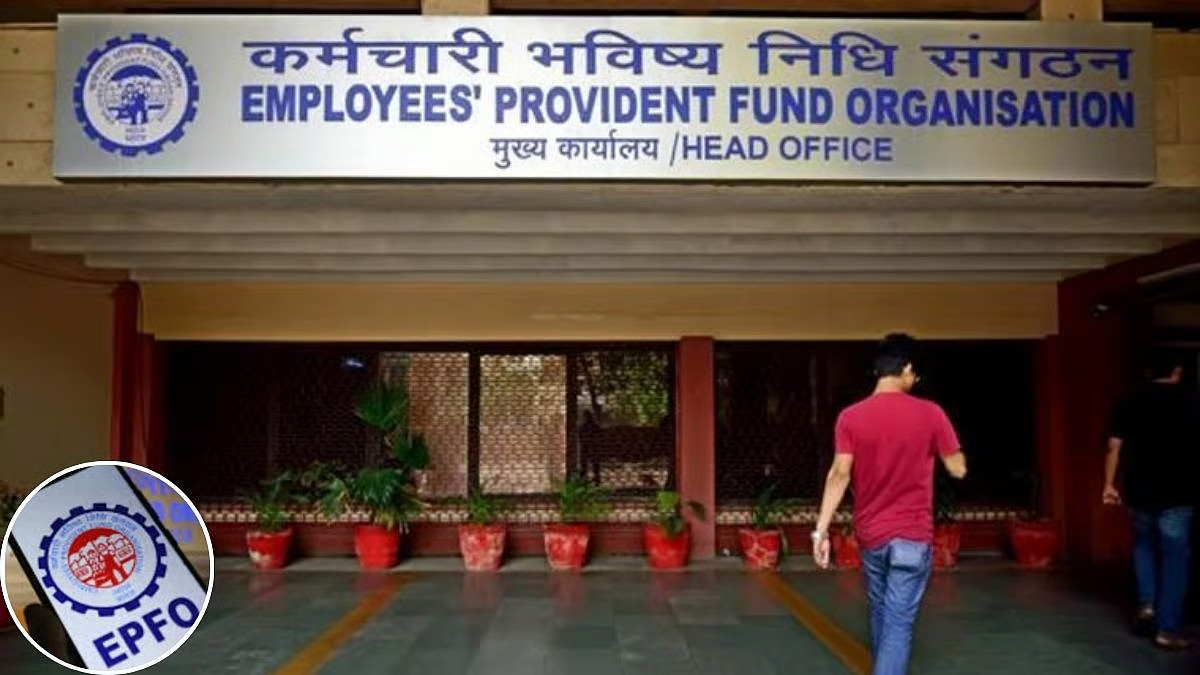
EPFO Plans Auto-Settlement System to Unlock ₹5,200 Crore from Dormant Accounts
In a major step toward improving accessibility and reducing unclaimed savings, Employees’ Provident Fund Organisation (EPFO) is working on introducing an automated settlement mechanism to facilitate seamless withdrawals from dormant accounts.
The initiative aims to unlock thousands of crores lying idle in inactive accounts while simplifying the withdrawal process for millions of subscribers across India.
Rising Unclaimed Balances Trigger Reform
The move comes in response to a growing pool of unclaimed funds within EPFO accounts.
As of February 2026:
- Total unclaimed balance: ₹10,181 crore
- Total inactive accounts: 31.8 lakh
A significant portion of these accounts has remained inactive for extended periods:
- Around 7 lakh accounts dormant for over 20 years
- Several others inactive for 5 to 20 years
This accumulation of idle funds highlights both administrative challenges and a lack of awareness or accessibility among subscribers.
What Is the Auto-Settlement System?
The proposed auto-settlement system is designed to eliminate the need for manual claim filing.
Instead of requiring users to submit withdrawal requests, the system will:
- Automatically identify eligible dormant accounts
- Verify subscriber details (especially Aadhaar linkage)
- Transfer funds directly to registered bank accounts
This shift represents a move toward a more technology-driven and user-friendly approach in managing retirement savings.
Unlocking ₹5,200 Crore in the First Phase
In its initial rollout, EPFO plans to:
- Cover approximately 8.1 lakh Aadhaar-verified accounts
- Unlock nearly ₹5,200 crore in unclaimed funds
This targeted approach ensures that the system is first implemented where verification and data accuracy are strongest, reducing the risk of errors.
Pilot Program to Test Efficiency
Before scaling the system nationwide, EPFO will conduct a pilot program.
Key features of the pilot phase:
- Focus on accounts with balances up to ₹1,000
- Test system efficiency and processing timelines
- Identify operational or technical challenges
This cautious rollout strategy allows EPFO to refine the system before handling larger-value accounts.
Distribution of Dormant Funds
While many inactive accounts contain relatively small balances, a significant portion of funds is concentrated in higher-value accounts.
Breakdown:
- 14,000 accounts hold balances above ₹5 lakh
- 38,000 accounts fall in the ₹1 lakh to ₹5 lakh range
This indicates that while small accounts dominate in number, large-value accounts contribute significantly to the total unclaimed corpus.
Eligibility Criteria and Account Classification
EPFO has specific rules for determining when an account becomes inoperative.
Key criteria:
- An account is considered inoperative if no contributions are made for three years after retirement at age 55
- For members below 55:
- Funds continue to earn interest
- Even if no fresh contributions are made
The initial rollout of auto-settlement is expected to prioritize:
- Aadhaar-verified accounts
- Members who joined after October 2017
This ensures smoother implementation due to better data availability and digital integration.
Benefits for Subscribers
The introduction of auto-settlement offers several advantages:
- Faster Access to Funds
Subscribers will no longer need to go through lengthy claim processes.
- Reduced Paperwork
Automation eliminates the need for manual documentation and verification.
- Improved Transparency
Direct transfers reduce ambiguity and delays.
- Recovery of Forgotten Savings
Many individuals who lost track of their EPFO accounts can now regain access to their funds.
Administrative and Operational Advantages
From an institutional perspective, the initiative helps EPFO:
- Reduce administrative backlog
- Improve operational efficiency
- Minimize manual intervention
- Enhance system transparency
It also aligns with the government’s broader push toward digital governance and ease of doing business.
Challenges in Implementation
While the auto-settlement system offers significant benefits, certain challenges remain:
- Data Accuracy
Ensuring that bank and Aadhaar details are correct is critical.
- Fraud Prevention
Automated transfers must include safeguards against unauthorized withdrawals.
- Technical Infrastructure
Handling large volumes of transactions requires robust IT systems.
- Awareness Among Subscribers
Many account holders may still be unaware of their dormant balances.
Addressing these challenges will be essential for the success of the initiative.
Broader Impact on Financial Ecosystem
The move is expected to have wider implications for India’s financial ecosystem:
- Increased liquidity in the hands of individuals
- Improved trust in retirement fund systems
- Encouragement for formal savings participation
It may also set a precedent for other financial institutions to adopt similar automated processes.
Aligning with Digital India Vision
The initiative aligns closely with India’s push toward digitization and financial inclusion.
By leveraging Aadhaar-based verification and automated systems, EPFO is moving toward a more:
- Efficient
- Transparent
- User-centric
framework for managing retirement savings.
The Road Ahead
Following the pilot phase, EPFO is expected to gradually expand the system to cover:
- Higher-value accounts
- A broader subscriber base
If successfully implemented, the auto-settlement mechanism could significantly reduce the volume of unclaimed funds in the system.
Over time, it may also evolve into a standard feature for account management, ensuring that funds are never left idle for extended periods.
Summary
EPFO is developing an auto-settlement system to enable direct transfer of funds from dormant accounts to subscribers’ bank accounts. The initiative aims to unlock ₹5,200 crore in its initial phase by covering 8.1 lakh Aadhaar-verified accounts.
A pilot program targeting small-balance accounts will precede a broader rollout. The move is expected to simplify withdrawals, reduce unclaimed balances, and improve operational efficiency while enhancing user convenience.
Disclaimer
This article is based on publicly available information, official statements, and media reports available at the time of publication. The content is intended solely for informational and educational purposes and should not be construed as investment advice.
While efforts have been made to ensure accuracy, the information presented may change as new developments emerge. Readers are advised to conduct their own research and consult financial advisors before making any investment decisions.
NoCap Times does not independently verify all claims or statements and shall not be held responsible for any inaccuracies or omissions.