

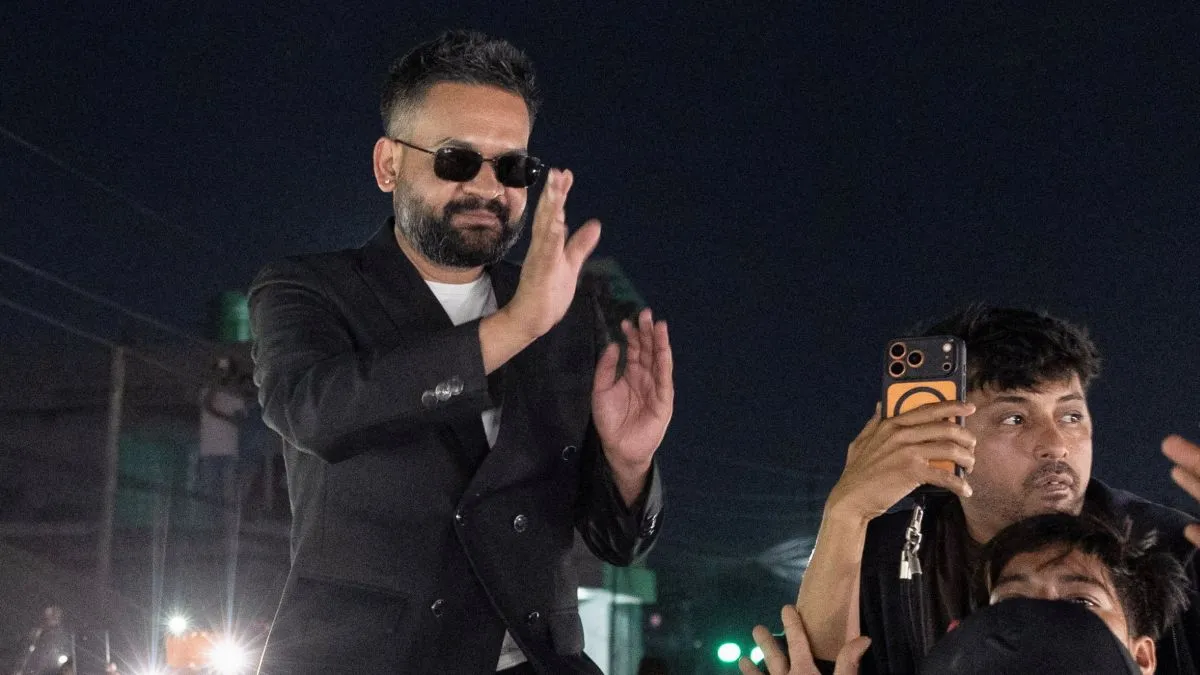
Rapper-Turned Politician Balen Shah Set to Become Nepal’s PM After Historic Election Victory
Balendra “Balen” Shah, a rapper-turned-politician and former mayor of Kathmandu, is set to become Nepal’s next prime minister after securing a record-breaking victory in the country’s parliamentary elections. Shah defeated veteran leader and former prime minister K. P. Sharma Oli in the Jhapa-5 constituency and led his Rastriya Swatantra Party to a sweeping win in direct parliamentary seats. The election, shaped by Gen-Z-led protests against corruption and traditional political leadership, signals a major generational shift in Nepal’s politics.
Historic Victory in Nepal’s Parliamentary Elections
Nepal has witnessed a dramatic political shift as Balendra Shah, widely known as Balen, secured a decisive victory in the country’s parliamentary elections.
Shah was elected to the House of Representatives of Nepal from the Jhapa District constituency with 68,348 votes, the highest number of votes recorded by any candidate in Nepal’s election history.
He defeated former prime minister Khadga Prasad Sharma Oli, a veteran leader who had long held the constituency and received 18,734 votes in the contest.
Landslide Win for Rastriya Swatantra Party
Shah’s Rastriya Swatantra Party delivered a strong performance in the direct parliamentary elections, securing more than 120 out of 165 seats chosen through the first-past-the-post system.
The sweeping result positions Shah to become Nepal’s youngest prime minister, reflecting a significant shift in voter sentiment.
At 35 years old, Shah represents a younger generation of leaders in a country where traditional political leadership has often been dominated by politicians in their 60s and 70s.
From Rap Music to National Leadership
Before entering national politics, Balen Shah was widely known in Nepal as a rapper and structural engineer.
He first gained major political visibility after being elected mayor of Kathmandu, where he developed a reputation for advocating transparency and administrative reform.
Shah later resigned from the mayor’s post to contest national elections and formally joined the Rastriya Swatantra Party in December 2025, soon becoming its prime ministerial candidate.
His campaign combined traditional political outreach with a strong digital presence, including an extensive social media strategy and support from the Nepali diaspora.
His song “Nepal Haseko” (Nepal Smiling) became widely popular during the protests, attracting millions of views online and becoming an anthem for political change among young voters.
Gen-Z Protests Spark Political Change
The election followed widespread Gen-Z-led protests in September 2025, which demanded an end to corruption, nepotism, and long-standing political dominance by traditional parties.
The protests were initially triggered by government attempts to restrict access to social media platforms, but they quickly evolved into a broader movement calling for systemic reforms.
During the unrest, clashes between protesters and police resulted in the deaths of more than 70 demonstrators, many of them students.
The crisis eventually led to the dissolution of parliament by Ramchandra Paudel, paving the way for fresh elections.
Former chief justice Sushila Karki was subsequently appointed caretaker prime minister until the elections were held.
How Nepal’s Electoral System Works
Nepal follows a mixed parliamentary electoral system established under its 2015 constitution.
The House of Representatives has 275 members, chosen through two methods:
- First-Past-the-Post (FPTP) System
- 165 seats are filled through direct constituency elections.
- The candidate receiving the highest number of votes wins the seat.
- Proportional Representation (PR) System
- The remaining 110 seats are allocated to political parties based on their share of the nationwide vote.
Voters cast two ballots — one for a local candidate and another for a political party.
Parties must receive at least 3% of the total valid votes to qualify for seats under the proportional representation system.
Nepal uses the Sainte-Laguë method, an internationally recognised formula that distributes seats proportionally based on vote share.
Representation and Diversity Requirements
Nepal’s electoral system also includes constitutional provisions to ensure representation from different communities.
Party lists submitted under the proportional representation system must include members from groups such as:
- Dalits
- Indigenous nationalities
- Khas-Arya communities
- Madhesi groups
- Tharu communities
- Muslim minorities
Additionally, at least 33% of Nepal’s parliament must be women, with additional female members drawn from party lists if direct election results fall short of the quota.
Nepal’s Evolving Democracy
Nepal has experienced major political transformations in recent decades.
The country remained under an absolute monarchy until 1990, when a popular movement introduced multi-party democracy.
A Maoist insurgency between 1996 and 2006 led to a decade-long conflict that resulted in thousands of deaths before a peace agreement ended the war.
In 2008, Nepal formally abolished its monarchy and became a federal democratic republic.
Since then, the country has experienced frequent political changes, with multiple coalition governments and leadership transitions.
Analysts believe the latest election result reflects widespread public frustration with traditional political elites and growing support for new leadership.
A New Political Era for Nepal?
Political observers say the strong mandate for the Rastriya Swatantra Party may allow the formation of a single-party government, something Nepal has not seen in many years.
However, analysts caution that meeting public expectations could be challenging.
The new leadership will need to address economic constraints, governance challenges, and institutional reforms while responding to the high hopes of voters who backed political change.
Summary
Balendra “Balen” Shah, a rapper-turned-politician and former Kathmandu mayor, is set to become Nepal’s next prime minister after winning a record number of votes in the Jhapa-5 constituency and leading the Rastriya Swatantra Party to a sweeping electoral victory. The election followed major Gen-Z-led protests against corruption and traditional political leadership. Nepal’s mixed electoral system combines direct constituency elections with proportional representation, ensuring both geographic representation and political diversity in parliament. Shah’s victory marks a generational shift in Nepal’s politics and signals strong public demand for reform.
Disclaimer
The information in this article is based on publicly available reports and election updates. Details related to final seat allocation and government formation may change as official results and political negotiations progress. The content is intended for informational purposes only. The publication does not independently verify third-party claims or assertions mentioned in developments.