
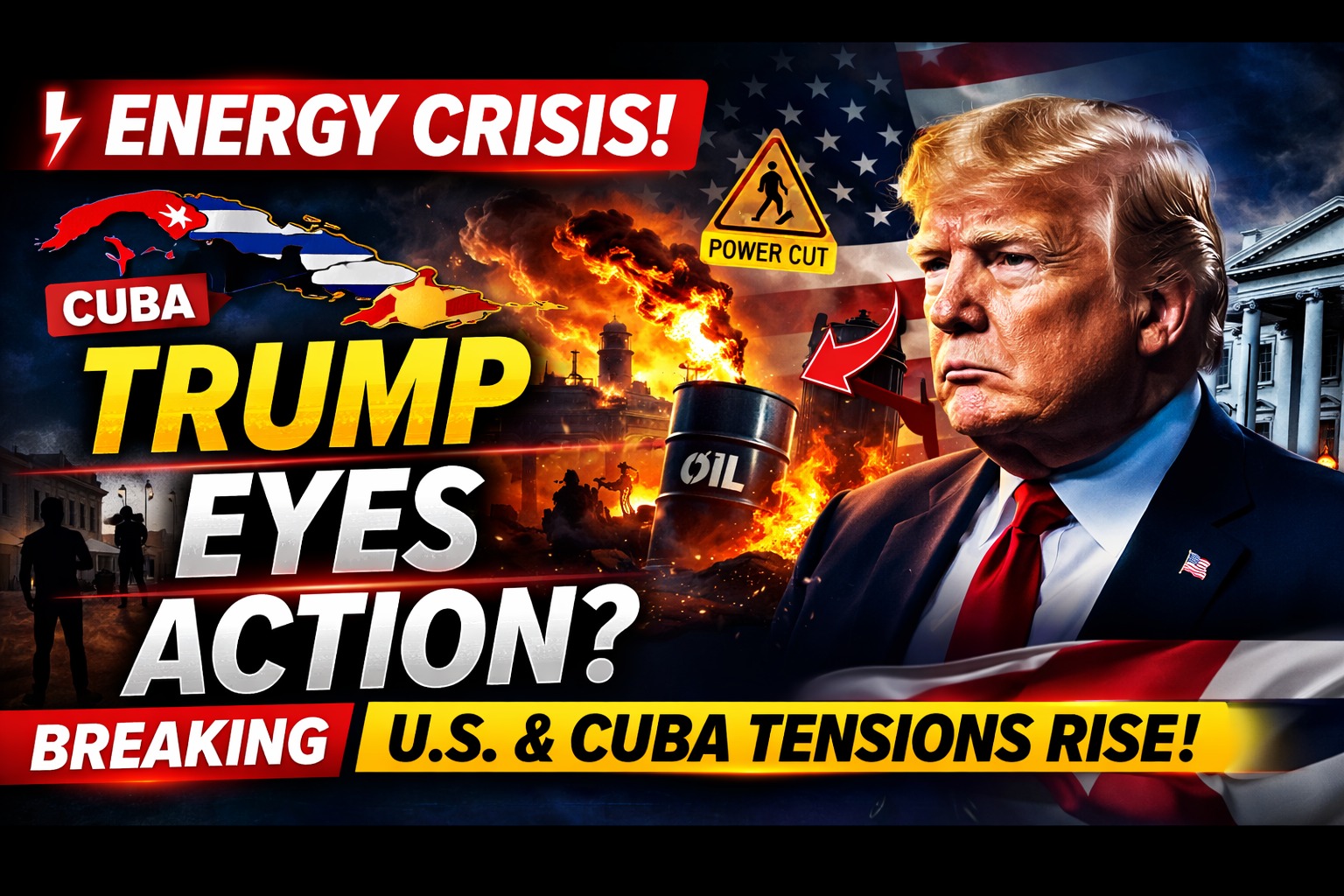
Trump Signals Possible Action on Cuba as Island Faces Deepening Energy Crisis
U.S. President Donald Trump has hinted that Cuba could soon become a major focus of his administration’s foreign policy, suggesting that significant political change on the island may occur in the near future.
His remarks came shortly after Cuba experienced another 24-hour nationwide blackout, highlighting the country’s worsening energy and economic crisis.
Speaking during an event alongside players from Inter Miami CF, including football stars Lionel Messi and Luis Suárez, Trump told Cuban-American businessman Jorge Mas, the club’s owner, that change in Cuba was inevitable.
Trump suggested that celebrations could soon follow developments on the island, claiming that Cuban authorities were eager to negotiate with the United States.
Trump Predicts Political Shift
In a later interview with CNN, Trump said that Cuba’s current political structure could collapse soon.
He also indicated that Marco Rubio, the U.S. Secretary of State, might play a role in upcoming diplomatic efforts involving the island.
While Trump said the administration’s immediate focus remained on Iran, he emphasized that Cuba would remain a priority in Washington’s regional strategy.
Economic Pressure Mounts on Havana
Cuba’s fragile economy has been under increasing strain in recent months, especially after political developments in Venezuela, historically one of the island’s closest allies.
The removal of Venezuelan leader Nicolás Maduro earlier this year disrupted the flow of subsidized crude oil that Cuba had long relied on. Without that supply, the country’s already aging energy infrastructure has struggled to maintain electricity production.
As a result, power outages have become frequent across the island.
Daily Life Disrupted by Energy Shortages
The fuel shortage has begun affecting everyday life across Cuba.
In many cities, garbage collection has slowed dramatically due to a lack of fuel for municipal trucks, leaving waste piling up in streets. Some residents have started burning trash piles at night, raising concerns about potential public health risks.
Even in relatively affluent neighborhoods of Havana, residents have resorted to cooking with firewood during prolonged electricity outages.
The country’s electricity system—largely dependent on aging Soviet-era power plants—requires imported oil to function efficiently. Without adequate fuel supplies, these facilities are unable to generate enough electricity to meet national demand.
Pressure Strategy by Washington
Trump and Rubio have repeatedly signaled that the United States intends to maintain pressure on the Cuban government rather than ease sanctions or economic restrictions.
Analysts believe this strategy may be designed to push Havana toward negotiations from a position of weakness.
However, critics argue that such policies disproportionately affect ordinary Cuban citizens while leaving the country’s political leadership relatively insulated.
Reports of Possible Talks
The Cuban government has not publicly confirmed reports that negotiations may be underway with U.S. officials.
According to some reports, a potential intermediary in Havana could be Raúl Guillermo Rodríguez Castro, the grandson of revolutionary leader Raúl Castro.
Facing mounting economic hardship, Cuban authorities have taken limited steps to allow private businesses to import fuel independently in order to keep operations running.
Still, these measures account for only a small fraction of the country’s overall energy needs.
Tourism Sector Also Hit
Cuba’s tourism industry—one of its most important sources of foreign currency—has also been affected by the ongoing fuel crisis.
Several airlines have begun suspending or reducing flights due to difficulties refueling aircraft in Havana. Among the latest carriers to halt operations is Air France.
With summer approaching, many Cubans worry that prolonged electricity shortages could become even more difficult to endure once temperatures rise and cooling systems become essential.
Summary
U.S. President Donald Trump has indicated that Cuba may soon become a major focus of his administration’s foreign policy, suggesting political change on the island could occur in the near future. His comments come as Cuba struggles with a severe energy crisis caused by fuel shortages and economic strain following political upheaval in Venezuela. The crisis has triggered widespread power outages, disrupted daily life, and impacted the tourism industry. While the United States continues to apply pressure on Havana, reports of possible negotiations between the two sides remain unconfirmed.
Disclaimer
This article is based on publicly available information and official statements. The content is intended for informational purposes only. The publication does not independently verify third-party claims or assertions mentioned in developments.