

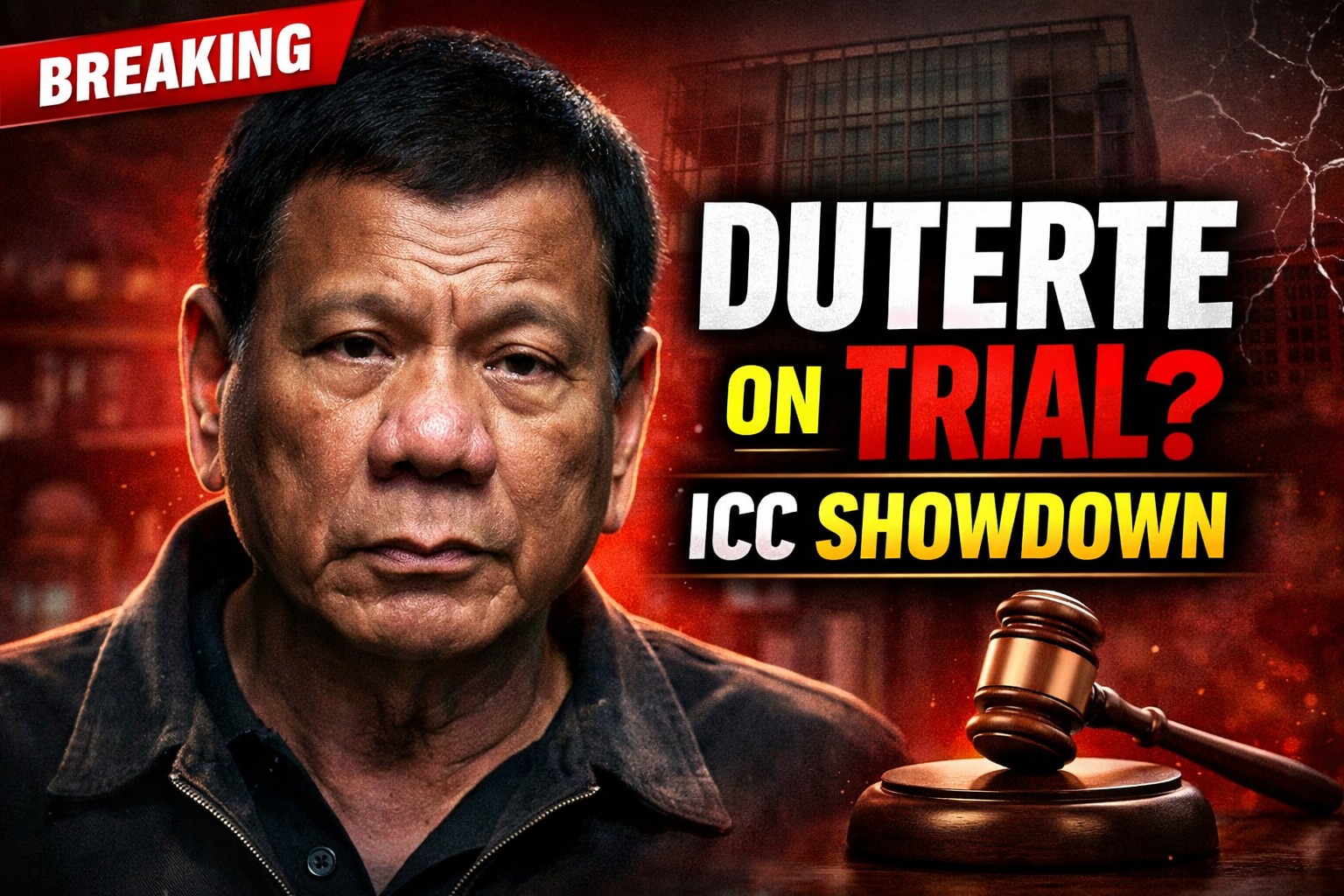
Rodrigo Duterte Faces ICC Trial Over Deadly Drug War — Historic Case Could Redefine Global Accountability
Duterte at The Hague: ICC Weighs Trial Over Philippines’ Violent Drug Crackdown
The International Criminal Court (ICC) has begun proceedings to determine whether former Philippine president Rodrigo Duterte will stand trial for alleged crimes against humanity linked to his controversial anti-drug campaign.
The hearing, known as a Confirmation of Charges proceeding, will assess whether prosecutors have presented sufficient evidence to move forward with a full trial. ICC prosecutors accuse Duterte of involvement in dozens of killings during his time as mayor of Davao City and later as president of the Philippines from 2016 to 2022.
According to the prosecution, Duterte may bear responsibility as an “indirect co-perpetrator,” allegedly enabling and directing security forces and others to carry out deadly operations under his flagship anti-drug initiative, widely referred to as “Operation Double Barrel.”
Allegations Surrounding the Drug War
Duterte’s anti-narcotics campaign was launched with a promise to eradicate illegal drugs and restore order. However, it quickly drew global scrutiny. Human rights organizations estimate that thousands — possibly as many as 30,000 — people were killed in police operations and vigilante-style attacks. Official figures are significantly lower.
Many of the deaths occurred in low-income communities, with critics arguing that small-time users and street-level suspects were disproportionately targeted, while major traffickers often escaped prosecution. Allegations include summary executions and excessive use of force. Philippine authorities have consistently maintained that officers acted in self-defense during legitimate operations.
ICC prosecutors have charged Duterte with multiple counts of crimes against humanity, including murder and attempted murder, covering actions between 2011 and 2019 — a period spanning his tenure as Davao mayor and the first half of his presidency.
Duterte has denied all accusations and refuses to recognize the ICC’s jurisdiction, arguing that the Philippines withdrew from the Rome Statute in 2019. He has opted not to appear in person at the hearing, citing age and health concerns.
A Polarizing Political Figure
Rodrigo Duterte rose to national prominence on a tough-on-crime platform. His political brand centered on blunt rhetoric and a strongman image, which resonated with voters frustrated by crime and inequality. His critics, however, point to inflammatory statements he made over the years, including remarks that sparked outrage internationally.
Despite the controversy, Duterte retains significant support, particularly in his political stronghold of Davao City. Even while detained in The Hague, he won the 2025 mayoral race there by a wide margin. His daughter, Sara Duterte, currently serves as vice-president of the Philippines, and his son Sebastian holds local office in Davao.
The family remains influential in Philippine politics, and supporters describe the ICC case as politically motivated.
Arrest and Political Fallout
Duterte’s arrest followed a dramatic shift in domestic political dynamics. After initially resisting ICC involvement, President Ferdinand Marcos Jr later permitted cooperation with the court amid growing tensions between the Marcos and Duterte families.
The two political dynasties had formed an alliance during the 2022 election, but relations deteriorated over time. Duterte was detained at Manila’s international airport and transferred to The Hague, marking a rare instance of a former Asian head of state being brought before the ICC.
His extradition process unfolded in real time on social media, as family members shared updates during his journey to Europe — offering an unusually transparent look at what is typically a discreet legal process.
Why the Case Matters
For the ICC, this case represents a crucial test of its authority and effectiveness. The court was established to prosecute the gravest crimes when national courts are unable or unwilling to act. However, it relies on member states for arrests and enforcement.
If the judges find sufficient evidence, a full trial could begin later this year. A written decision on whether to proceed is expected within 60 days after the hearing concludes.
In the Philippines, the case has deepened political divisions and could shape the country’s 2028 presidential election, in which Vice-President Sara Duterte is widely expected to be a key contender.
The proceedings mark a significant moment in international justice, raising complex questions about sovereignty, accountability, and the limits of executive power.
Summary
Former Philippine President Rodrigo Duterte is facing potential trial at the International Criminal Court over alleged crimes against humanity connected to his anti-drug campaign. Prosecutors argue that thousands were killed during operations that disproportionately affected poor communities. Duterte denies the allegations and rejects the ICC’s authority. The case has major political implications both domestically and internationally, testing the ICC’s ability to prosecute a former head of state and intensifying tensions within Philippine politics.
Disclaimer: This article is based on information compiled from multiple international news agencies, official court documents, and publicly available reports. While every effort has been made to ensure factual accuracy, legal proceedings are ongoing and subject to change. Readers are encouraged to refer to official ICC statements and verified government sources for the latest updates.