

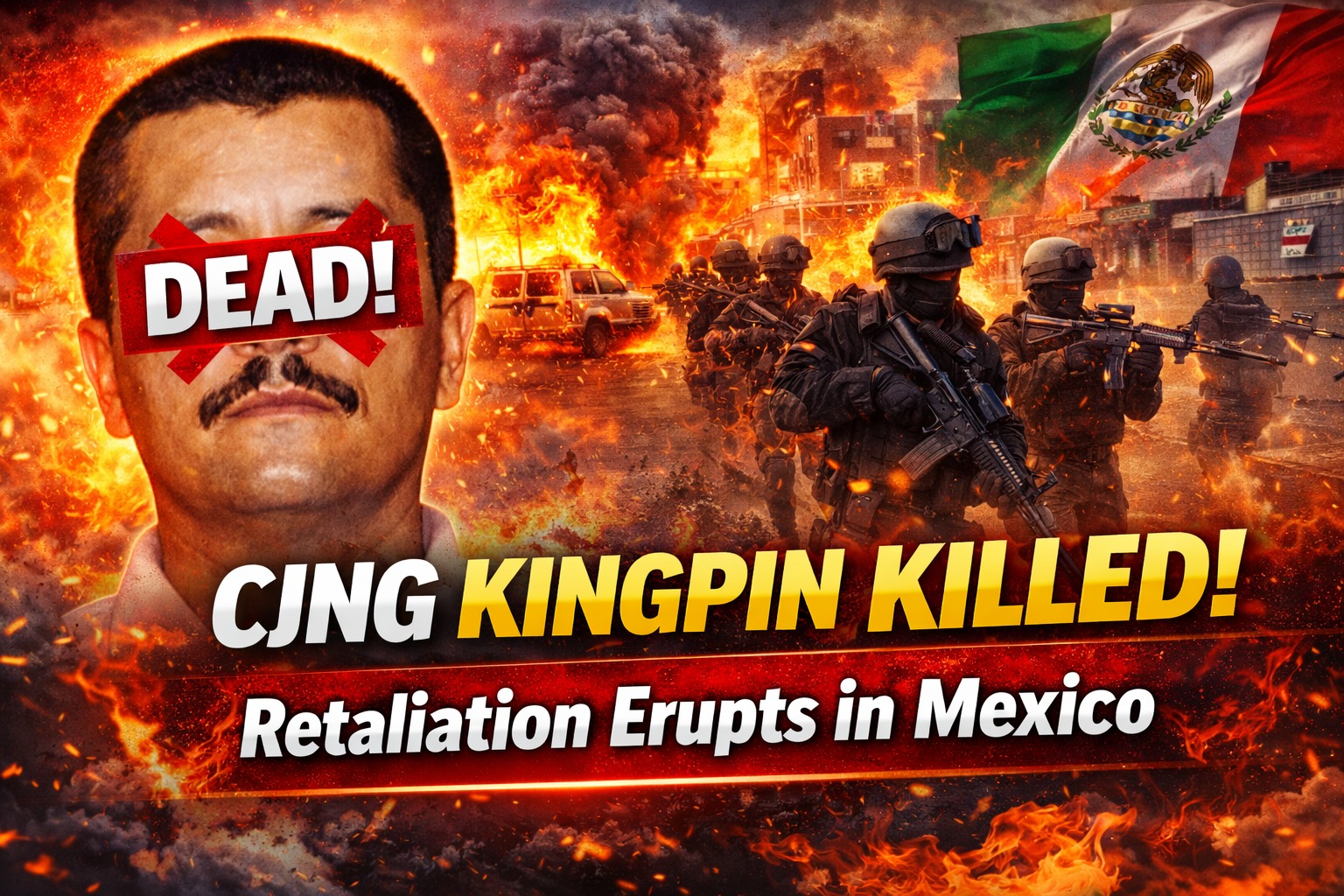
Mexican Forces Kill CJNG Chief ‘El Mencho’ in Jalisco Operation; Retaliatory Violence Erupts Across Western Mexico
Mexico City / Jalisco | February 23, 2026 — In one of the most consequential security operations in recent years, Mexican armed forces have killed Nemesio Rubén Oseguera Cervantes, widely known as “El Mencho,” the longtime head of the Jalisco New Generation Cartel (CJNG). His death followed a high-intensity military raid in the mountain town of Tapalpa in Jalisco, triggering immediate and widespread violence across multiple states.
Operation in Tapalpa Turns Deadly
According to Mexico’s Defense Ministry, elite Special Forces units—backed by the Air Force and National Guard—launched an operation on February 22 aimed at capturing Oseguera. The mission escalated when heavily armed cartel members reportedly opened fire on advancing troops.
Authorities said Oseguera, 59, was critically wounded during the confrontation. Several CJNG members were killed at the scene, while others died later from injuries sustained in the clash. Three soldiers were injured and evacuated by air. Oseguera later died while being transported to a hospital in Mexico City.
Mexican officials acknowledged intelligence-sharing cooperation with U.S. agencies in tracking the cartel leader. The U.S. government had previously offered a $15 million reward for information leading to his capture.
President Claudia Sheinbaum described the operation as a decisive action against organized crime and praised security forces for their coordination. She urged citizens to remain calm as authorities worked to contain the fallout.
Cartel Retaliation Sparks Chaos in Multiple States
Within hours of the announcement, suspected CJNG operatives launched coordinated retaliatory actions. In Guadalajara and surrounding regions, armed groups reportedly hijacked vehicles and set them ablaze to block highways—an intimidation tactic frequently used by cartels to paralyze security responses.
Violence quickly spread beyond Jalisco to neighboring states, including:
- Michoacán
- Colima
- Guanajuato
Local media and eyewitness reports described scenes of burning buses, shuttered businesses, and sporadic gunfire. Tourist hubs such as Puerto Vallarta saw thick plumes of smoke rising from blocked roadways. Several airports and ports reported temporary service disruptions, while public transportation was suspended in affected zones.
Jalisco Governor Pablo Lemus called on residents to stay indoors, closed schools, and halted large gatherings, citing security concerns. Emergency services and federal reinforcements were deployed to stabilize the situation.
The U.S. Embassy in Mexico issued advisories urging American citizens in western Mexico to shelter in place. Other foreign governments released similar alerts.
Power Vacuum and Uncertain Aftermath
Security analysts believe Oseguera’s death represents a critical blow to the CJNG, which has grown into one of Mexico’s most powerful and globally connected trafficking networks. However, experts caution that cartel decapitation strategies often lead to internal struggles and short-term spikes in violence as rival factions compete for control.
The swift mobilization of coordinated retaliation suggests that CJNG retains significant operational strength despite the loss of its leader.
As of February 23, federal forces remain on high alert across western Mexico. Authorities are closely monitoring for signs of factional infighting or additional attacks.
Summary
Mexican security forces have killed CJNG leader Nemesio Rubén Oseguera Cervantes, alias “El Mencho,” during a military raid in Jalisco. The operation has triggered widespread retaliatory violence, including road blockades, arson attacks, and clashes across multiple states. While the strike is seen as a major victory against organized crime, authorities warn that instability may continue as power dynamics within the cartel shift.
Disclaimer
This article is based on official statements, verified media reports, and publicly available information as of February 23, 2026. Developments in security situations can evolve rapidly. Readers are advised to consult official government advisories and credible news sources for the latest updates.