

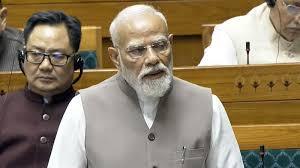
PM Narendra Modi Says India Engaging with Iran, US, and Israel; Calls for De-escalation in West Asia
Narendra Modi on Tuesday outlined India’s diplomatic and strategic response to the ongoing conflict in West Asia, emphasizing continuous engagement with key global players, including Iran, Israel, and the United States.
Addressing the Rajya Sabha, the Prime Minister stressed that India’s primary objective is to promote de-escalation, ensure the reopening of critical trade routes, and safeguard national interests amid growing geopolitical uncertainty.
India’s Diplomatic Outreach Amid Crisis
The Prime Minister highlighted that India is actively maintaining communication with all major stakeholders involved in the conflict.
India’s diplomatic approach is centered on:
- Encouraging peaceful resolution through dialogue
- Preventing further escalation of tensions
- Maintaining balanced relations with all sides
This multi-aligned engagement reflects India’s long-standing foreign policy strategy of maintaining strategic autonomy while fostering global cooperation.
Focus on De-escalation and Stability
A key priority for India is the de-escalation of tensions in the region.
PM Modi emphasized the importance of reopening the Strait of Hormuz, a crucial global shipping route that has been affected by the conflict.
Disruptions in this region have significant implications for:
- Global oil supply
- Trade flows
- Economic stability
India has been actively advocating for diplomatic solutions to restore normalcy in this vital corridor.
Safety of Indians in the Gulf Region
One of the most pressing concerns highlighted by the Prime Minister is the safety of Indian citizens in the Gulf region.
He noted that approximately one crore Indians live and work in Gulf countries, making their security a top priority.
Key measures undertaken include:
- Monitoring the situation closely
- Coordinating with host countries
- Facilitating safe movement and evacuation when necessary
Large-Scale Evacuation Efforts
The government has already undertaken significant evacuation efforts since the conflict began.
According to the Prime Minister:
- Over 3.72 lakh Indians have returned safely to India
- More than 1,000 individuals have been evacuated from Iran alone
These efforts highlight the government’s commitment to ensuring the safety and well-being of its citizens during international crises.
Impact on Energy and Trade
The ongoing conflict has had a direct impact on global energy markets and trade routes.
PM Modi acknowledged that the situation has affected:
- Supply of petrol and diesel
- Availability of natural gas
- Fertiliser imports
- International shipping routes
These disruptions pose challenges for India, which relies on imports for a significant portion of its energy needs.
Ensuring Energy Security
To address these challenges, India is taking proactive steps to secure energy supplies.
The Prime Minister stated that the country is:
- Exploring multiple sources for crude oil and gas
- Strengthening supply chains
- Ensuring continuity of essential resources
These measures aim to mitigate the impact of global disruptions on the domestic economy.
Strategic Oil Reserves Expansion
A key highlight of the Prime Minister’s address was the emphasis on strengthening India’s energy resilience.
He noted that over the past 11 years, India has built 53 lakh metric tonnes of strategic oil reserves, with plans to add another 65 lakh metric tonnes.
Strategic reserves serve as a buffer during supply disruptions, helping to:
- Stabilize domestic markets
- Ensure energy availability
- Reduce vulnerability to global shocks
Push for Self-Reliance
The Prime Minister also underscored the importance of self-reliance in the face of global uncertainties.
He highlighted a government initiative worth ₹70,000 crore aimed at boosting domestic shipbuilding capabilities.
This initiative is expected to:
- Strengthen India’s maritime infrastructure
- Reduce dependence on foreign shipping
- Enhance economic resilience
The push for self-reliance aligns with broader national goals of building a robust and sustainable economy.
Ensuring Safe Maritime Operations
India is also working to ensure the safe movement of its ships during the conflict.
Efforts include:
- Monitoring maritime routes
- Coordinating with international agencies
- Implementing safety measures for vessels
These steps are crucial for maintaining trade continuity and minimizing disruptions.
Humanitarian Perspective
PM Modi emphasized that the loss of life in any conflict is against the interests of humanity.
India’s stance is rooted in:
- Promoting peace
- Encouraging dialogue
- Supporting humanitarian values
This perspective reinforces India’s role as a responsible global actor advocating for stability and cooperation.
Balancing Economic and Strategic Interests
India’s response to the West Asia crisis reflects a careful balance between:
- Protecting economic interests
- Ensuring national security
- Maintaining diplomatic relationships
This balanced approach is essential in navigating complex geopolitical scenarios.
Global and Domestic Implications
The ongoing conflict has broader implications for India:
Economic Impact
Rising energy prices and disrupted trade routes can affect inflation and growth.
Strategic Considerations
Maintaining relationships with multiple global powers requires careful diplomacy.
Policy Response
The government’s proactive measures aim to minimize risks and ensure stability.
The Road Ahead
Looking forward, India’s strategy will focus on:
- Continued diplomatic engagement
- Strengthening energy security
- Enhancing self-reliance
- Ensuring citizen safety
The evolving situation in West Asia will require sustained attention and adaptive policymaking.
Summary
Prime Minister Narendra Modi informed the Rajya Sabha that India is actively engaging with Iran, Israel, and the United States amid the ongoing West Asia conflict. He emphasized India’s focus on de-escalation, reopening the Strait of Hormuz, and ensuring the safety of Indian citizens in the Gulf region.
The government has undertaken large-scale evacuation efforts and is working to secure energy supplies while expanding strategic oil reserves. India’s approach combines diplomacy, economic resilience, and self-reliance to navigate the challenges posed by the conflict.
Disclaimer
This article is based on official statements and publicly available information at the time of publication. The geopolitical situation in West Asia is rapidly evolving, and new developments may change the context of the information presented.
The content is intended for informational purposes only and should not be interpreted as policy advice or official communication. Readers are encouraged to refer to government releases and verified sources for the latest updates.
NoCap Times does not independently verify all claims and shall not be held responsible for any inaccuracies or omissions.