

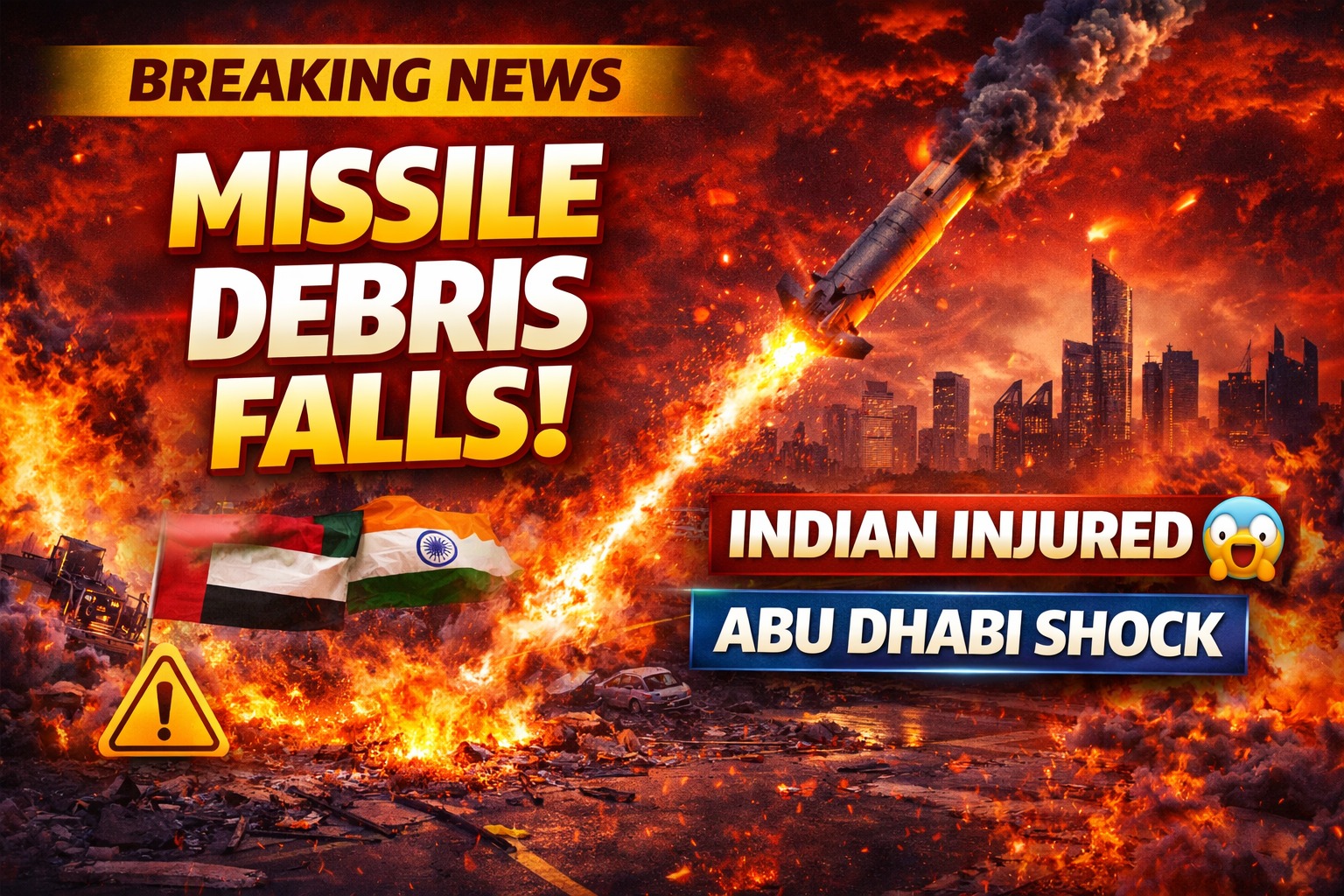
Indian Injured in Abu Dhabi After Missile Debris Falls in Al Shawamekh Amid Rising Iran Conflict
An Indian national sustained injuries in the United Arab Emirates after debris from an intercepted ballistic missile fell in a residential area of Abu Dhabi. The incident, which occurred in the Al Shawamekh locality, highlights the growing spillover risks of the ongoing conflict involving Iran.
Despite the development, India’s Ministry of External Affairs (MEA) has not yet issued an official statement regarding the injured citizen.
Missile Interception Leads to Civilian Injury
According to UAE authorities, the country’s air defence systems successfully intercepted a ballistic missile targeting Abu Dhabi. However, fragments from the destroyed missile fell in the Al Shawamekh area, leading to injuries on the ground.
An Indian national was reported to have suffered minor injuries due to the falling debris. Emergency services responded promptly, and the injured individual received medical attention.
The incident underscores the indirect risks civilians face even when defence systems successfully neutralize incoming threats.
UAE Confirms Incident, Urges Public to Avoid Rumours
The Abu Dhabi Media Office confirmed the development in an official statement, noting that relevant authorities quickly handled the situation.
Officials also issued a public advisory urging residents to:
- Rely only on verified and official sources
- Avoid spreading rumours or unconfirmed information
Such communication is critical during conflict situations, where misinformation can spread rapidly and create panic.
No Official Response Yet from India
As of now, the Ministry of External Affairs has not released any formal statement regarding the injured Indian national.
Given the large Indian expatriate population in the UAE, any such incident typically draws close attention from Indian authorities. A response or advisory may be expected as the situation evolves.
Rising Regional Tensions: Day 24 of Conflict
The incident comes as the ongoing conflict involving Iran enters its 24th day, following the escalation that began on February 28.
The UAE has increasingly found itself within the range of aerial threats as the conflict intensifies. On Sunday, UAE authorities reported intercepting:
- 25 unmanned aerial vehicles (UAVs)
- 4 ballistic missiles
This indicates a sharp rise in attempted attacks targeting the region.
Scale of Interceptions Since Conflict Began
The UAE Ministry of Defence has provided staggering figures that highlight the scale of aerial threats faced since the escalation began.
According to official data, UAE air defence systems have intercepted:
- 1,773 UAVs (drones)
- 15 cruise missiles
- 345 ballistic missiles
These numbers reflect the intensity of the ongoing conflict and the critical role of air defence systems in protecting civilian areas.
Widespread Injuries Reported
In addition to the injured Indian national, reports indicate that 161 individuals sustained injuries in the broader incident. The injuries ranged from minor to severe.
Those affected included nationals from multiple countries, highlighting the diverse expatriate population in the UAE. Among them were citizens from:
- India, Pakistan, Bangladesh, Sri Lanka, Nepal
- UAE, Egypt, Sudan, Ethiopia
- Philippines, Indonesia, Türkiye, Jordan
- Nigeria, Ghana, Sweden, and several others
This underscores the global implications of regional conflicts, where people from various nationalities are impacted.
Civilian Risk Despite Advanced Defence Systems
While the UAE’s air defence systems have been effective in intercepting incoming threats, incidents like this highlight a key challenge: collateral damage from intercepted projectiles.
Even when missiles are destroyed mid-air, falling debris can pose risks to:
- Residential areas
- Public infrastructure
- Civilians on the ground
This has become a growing concern in conflict zones where urban centers are within range of aerial attacks.
Importance of Air Defence Preparedness
The UAE’s ability to intercept a large number of aerial threats demonstrates its advanced defence capabilities. However, the increasing frequency of such incidents points to the need for:
- Enhanced early warning systems
- Public safety protocols
- Emergency response readiness
Authorities continue to emphasize preparedness to minimize risks to civilians.
Impact on Indian Diaspora
The UAE is home to a large Indian expatriate community, making such incidents particularly concerning for India.
Key concerns include:
- Safety of Indian nationals in conflict-prone areas
- Need for timely advisories and updates
- Coordination between Indian and UAE authorities
The absence of an immediate statement from the MEA has drawn attention, though such responses often follow after initial assessments.
Broader Implications for Regional Stability
The incident reflects how the ongoing conflict is extending beyond its primary zones, affecting neighboring countries and civilians.
Key implications include:
- Increased risk of cross-border incidents
- Heightened security alerts across the Middle East
- Potential disruptions to daily life and economic activity
As tensions continue, the possibility of further spillover incidents remains a concern.
Final Takeaway
The injury of an Indian national in Abu Dhabi due to missile debris highlights the unpredictable and far-reaching consequences of modern warfare. Even with strong defence systems in place, civilian safety remains vulnerable to indirect impacts.
As the conflict involving Iran continues to escalate, countries in the region—including the UAE—are likely to remain on high alert, with global attention focused on preventing further escalation.
Summary
An Indian national was injured in Abu Dhabi after debris from an intercepted ballistic missile fell in the Al Shawamekh area. The UAE confirmed the incident and reported multiple interceptions of aerial threats amid the ongoing Iran conflict. While 161 people were injured overall, India’s Ministry of External Affairs has yet to issue a statement. The incident highlights growing regional risks and the impact of escalating tensions on civilians.
Disclaimer:
This article is based on publicly available information, official statements, and media reports available at the time of publication. The content is intended solely for informational and educational purposes.
While efforts have been made to ensure accuracy, NoCap Times does not independently verify all claims, statements, or allegations made by individuals, witnesses, or investigative sources mentioned in the report.
NoCap Times shall not be held responsible for any inaccuracies, omissions, or changes that may arise as new verified information becomes available.