

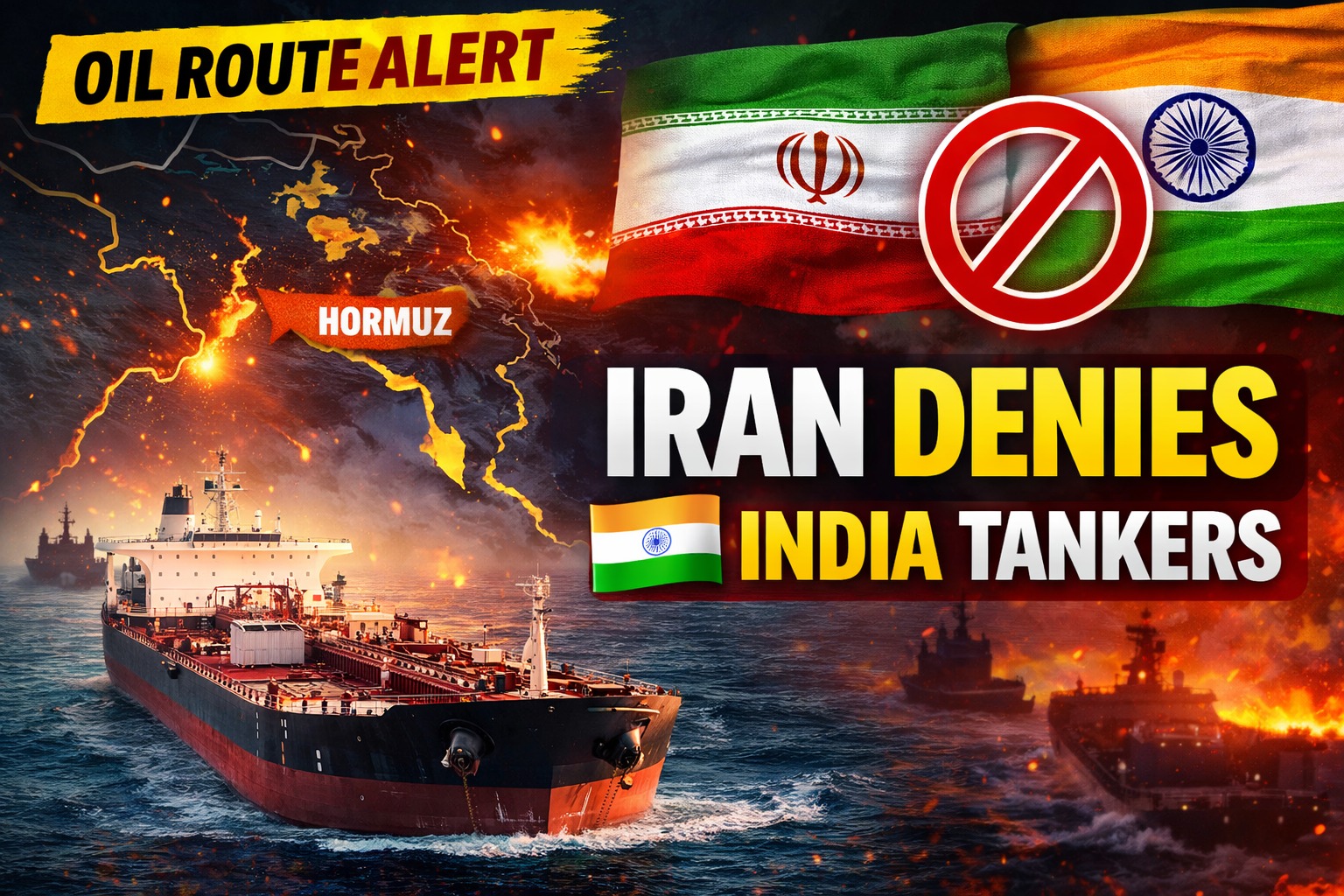
Iran Denies Allowing India-Flagged Tankers Through Strait of Hormuz Amid Rising Shipping Tensions
Conflicting reports have emerged regarding the movement of India-flagged oil tankers through the strategically vital Strait of Hormuz as regional tensions continue to affect global shipping routes.
While an Indian source suggested that Tehran might permit Indian-flagged vessels to transit the waterway, Iranian officials reportedly denied granting any such permission, according to a report by Reuters.
Diplomatic Discussions Between India and Iran
According to reports, S. Jaishankar, India’s External Affairs Minister, held discussions with Iranian Foreign Minister Abbas Araghchi regarding the safety of maritime trade routes.
The talks reportedly focused on ensuring safe passage for commercial vessels amid growing security concerns in the region.
Earlier media reports indicated that at least two India-flagged tankers — Pushpak and Parimal — were navigating the corridor without disruption. However, Iranian sources later rejected claims that India had been given special permission for transit.
Shipping Attack Raises Security Concerns
The uncertainty comes shortly after a Thailand-flagged cargo vessel, Mayuree Naree, was reportedly attacked while sailing through the narrow Gulf shipping corridor.
The ship had departed from Khalifa Port and was headed toward Kandla Port when it was struck by an unidentified projectile, triggering a fire onboard and prompting emergency rescue operations.
The incident highlights the growing risks to commercial shipping as tensions escalate between Iran and the United States.
Why the Strait of Hormuz Is Critical
The Strait of Hormuz is one of the most strategically important maritime routes for global energy trade.
The narrow channel, roughly 55 kilometres wide, connects the Persian Gulf to the Arabian Sea, serving as the main export route for oil producers in the region.
On average:
- Around 13 million barrels of crude oil pass through the strait daily
- The route accounts for nearly 31% of global seaborne oil shipments
Major oil exporters that rely on this corridor include:
- Iraq
- Kuwait
- Saudi Arabia
- United Arab Emirates
- Iran
A large share of global liquefied natural gas (LNG) shipments also travels through the same route.
Global Energy Market Impact
Any disruption in traffic through the strait can have immediate consequences for global oil prices, shipping costs, and energy supply chains.
Even short-term interruptions could affect fuel availability and energy costs worldwide, making the stability of this maritime corridor crucial for the global economy.
Summary
- Iran has denied reports that it allowed India-flagged tankers to pass through the Strait of Hormuz.
- Indian External Affairs Minister S. Jaishankar reportedly discussed the issue with Iran’s Foreign Minister Abbas Araghchi.
- Two Indian tankers, Pushpak and Parimal, were earlier reported to be moving safely through the route.
- A Thailand-flagged ship, Mayuree Naree, was attacked while travelling from Khalifa Port to Kandla Port.
- The Strait of Hormuz handles about 13 million barrels of oil daily, making it one of the world’s most critical energy chokepoints.
Disclaimer
This article is based on publicly available information and official statements. The content is intended for informational purposes only. The publication does not independently verify third-party claims or assertions mentioned in the developments.