

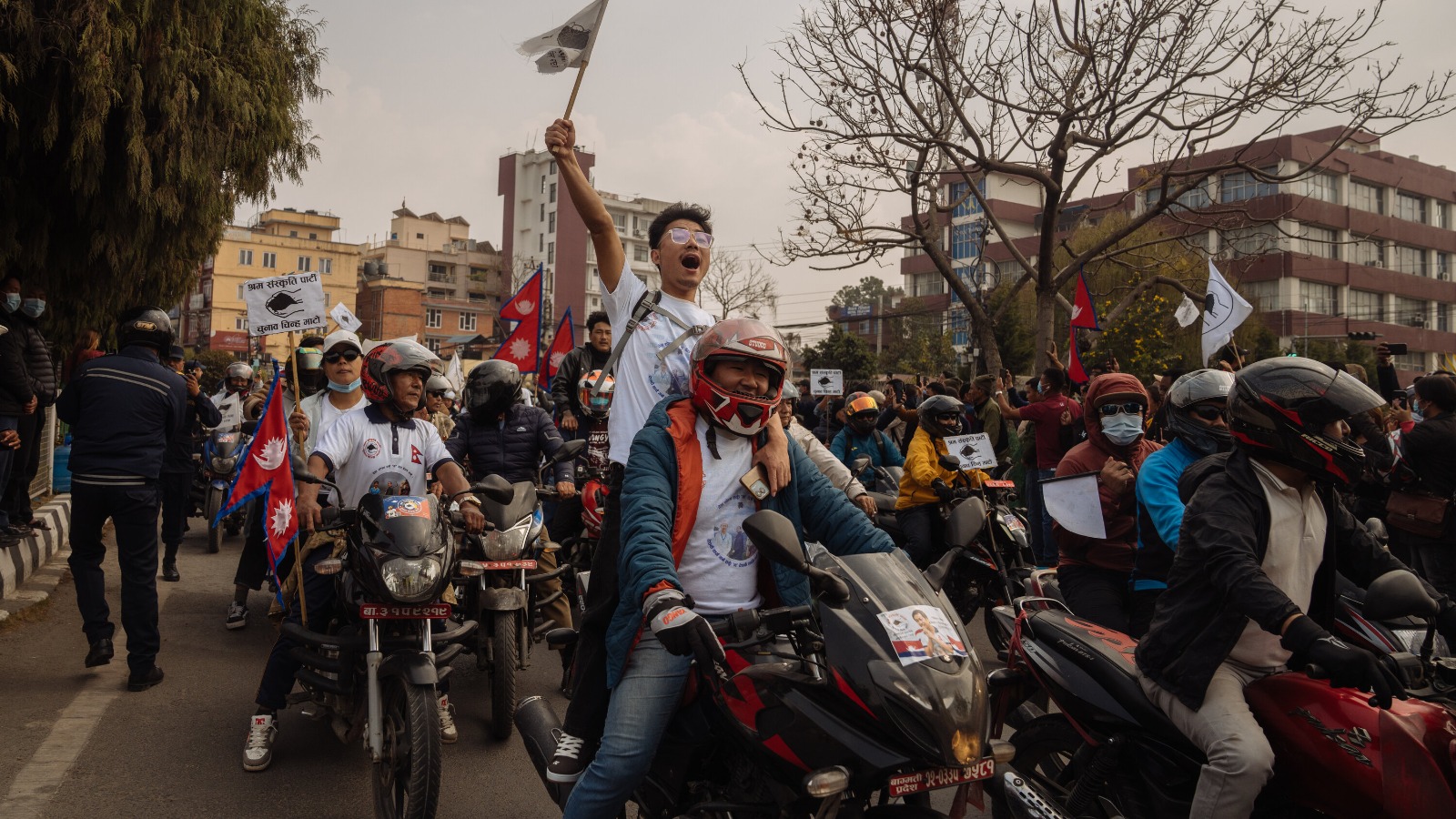
Nepal Heads to the Polls a Year After Youth-Led Uprising: Key Points to Know
Nepal held nationwide elections on Thursday in a crucial vote taking place a year after massive youth-led protests dramatically reshaped the country’s political environment. The election marks the first national poll since the uprising widely described as a “Gen Z revolution,” which forced the collapse of the previous government and triggered sweeping political changes.
Across the Himalayan nation of nearly 30 million people, long queues were seen outside polling stations as voters turned out early to cast their ballots. Authorities imposed strict measures on election day, including a ban on vehicles and political gatherings, while security forces patrolled cities and towns to maintain order.
Nearly 19 million citizens are eligible to vote in the election, which many observers view as a referendum on the long-dominant political establishment.
Young Voters Drive the Political Mood
For many young Nepalis, the election represents more than a routine democratic exercise. It reflects the aspirations and frustrations that fueled last year’s protests.
Among them is 25-year-old student Dipika Saru Magar, who travelled more than 16 hours from Kathmandu to participate in the vote. She had previously taken part in the protests, carrying a banner condemning nepotism, political favouritism and sycophancy.
Despite the enthusiasm that once energised the streets, she remains cautious about whether a new government can truly meet public expectations.
Interim Leadership Urges Peaceful Participation
Following last year’s turmoil, former chief justice Sushila Karki stepped out of retirement to serve as interim prime minister after the previous administration collapsed.
As polling began, the 73-year-old leader urged citizens to vote responsibly and peacefully, emphasising that every ballot would shape the country’s future.
The Gen Z Movement That Shook Nepal
The election comes after one of the most turbulent periods in Nepal’s recent political history. In September 2025, protests erupted after authorities introduced restrictions on social media platforms.
What began as digital freedom protests quickly expanded into a nationwide movement against corruption, nepotism and economic stagnation. Demonstrations spread across major cities, including Kathmandu, with thousands of young people taking to the streets.
Violence eventually erupted during clashes with security forces. Several government buildings—including the parliament complex, the Supreme Court and the central secretariat—were set on fire by protesters.
Authorities reported that 77 people lost their lives during the unrest, many of them protesters shot during confrontations with police. The crisis ultimately forced the resignation of then prime minister K. P. Sharma Oli and led to the dissolution of parliament.
Millions of Voters in a High-Stakes Contest
The scale of the election reflects the heightened political engagement in the country. Approximately 18.9 million voters are registered, about 900,000 more than in the previous election held in 2022.
Young voters hold significant influence this time. More than half of the electorate is between 18 and 40 years old, giving the younger generation unprecedented sway in determining the outcome.
A total of 6,541 candidates are competing for 275 seats in the House of Representatives. Of these, 165 seats will be filled through a first-past-the-post system, while the remaining 110 will be allocated through proportional representation.
Rapper-Turned-Politician Emerges as Symbol of Change
One of the most closely watched figures in the election is Balendra Shah, popularly known as “Balen.” The 35-year-old rapper-turned-politician first gained national attention after his unexpected victory in the 2022 mayoral race in Kathmandu.
Shah later became a prominent voice during the anti-government protests and has since positioned himself as a reformist leader advocating for transparency, better education and improved healthcare.
Running under the banner of the National Independent Party, Shah has attracted strong support from younger voters who are disillusioned with traditional political parties.
In one of the election’s most symbolic contests, Shah is challenging former prime minister K. P. Sharma Oli in an eastern constituency long regarded as Oli’s political stronghold.
Traditional Parties Still Hold Strong Networks
Despite the growing appeal of new political movements, established parties continue to wield significant influence in Nepal’s political system.
The Nepali Congress and the Communist Party of Nepal (Unified Marxist–Leninist) remain dominant forces with loyal support bases and well-organised party structures.
However, public frustration over corruption, patronage politics and unstable coalition governments has weakened trust in the traditional political establishment.
Many voters say the frequent changes in government have failed to deliver meaningful economic growth or stability.
Massive Security Deployment
Given the violence seen during last year’s protests, authorities have implemented one of the largest security operations in the country’s electoral history.
More than 340,000 security personnel have been deployed nationwide, including around 150,000 temporary election police officers. The government has also banned vehicles and campaign activities on polling day to reduce the risk of unrest.
Logistical Challenges in a Mountainous Nation
Conducting elections in Nepal presents significant logistical hurdles due to its rugged terrain. In remote mountain regions, ballot boxes often have to be carried by hand or transported by helicopter.
As a result, the counting process can take time. The Election Commission expects early results from directly elected seats within 24 hours, while proportional representation results could take several days.
In the previous election held in 2022, final results took nearly two weeks to be declared.
Coalition Politics Likely Again
Even after the results are announced, Nepal may face another period of coalition negotiations. Analysts believe it is unlikely that any single party will secure a clear parliamentary majority.
The next government will inherit major challenges, including demands for accountability over last year’s violence, efforts to combat corruption and the urgent need to create economic opportunities for young citizens.
Summary:
Nepal is holding nationwide elections a year after massive youth-led protests forced the resignation of the previous government. With nearly 19 million eligible voters and a strong youth presence in the electorate, the poll is widely viewed as a test of the country’s political system. New political figures such as Balendra “Balen” Shah are challenging traditional parties, while security forces have been heavily deployed to ensure peaceful voting. The election results may lead to coalition negotiations as the next government faces pressure to deliver reforms, tackle corruption and address the concerns of young Nepalis.