
Shehbaz Sharif’s ‘Draft Tweet’ Sparks Controversy Amid US-Iran Ceasefire Talks
A recent social media post by Pakistan Prime Minister Shehbaz Sharif has triggered an unexpected diplomatic debate, even as global attention remains fixed on the fragile ceasefire between the United States and Iran.
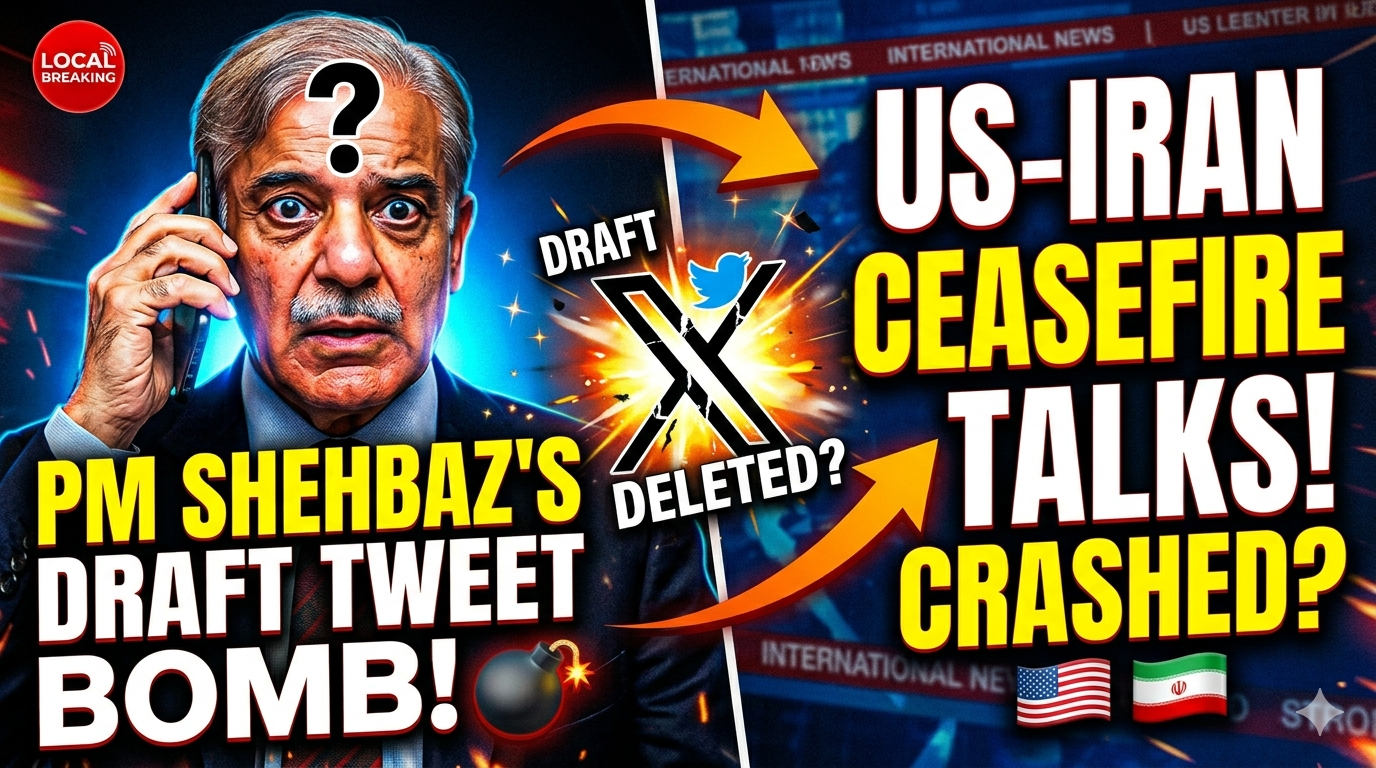
What was intended as a call for peace quickly turned controversial after users noticed an unusual detail in the post—an apparent editing trace that read: “Draft – Pakistan’s PM Message on X.” The wording has since fueled speculation about whether the message was internally prepared or externally influenced.
The ‘Draft’ Controversy Explained
Sharif’s post urged restraint and called on Donald Trump to extend the diplomatic window by two weeks. He also appealed to Iran to reopen the strategically critical Strait of Hormuz during this period as a goodwill gesture.
However, the presence of the word “Draft” and the formal label “Pakistan’s PM Message” raised eyebrows online. Critics questioned whether the post had been accidentally published before final editing or whether it hinted at external drafting assistance.
Despite the speculation, there is no confirmed evidence suggesting that the message was written or influenced by any foreign government.
Pakistan Positions Itself as Mediator
Shortly after the controversy, Sharif posted again, announcing that both the US and Iran had agreed to an immediate ceasefire, including in conflict-affected regions like Lebanon. He also invited delegations from both countries to Islamabad for peace talks scheduled for April 10.
This move signals Pakistan’s attempt to position itself as a diplomatic intermediary in the ongoing crisis.
Trump Confirms Temporary Ceasefire
President Donald Trump confirmed the development, stating that the United States would pause military operations against Iran for two weeks. The announcement came just ahead of a self-imposed deadline for escalation.
Trump acknowledged Pakistan’s role in facilitating the pause, citing discussions with Shehbaz Sharif and Pakistan’s military leadership, including Field Marshal Asim Munir.
He described the arrangement as a “double-sided ceasefire,” conditional upon Iran’s cooperation—particularly regarding safe navigation through the Strait of Hormuz and continued diplomatic engagement.
Iran’s Conditional Acceptance
Iran signaled its willingness to comply with the ceasefire under specific conditions. Officials indicated that if hostilities ceased, their armed forces would halt defensive operations.
Additionally, Iran agreed to allow maritime passage through the Strait of Hormuz during the two-week period, subject to coordination with its military authorities.
The Supreme National Security Council of Iran also confirmed that discussions with the US are expected to begin soon, potentially in Islamabad.
Diplomatic Momentum Builds
From Washington, White House Press Secretary Karoline Leavitt stated that while talks are being explored, no final decisions have been officially confirmed yet.
Meanwhile, Trump revealed that the US has received a 10-point proposal from Iran, which he described as a workable framework for negotiations. He expressed optimism that the temporary ceasefire could pave the way for a broader, long-term peace agreement in the Middle East.
A Conflict Nearing a Turning Point?
According to Trump, significant progress has already been made on key issues, and the pause in hostilities is intended to finalize a comprehensive deal. He suggested that military objectives have largely been achieved, allowing diplomacy to take center stage.
The conflict itself traces back to late February, when the US initiated military action against Iran over concerns related to its nuclear program.
Optics Matter in Diplomacy
While the ceasefire and upcoming talks have been widely welcomed, the controversy surrounding Sharif’s “draft” post highlights how even minor communication lapses can carry significant diplomatic implications.
In an era where global diplomacy often unfolds in real time on social media, the incident underscores the importance of precision, perception, and messaging at the highest levels of leadership.
Summary
Pakistan Prime Minister Shehbaz Sharif’s social media post calling for a US-Iran ceasefire sparked controversy after it appeared to include a “Draft” label, raising questions about its origin. While no evidence suggests external involvement, the incident drew attention amid critical diplomatic developments. The US, under President Donald Trump, agreed to a two-week ceasefire with Iran following talks facilitated by Pakistan. Iran has conditionally accepted the pause, and both sides are expected to engage in negotiations in Islamabad. The episode highlights both the progress toward peace and the sensitivity of diplomatic communication in the digital age.
Disclaimer
This article is based on publicly available information, official statements, and media reports available at the time of publication. The content is intended solely for informational and educational purposes and should not be construed as investment advice.
While efforts have been made to ensure accuracy, the information presented may change as new developments emerge. Readers are advised to conduct their own research and consult financial advisors before making any investment decisions.
NoCap Times does not independently verify all claims or statements and shall not be held responsible for any inaccuracies or omissions.