
Iran Oil Tankers Reach India Amid Trump’s Hormuz Blockade: Global Energy Tensions Spike
Two Iranian Supertankers Anchor Near Indian Ports as US Announces Blockade
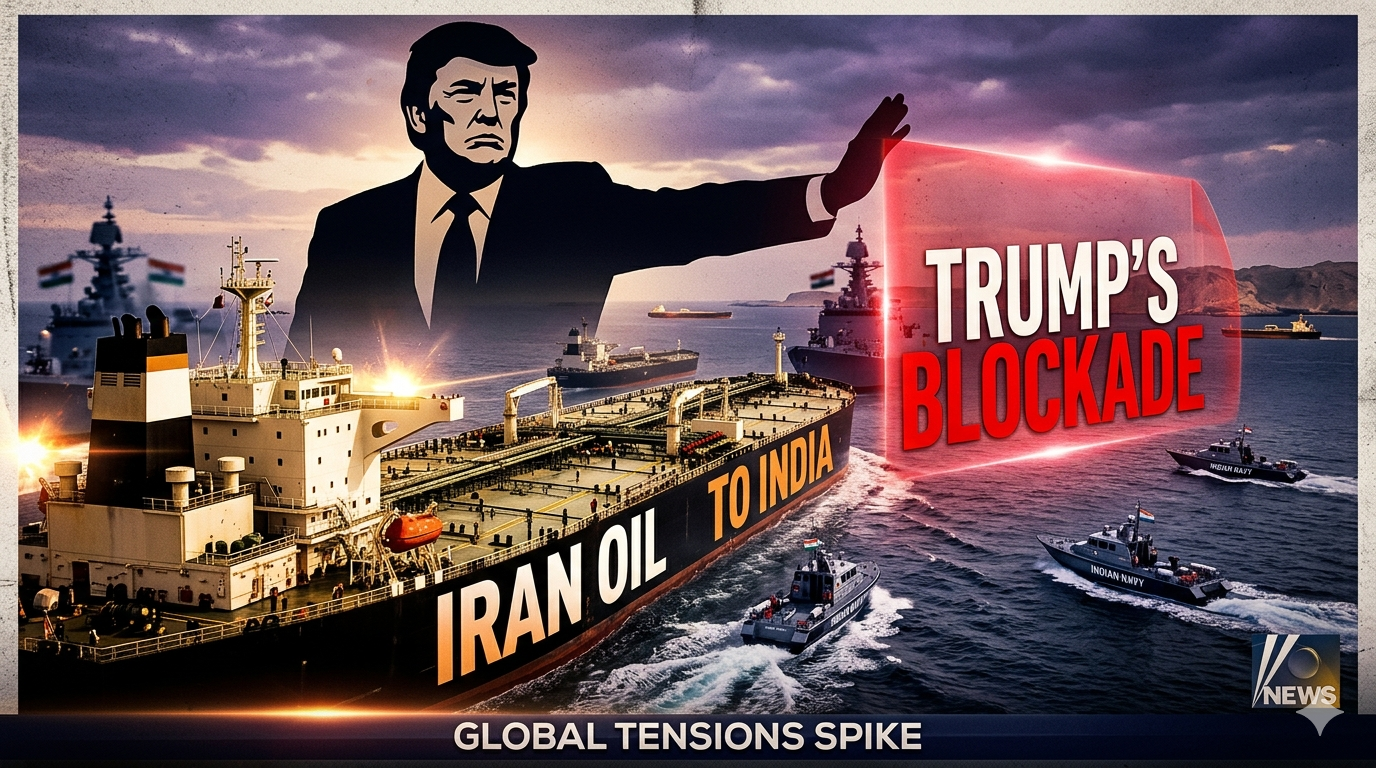
In a dramatic convergence of geopolitics and energy security, two massive supertankers carrying Iranian crude oil have anchored off India’s western and eastern coasts—just hours after Donald Trump announced a naval blockade targeting Iranian ports near the Strait of Hormuz.
The vessels, each carrying around 2 million barrels of crude, represent the first significant Iranian oil shipments to India in nearly seven years, signaling a temporary shift in global oil dynamics amid rising Middle East tensions.
Where Are the Tankers and What Are They Carrying?
According to ship-tracking data:
- The Felicity, a Very Large Crude Carrier (VLCC) linked to Iran, is anchored near Sikka in Gujarat
- The Jaya is stationed near Paradip port in Odisha
Both vessels loaded their cargo from Iran’s Kharg Island export terminal—one of the country’s primary oil hubs.
Each tanker is carrying approximately:
- 2 million barrels of crude oil
- Combined cargo of 4 million barrels
These shipments were loaded before March 20, 2026, making them eligible under a temporary US sanctions waiver.
The Trigger: US Announces Hormuz Blockade
The arrival of these tankers coincides with a major geopolitical escalation.
Following the collapse of high-level US-Iran peace talks in Islamabad, Donald Trump declared that the United States would enforce a naval blockade targeting Iranian oil exports.
The operation is being coordinated by the United States Central Command (CENTCOM), aiming to:
- Restrict Iran’s oil revenue
- Pressure Tehran economically
- Maintain limited global shipping access
The blockade specifically focuses on vessels linked to Iran, while attempting to preserve broader trade flow through the Strait of Hormuz.
Why the Strait of Hormuz Matters
The Strait of Hormuz is one of the most strategically important waterways in the world:
- Handles nearly 20% of global oil trade
- Serves as a key route for Middle Eastern exports
- Connects Gulf producers to global markets
Any disruption here sends immediate shockwaves across global energy markets—and that’s exactly what is happening now.
Oil Prices Surge Amid Supply Fears
Following the blockade announcement:
- Oil prices surged 7–8%, crossing $100 per barrel
- Shipping costs increased due to rising risk premiums
- Global markets reacted with volatility
Investors are factoring in potential supply shortages, especially if the blockade leads to prolonged disruption.
Why India Is Accepting Iranian Oil Again
For India, this development is both strategic and opportunistic.
India:
- Imports nearly 85% of its crude oil needs
- Stopped Iranian oil imports in 2019 due to US sanctions
- Has since diversified suppliers (Russia, Saudi Arabia, UAE, US)
However, the current shipments are possible due to a temporary US Treasury waiver, allowing crude loaded before March 20, 2026, to be delivered.
This creates a narrow window for India to:
- Secure discounted crude
- Stabilize domestic fuel supply
- Manage inflationary pressures
Who Might Be Buying the Oil?
While official confirmations are pending, industry sources suggest possible involvement of major Indian refiners:
- Indian Oil Corporation (Paradip refinery)
- Reliance Industries
- Bharat Petroleum
These companies have historically processed Iranian crude and are well-equipped to handle heavier oil grades.
The “Shadow Fleet” Factor
Both tankers are believed to be part of Iran’s so-called “shadow fleet”—a network of vessels used to bypass sanctions.
These ships typically:
- Operate under unclear ownership structures
- Use techniques like AIS spoofing (fake tracking signals)
- Engage in ship-to-ship transfers
- Change flags frequently to avoid detection
The Felicity is linked to Iran’s tanker network, while the ownership of Jaya remains unclear—raising further questions about enforcement challenges.
India’s Delicate Balancing Act
India finds itself in a complex position between:
- Maintaining strong ties with the United States
- Preserving historical energy relations with Iran
- Ensuring domestic energy security
So far, India has taken a pragmatic approach:
- Accepting shipments under legal waivers
- Avoiding direct violation of sanctions
- Engaging diplomatically with all stakeholders
Officials have also clarified that no “tolls” or special payments were made to Iran for safe passage.
Impact of Blockade on Future Shipments
While these two tankers are likely safe under the waiver, the future looks uncertain.
The US blockade could:
- Halt further Iranian oil shipments
- Increase risks for tankers in the region
- Force India to rely more heavily on alternative suppliers
The waiver itself is set to expire by mid-April 2026, limiting further imports.
Global Energy Market Implications
The situation reflects the fragile state of global oil markets:
- Supply Chain Disruptions
Reduced tanker movement through Hormuz could tighten global supply.
- Rising Insurance Costs
War-risk premiums for shipping have surged significantly.
- Asian Buyers on Alert
Countries like Japan and South Korea are watching closely before making procurement decisions.
- China’s Continued Purchases
China remains a major buyer of Iranian crude through informal channels.
Geopolitical Context: Iran Under Pressure
The developments come amid rising pressure on Iran:
- Ongoing conflict with the US and Israel
- Economic strain due to sanctions
- Leadership uncertainty following the rise of Mojtaba Khamenei
Iran has condemned the blockade, calling it an act of aggression, and has warned of possible retaliation.
Domestic Implications for India
For India, the arrival of these tankers offers short-term relief but also long-term challenges:
Short-Term Benefits
- Access to cheaper crude
- Stabilization of fuel prices
- Strengthening energy reserves
Long-Term Risks
- Diplomatic friction with the US
- Exposure to geopolitical shocks
- Need for rapid diversification
What Happens Next? Key Scenarios
- Smooth Discharge of Current Cargo
The Felicity and Jaya may unload without legal complications under the waiver.
- Strict Enforcement of Blockade
Future shipments could be blocked, escalating tensions.
- Oil Market Volatility Continues
Prices may remain elevated due to uncertainty.
- India Diversifies Further
New Delhi may accelerate investments in renewables and alternative suppliers.
Conclusion: A Symbol of Global Energy Uncertainty
The sight of two Iranian supertankers anchored quietly off India’s coast is more than just a logistical event—it is a powerful symbol of the complex interplay between geopolitics, energy security, and global markets.
As tensions rise around the Strait of Hormuz and diplomatic efforts remain stalled, countries like India are forced to navigate a delicate path between opportunity and risk.
Whether these shipments mark a temporary exception or the beginning of a renewed India-Iran energy relationship will depend largely on how the crisis unfolds in the coming days.
For now, global markets—and policymakers—are watching closely.
Disclaimer
This article is based on publicly available information, official statements, and media reports available at the time of publication. The content is intended for informational purposes only and should not be considered financial or policy advice. Readers are encouraged to refer to official sources for the latest updates.
While efforts have been made to ensure accuracy, the information presented may change as new developments emerge. Readers are advised to conduct their own research and consult financial advisors before making any investment decisions.
NoCap Times does not independently verify all claims or statements and shall not be held responsible for any inaccuracies or omissions.