

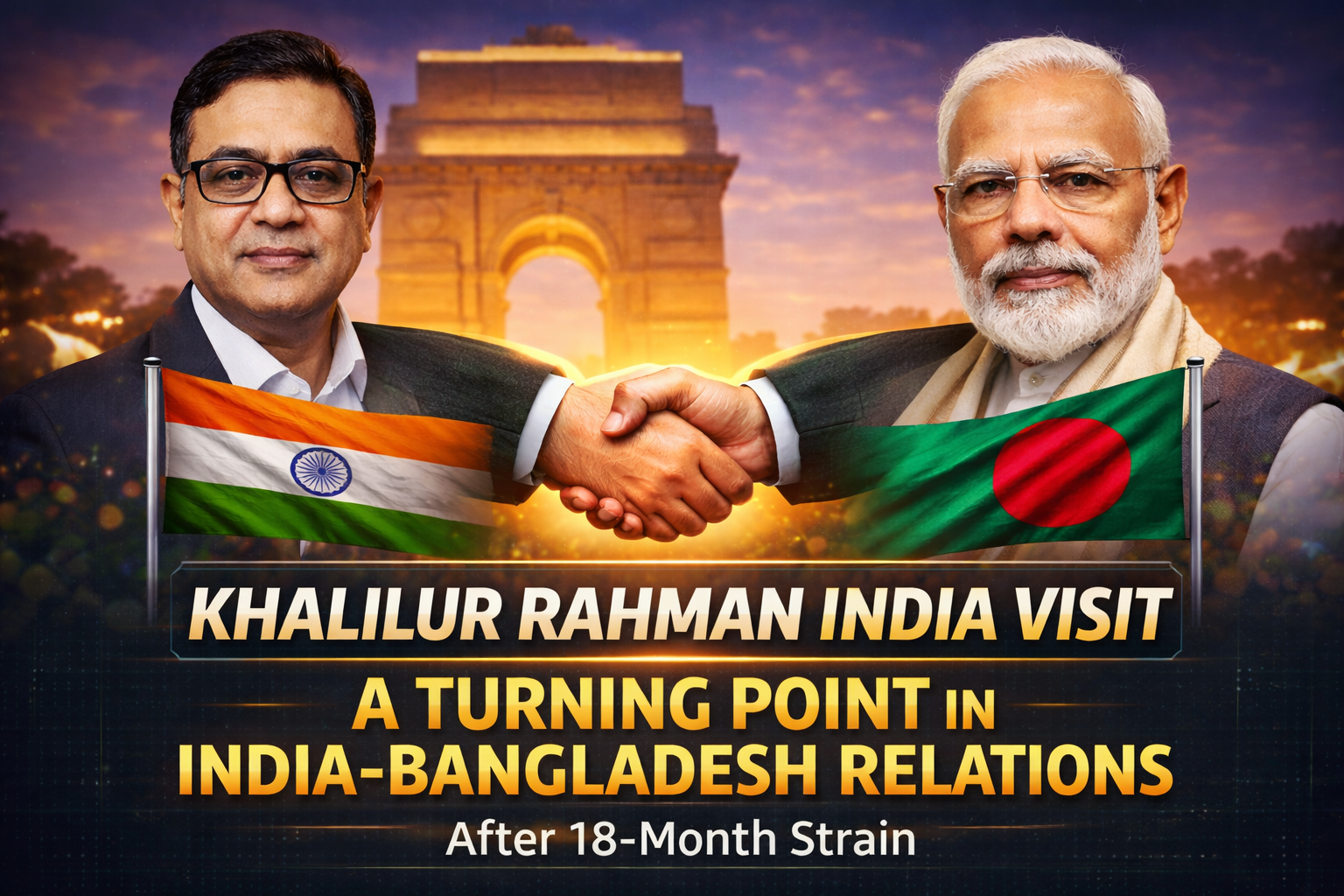
Khalilur Rahman India Visit: A Turning Point in India-Bangladesh Relations After 18-Month Strain
Khalilur Rahman India visit marks a major step in restoring India-Bangladesh ties, focusing on trade, energy, diplomacy, and regional cooperation.
Khalilur Rahman India Visit Signals Reset in India-Bangladesh Relations
The Khalilur Rahman India visit has emerged as a crucial diplomatic moment for South Asia. After nearly 18 months of strained ties, India and Bangladesh are now taking clear steps toward rebuilding their relationship.
This visit is not just symbolic. Instead, it reflects a serious effort from both sides to restore trust. Moreover, it highlights the importance of cooperation in areas like trade, energy, and regional stability.
During his visit to New Delhi, Bangladesh’s Foreign Minister Khalilur Rahman held key meetings with top Indian leaders. These discussions focused on resolving differences while also identifying new opportunities for collaboration.
Khalilur Rahman India Visit Begins with High-Level Security Talks
Shortly after his arrival, Rahman met Ajit Doval. This meeting set the tone for the rest of the visit.
The discussions were wide-ranging. They covered security concerns, regional challenges, and future cooperation. Importantly, both sides showed willingness to move forward despite past tensions.
This early engagement was significant. It indicated that both nations want to address core issues first before expanding cooperation.
Khalilur Rahman India Visit: A Strategic Visit at a Critical Time
The Khalilur Rahman India visit comes at a time when Bangladesh has a new political leadership. The government led by Tarique Rahman took office earlier this year after a decisive election victory.
Therefore, this visit is the first major diplomatic outreach to India by the new administration. Naturally, expectations were high. However, the outcomes suggest a positive direction.
Key Meeting Between Khalilur Rahman and S. Jaishankar
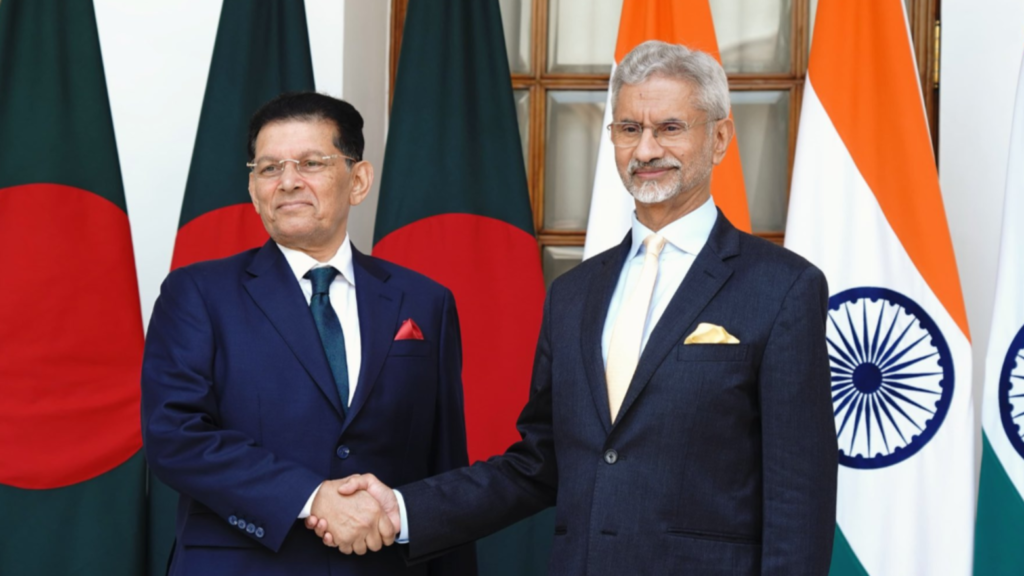
One of the most important moments of the visit was Rahman’s meeting with S. Jaishankar.
Both leaders held detailed discussions on strengthening bilateral ties. They agreed to focus on practical areas such as:
- Trade expansion
- Energy cooperation
- People-to-people connections
Additionally, they exchanged views on global and regional developments. This shows that the relationship goes beyond bilateral concerns.
Jaishankar later shared that both sides agreed to stay in close contact. This reflects a commitment to continuous engagement.
Focus on Rebuilding Trust
Trust had taken a hit over the past year and a half. Therefore, rebuilding it remains a top priority.
During the talks, India expressed its willingness to engage constructively with the new Bangladeshi government. At the same time, Bangladesh emphasized mutual respect and shared benefits.
This balanced approach is essential. It ensures that both sides feel equally valued in the partnership.
Khalilur Rahman India Visit and the Extradition Issue
Despite the positive atmosphere, sensitive issues were also discussed. One of them was Bangladesh’s request to extradite former Prime Minister Sheikh Hasina and former Home Minister Asaduzzaman Khan Kamal.
Both leaders have been living in India since the political upheaval in 2024. They were convicted by Bangladesh’s International Crimes Tribunal.
Rahman reiterated the extradition request during his meeting. However, both sides handled the matter carefully.
Keeping Bilateral Ties on Track
Importantly, both countries agreed that this issue should not affect overall relations. This decision shows diplomatic maturity.
Instead of allowing one issue to dominate the agenda, both sides chose to focus on long-term cooperation. This approach is likely to prevent future disruptions.
Progress on Security Cooperation and the Hadi Case
Another important topic was the case of Shaheed Osman Hadi.
Hadi was attacked in Dhaka last year and later died during treatment in Singapore. The incident had triggered widespread protests in Bangladesh.
During the Khalilur Rahman India visit, Bangladesh thanked India for helping arrest the suspects. Both sides agreed to follow the extradition treaty to return the accused.
Strengthening Legal and Security Ties
This cooperation is a positive sign. It shows that both countries are willing to work together on sensitive matters.
Moreover, it helps build confidence. Over time, such actions can reduce mistrust and improve overall relations.
Trade and Energy Take Centre Stage
Economic cooperation formed a major part of the discussions. Both countries agreed to focus on boosting trade and energy ties.
Rahman also met Hardeep Singh Puri during his visit. Energy cooperation was a key topic in this meeting.
Bangladesh requested increased supplies of diesel and fertilizers from India. In response, India indicated a positive and open approach.
Energy Cooperation as a Growth Driver
Energy is a critical area for both nations. Bangladesh needs reliable supplies, while India aims to expand its regional influence.
Therefore, stronger energy ties can benefit both sides. It can also create long-term economic stability.
Visa Easing and People-to-People Connect
Another important outcome of Khalilur Rahman’s visit to India was India’s assurance regarding visa facilitation.
India plans to ease visa processes for Bangladeshi citizens. This includes:
- Medical visas
- Business visas
This step is crucial. It directly impacts people-to-people relations, which form the foundation of any strong partnership.
Why Connectivity Matters
Better connectivity leads to stronger relationships. When people travel easily, business grows. Cultural exchange also improves.
Therefore, easing visa rules is a practical step toward rebuilding trust at the grassroots level.
Background: What Caused the Diplomatic Tensions
To fully understand the importance of this visit, it is necessary to look back.
Relations between India and Bangladesh deteriorated after the interim government led by Muhammad Yunus took charge.
This followed the collapse of the previous government in 2024. The political shift created uncertainty in bilateral relations.
Gradual Steps Towards Stability
However, both countries have been working to stabilise ties in recent months.
India’s participation in the swearing-in ceremony of Tarique Rahman was an important gesture. It signaled readiness for engagement.
The Khalilur Rahman India visit builds on this momentum.
A Forward-Looking Partnership
Looking ahead, both countries appear committed to strengthening their partnership.
They have agreed to:
- Hold more official meetings
- Explore new cooperation mechanisms
- Stay engaged on global and regional issues
This forward-looking approach is essential. It ensures that the relationship continues to grow despite challenges.
Summary: Khalilur Rahman India Visit Marks a New Beginning
The Khalilur Rahman India visit is more than just a diplomatic event. It represents a fresh start for India-Bangladesh relations.
After 18 months of tension:
- Both nations are ready to rebuild trust
- Key issues are being handled with maturity
- Trade and energy cooperation are back in focus
- People-to-people connections are being strengthened
Most importantly, both sides have shown a willingness to move forward.
If this momentum continues, the relationship between India and Bangladesh could enter a new and more stable phase. This will not only benefit the two countries but also contribute to regional peace and development.
Disclaimer
This article is based on publicly available information, official statements, and media reports available at the time of publication. The content is intended for informational purposes only and should not be considered financial or policy advice. Readers are encouraged to refer to official sources for the latest updates.
While efforts have been made to ensure accuracy, the information presented may change as new developments emerge. Readers are advised to conduct their own research and consult financial advisors before making any investment decisions.
NoCap Times does not independently verify all claims or statements and shall not be held responsible for any inaccuracies or omissions.