
Iran-China Petroyuan Strategy: How Two Sanctioned Nations Challenge the US Dollar Dominance
Iran-China petroyuan strategy gains traction as Tehran and Beijing bypass the US dollar, impacting global trade, oil markets, and American economic influence.
Iran-China Petroyuan Strategy Reshapes Global Power Dynamics
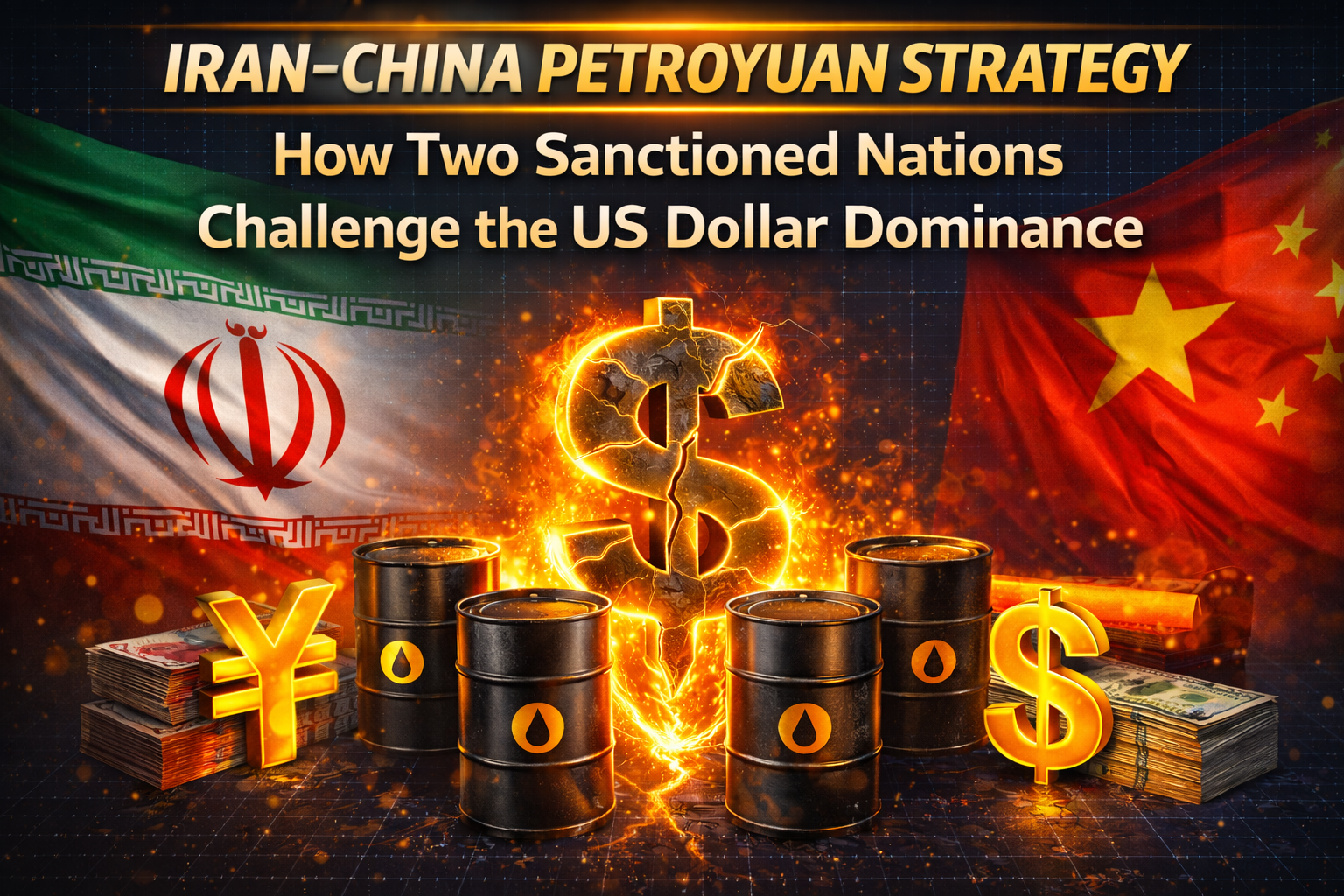
The ongoing geopolitical tensions in the Middle East have taken a new turn. While the conflict involving Iran, United States, and Israel remains in a fragile pause, a quieter but far more strategic shift is underway.
At the center of this transformation lies the growing financial cooperation between Iran and China. Together, these two sanctioned nations are testing a system that could gradually weaken the dominance of the US dollar in global trade.
This emerging approach, often referred to as the “petroyuan” strategy, is not just about currency. Instead, it reflects a deeper attempt to reshape global economic power.
Iran-China Petroyuan Strategy and Control of the Strait of Hormuz
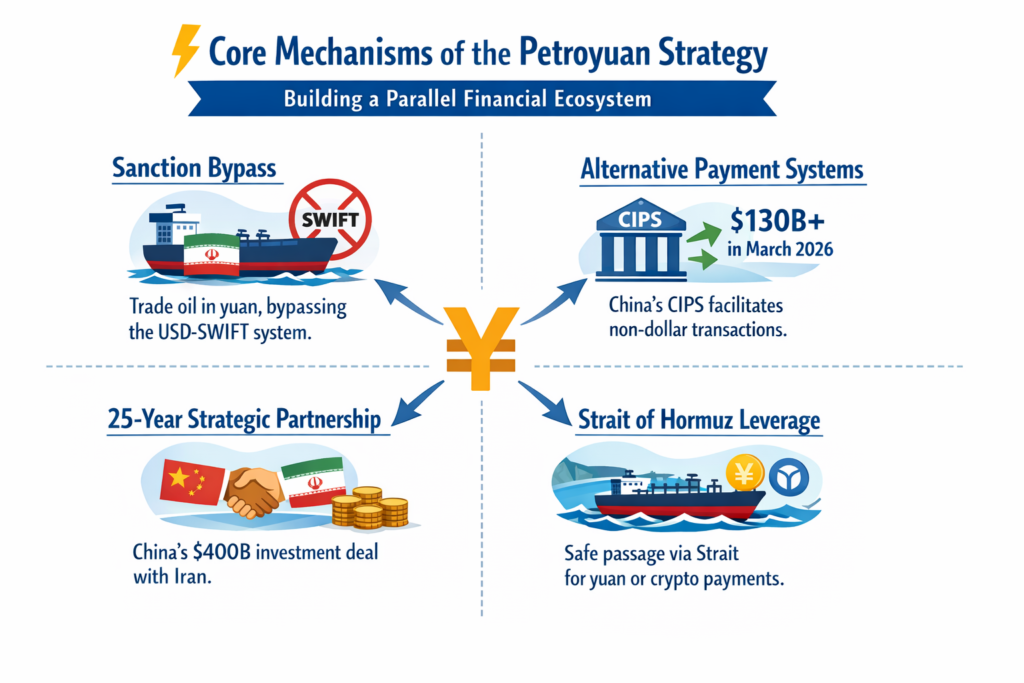
One of the most critical elements in this strategy is Iran’s geographic advantage. The country controls access to the Strait of Hormuz, a narrow but vital shipping route.
Nearly one-fifth of the world’s oil and liquefied natural gas passes through this corridor. Therefore, any change in how transactions are handled here has global consequences.
Recently, Iran has reportedly begun charging transit fees to commercial vessels. However, what makes this move significant is the choice of currency. Instead of US dollars, these payments are being settled in Chinese yuan.
This shift may appear small at first glance. However, it carries long-term implications for global trade systems.
Early Signs of a Currency Shift
Reports suggest that at least two vessels had already made payments in yuan by late March. Shortly after, China’s commerce authorities acknowledged the development publicly.
Furthermore, Iranian officials have openly encouraged the adoption of the petroyuan in global oil markets. Although neither government has officially detailed the arrangement, the intent is becoming increasingly clear.
Why the Iran-China Petroyuan Strategy Makes Sense
Both nations have strong reasons to pursue this path. For years, the United States has relied on the global dominance of the dollar to enforce sanctions.
Countries that fall out of favor with Washington often find themselves cut off from the international financial system. Iran has experienced this pressure more than most.
By switching to yuan-based transactions, Iran and China can bypass these restrictions. As a result, they reduce their dependence on Western-controlled financial networks.
A Partnership Built on Mutual Benefit
The economic relationship between Iran and China has deepened significantly over the past decade. In 2021, both countries signed a long-term strategic agreement aimed at expanding cooperation.
China now buys over 80% of Iran’s oil exports, often at discounted rates. Meanwhile, Iran depends heavily on Chinese goods, including machinery, electronics, and industrial components.
Even during the recent conflict, this trade flow remained strong. Data indicates that Iran exported between 12 to 13.7 million barrels of crude oil in just two weeks, with most shipments heading to China.
Clearly, the partnership is not only stable but also growing.
China’s Larger Vision Behind the Petroyuan
For China, the Iran-China petroyuan strategy is part of a much bigger plan.
Xi Jinping has repeatedly expressed his vision of a financial system that is less dependent on the US dollar. His goal is to promote the yuan as a global currency for trade and reserves.
This idea aligns with China’s broader ambition to create a “multipolar financial world.” In such a system, multiple currencies share influence instead of one dominating.
Moving Towards a Multipolar Financial Order
China understands that replacing the dollar overnight is impossible. However, it is focusing on gradual change.
Each transaction settled in yuan adds to its credibility. Over time, these small steps could build a strong alternative to the current system.
Therefore, the Iran-China collaboration is not just tactical. It is also deeply strategic.
Challenges Facing the Petroyuan Strategy
Despite its potential, the petroyuan strategy faces significant hurdles.
The US dollar has been the backbone of global finance for decades. Its dominance is supported by trust, stability, and deep financial markets.
In comparison, the yuan still has limitations.
Structural Weakness of the Yuan
One major issue is that the yuan is not freely convertible. China maintains strict controls over its currency.
This means businesses cannot easily exchange yuan or move it across borders without restrictions. As a result, many global investors remain cautious.
Additionally, concerns about transparency and government control over financial institutions make some countries hesitant to adopt the yuan fully.
The Numbers Tell the Story
Current data highlights the gap between ambition and reality.
- The US dollar accounts for about 57% of global foreign exchange reserves
- The euro holds around 20%
- The yuan stands at just 2%
Even in trade settlements, the yuan’s share remains relatively small. Although it has grown from less than 1% in 2012 to around 3.7% in 2024, it still represents a tiny portion of global commerce.
These figures show that the dollar’s dominance is far from over.
Role of Gulf Nations in the Equation
Another key factor is the position of Gulf countries. Nations like Saudi Arabia have traditionally priced oil in US dollars.
This practice dates back to agreements made in the 1970s. Changing this system would require a major shift in global alliances.
For now, such a shift seems unlikely. However, even small changes could have ripple effects.
Small Steps, Big Impact
Some analysts believe that the petroyuan does not need to replace the dollar to be effective.
Even limited adoption can weaken the dollar’s influence over time. Each yuan-based transaction reduces reliance on US-controlled systems.
For Iran, this strategy offers a way to survive and even thrive under sanctions. For China, it provides a pathway to greater global influence.
A Gradual but Meaningful Shift
The Iran-China petroyuan strategy is best understood as a long-term game. It is not about sudden disruption but steady evolution.
As more countries explore alternatives, the global financial system may slowly become more diversified.
Summary: Iran-China Petroyuan Strategy Signals a Changing World Order
The Iran-China petroyuan strategy represents a significant shift in global economics.
- Iran is leveraging its control over key trade routes
- China is pushing for greater currency influence
- Both nations are reducing dependence on the US dollar
- Small changes are creating long-term impact
While the dollar remains dominant, the foundation of that dominance is being tested.
In the coming years, the success of this strategy will depend on how widely it is adopted. However, one thing is certain—the global financial landscape is no longer static.
Disclaimer
This article is based on publicly available information, official statements, and media reports available at the time of publication. The content is intended for informational purposes only and should not be considered financial or policy advice. Readers are encouraged to refer to official sources for the latest updates.
While efforts have been made to ensure accuracy, the information presented may change as new developments emerge. Readers are advised to conduct their own research and consult financial advisors before making any investment decisions.
NoCap Times does not independently verify all claims or statements and shall not be held responsible for any inaccuracies or omissions.