

India and Canada Sign Critical Minerals & Uranium Deals, Target $50 Billion Trade by 2030
India and Canada have taken a major step toward restoring and strengthening bilateral ties by signing key agreements on critical minerals and uranium supply, while also advancing negotiations for a Comprehensive Economic Partnership Agreement (CEPA).
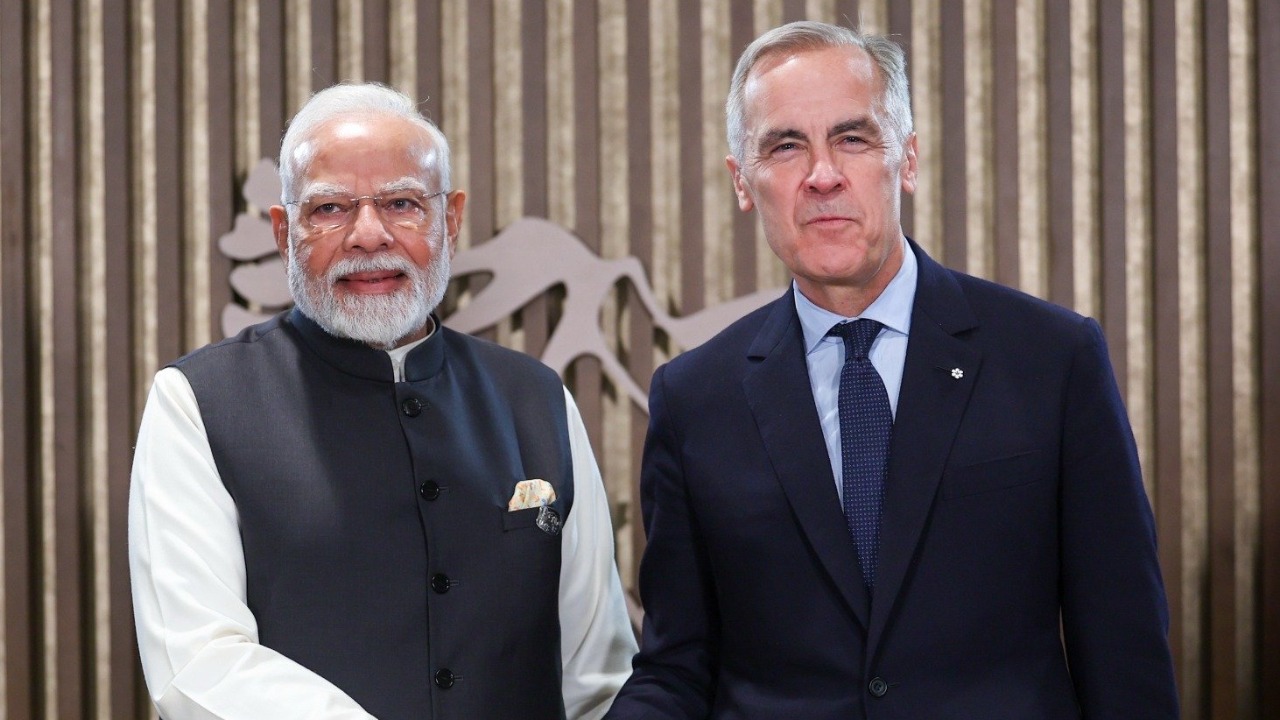
During high-level talks between Prime Minister Narendra Modi and Canadian Prime Minister Mark Carney, both nations set an ambitious goal of increasing bilateral trade to $50 billion by 2030 and deepening defence and security cooperation.
Uranium Supply and Critical Minerals Pact
A significant outcome of the visit was the signing of a $2.6-billion agreement between India’s Department of Atomic Energy and Cameco, one of the world’s largest publicly traded uranium companies. The deal ensures the long-term supply of uranium ore concentrate to support India’s expanding nuclear energy programme.
Additionally, both countries signed a Memorandum of Understanding (MoU) on cooperation in critical minerals, a sector considered essential for clean energy, electric vehicles, semiconductors and advanced manufacturing.
With India rapidly expanding renewable energy capacity and nuclear power generation, Canada positioned itself as a reliable long-term resource partner.
Push for Free Trade Agreement (CEPA)
India and Canada also finalized the Terms of Reference for negotiations on the Comprehensive Economic Partnership Agreement (CEPA), effectively reviving free trade discussions that were previously suspended.
Both leaders expressed intent to conclude the agreement by the end of the year, aiming to:
- Reduce trade barriers
- Improve investor certainty
- Boost exports and job creation
- Expand bilateral investment flows
Prime Minister Modi highlighted unlocking the “full potential of economic cooperation” as a priority, while Carney emphasized the importance of resilient partnerships in a rapidly transforming global economy.
Trade and Investment Snapshot
- Goods trade (2024): CAD 13.32 billion
- Services trade (2024): CAD 19.61 billion
- Canadian pension fund investment in India: $100 billion
- Total capital managed by Canadian pension funds: $2 trillion
Canada remains one of the largest institutional investors in India, particularly in infrastructure, logistics, and renewable energy projects.
Resetting Diplomatic Ties
The renewed engagement comes after diplomatic tensions escalated in 2023 following allegations made by former Canadian Prime Minister Justin Trudeau regarding the killing of Hardeep Singh Nijjar. India rejected those allegations, leading to strained ties and reciprocal diplomatic actions.
The reset began through security-level discussions in late 2024, followed by leadership engagement on the sidelines of the G7 Summit. The current visit marks the first Canadian prime ministerial visit to India in eight years.
Defence and Indo-Pacific Cooperation
Both countries agreed to launch the India–Canada Defence Dialogue, signaling stronger strategic coordination.
Planned areas of cooperation include:
- Maritime domain awareness in the Indo-Pacific
- Defence industry collaboration
- Military exchanges
- Intelligence coordination
Carney underlined the importance of practical security cooperation amid shifting global power structures.
Energy Security and Clean Growth Partnership
Canada pitched itself as a dependable supplier of:
- Critical minerals
- Liquefied Natural Gas (LNG)
- Uranium for nuclear energy
With India targeting 500 GW renewable capacity and doubling LNG’s share in its energy mix by 2030, the partnership is positioned as mutually strategic.
Carney also highlighted Canada’s low-carbon LNG and opportunities for collaboration as Canada aims to double its electricity grid by 2050.
Education, Innovation and People-to-People Ties
The two nations unveiled the Canada–India Talent and Innovation Strategy, covering 13 partnerships to deepen education and research collaboration.
Leading institutions such as:
- McGill University
- University of Toronto
- University of British Columbia
will collaborate with Indian counterparts in AI, health sciences, agriculture, digital architecture and innovation.
Canada is home to nearly two million people of Indian origin and hosts approximately 400,000 Indian students — one of the largest such communities globally.
Trilateral Technology Cooperation
India and Canada also joined Australia in signing a trilateral MoU focused on technology and innovation cooperation. Additionally, both sides agreed to establish a joint pulse production centre of excellence, aimed at strengthening agricultural collaboration.
Strategic Outlook
The agreements on uranium, critical minerals, trade negotiations, defence cooperation and education signal a comprehensive reset in India–Canada relations.
With an ambitious $50 billion trade target, revived CEPA talks and expanded strategic cooperation, both countries appear determined to move beyond past tensions and build a forward-looking economic and security partnership.
Summary
India and Canada have signed major agreements on uranium supply and critical minerals while reviving free trade negotiations under CEPA. Both nations aim to double trade to $50 billion by 2030, expand defence collaboration, deepen energy ties, and strengthen education and innovation partnerships, marking a significant reset in bilateral relations.
Disclaimer:
This article is based on publicly available information and official statements. The content is intended for informational purposes only. The publication does not independently verify third-party claims or geopolitical assertions mentioned in international developments.