

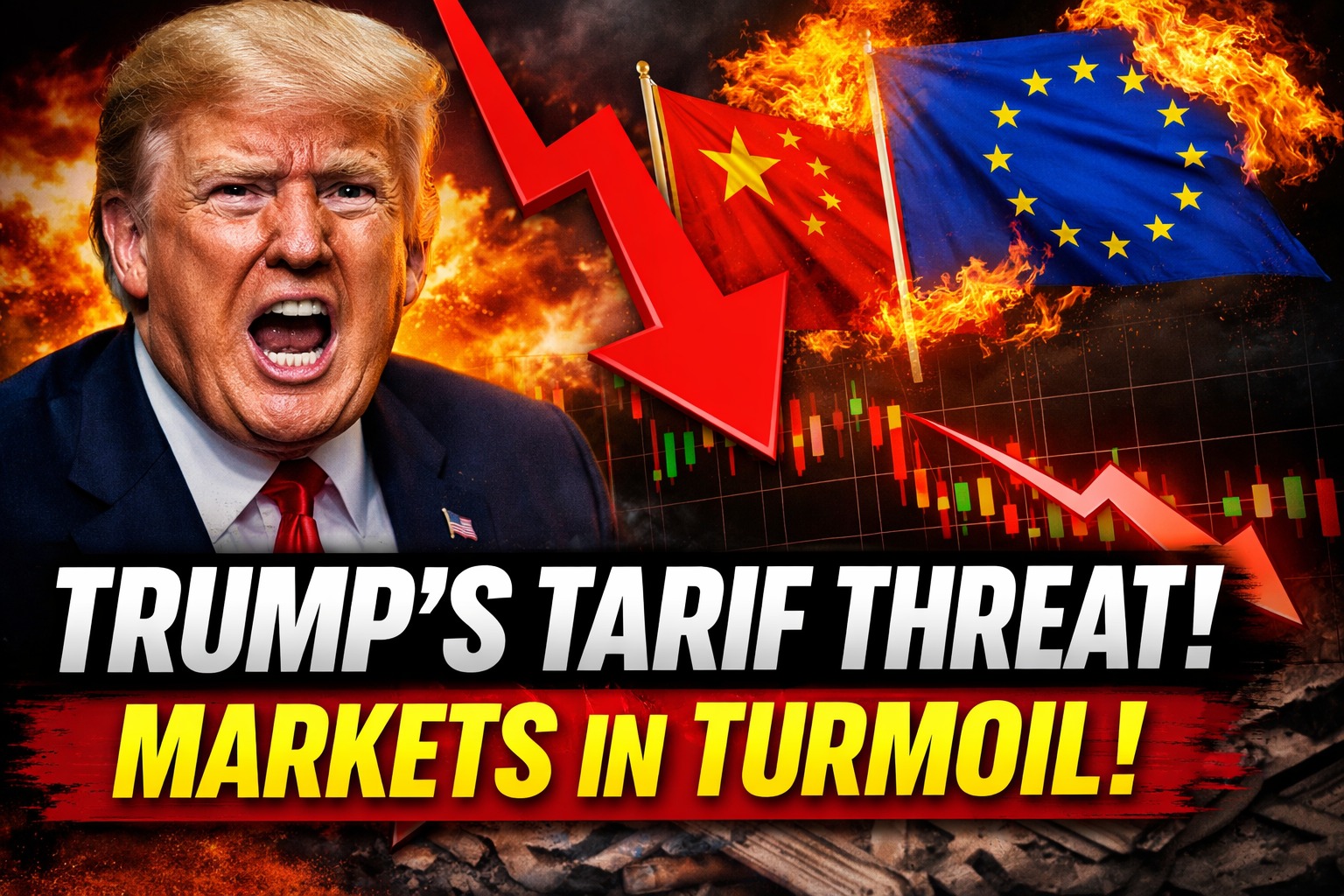
Trump Threatens Even Higher Tariffs After Supreme Court Blow, Global Markets Slide
US President Donald Trump has warned that countries reconsidering trade arrangements with Washington could face steeper tariffs, even after the US Supreme Court struck down his earlier emergency-based duties.
In a series of posts on his social media platform, Truth Social, Trump cautioned foreign governments against what he described as attempts to “play games” following the court’s ruling. He indicated that while the Supreme Court invalidated tariffs imposed under the International Emergency Economic Powers Act (IEEPA), his administration retains the authority to reintroduce levies using other legal mechanisms — potentially in a stronger and more expansive manner.
Trump suggested that nations which have “taken advantage” of the United States in past trade relationships could be subject to higher duties than those previously negotiated. He also floated the possibility of introducing licensing fees for trading partners, though he did not outline how such a system would function.
The Office of the US Trade Representative did not immediately provide clarification regarding the president’s remarks or the potential implementation timeline.
European Union Delays Trade Vote
Meanwhile, in Brussels, the European Parliament postponed a scheduled vote on a proposed EU-US trade agreement after Washington announced a temporary import duty of 15% on goods from all countries.
Under the draft trade arrangement, most EU goods would face a 15% US tariff, although exemptions were carved out for hundreds of items, including select food products, aircraft components, pharmaceutical ingredients, and critical minerals. In return, the European Union had agreed to eliminate duties on various US imports, particularly industrial goods.
Initially, Trump introduced the temporary tariff at 10% under Section 122 of the Trade Act of 1974, but later raised it to the statutory maximum of 15%. The revised duty is scheduled to take effect at 12:01 a.m. EST Tuesday. Simultaneously, US Customs and Border Protection confirmed it would stop collecting tariffs previously imposed under IEEPA, following the Supreme Court’s decision.
Markets React to Renewed Trade Uncertainty
Financial markets responded with caution. Wall Street indices declined in early trading as investors grappled with renewed unpredictability surrounding US trade policy. The Dow Jones Industrial Average fell more than 1%, while both the S&P 500 and Nasdaq Composite recorded moderate losses. The US dollar index also edged lower against major global currencies.
Internationally, reactions have been mixed. China urged Washington to roll back tariff measures, the European Union paused its approval process, and India delayed upcoming trade discussions. US Trade Representative Jamieson Greer signaled that the administration may launch new Section 301 investigations into alleged unfair trade practices — a step that could pave the way for additional tariffs.
The Supreme Court ruling, authored by Chief Justice John Roberts, reinforced judicial limits on executive authority. Trump criticized the decision publicly, including remarks directed at justices he had appointed during his presidency. He also expressed concern about other pending cases, including one related to birthright citizenship.
As the situation unfolds, global trade partners and investors remain on edge, awaiting clarity on the next phase of US trade policy.
Tariffs, Turbulence, and the Risk to U.S. Credibility
President Trump’s renewed tariff threats risk deepening global economic instability and straining diplomatic ties at a time when cooperation is essential. Rather than restoring confidence, the repeated use of tariffs as a political tool may isolate the United States from key allies and trade partners.
Economically, tariffs are not paid by foreign governments — they are ultimately borne by American importers, businesses, and consumers. Higher duties translate into increased costs for manufacturers, retailers, and ultimately everyday US citizens. Inflationary pressure, supply chain disruptions, and weakened investor confidence are direct consequences of such policies.
Moreover, policy unpredictability undermines America’s credibility in international negotiations. Sudden reversals, legal setbacks, and retaliatory rhetoric create uncertainty that discourages long-term investment. Markets have already shown signs of anxiety, reflecting fears that trade volatility could dampen economic growth.
Critics argue that instead of strengthening America’s position, aggressive tariff strategies may be eroding it. From strained alliances to legal defeats and financial market instability, the broader impact raises questions about the sustainability and effectiveness of this approach.
Public sentiment within the United States appears increasingly divided, with growing criticism over economic management, rising costs of living, and global diplomatic tensions. Whether this strategy will ultimately deliver economic advantage or deepen domestic and international challenges remains to be seen — but the risks are mounting.
Disclaimer
Disclaimer: This article is based on information compiled from multiple publicly available national and international news sources, official statements, and media reports. While every effort has been made to ensure accuracy, developments in trade policy and international relations are subject to change. Readers are advised to refer to official government releases and verified sources for the latest updates.