

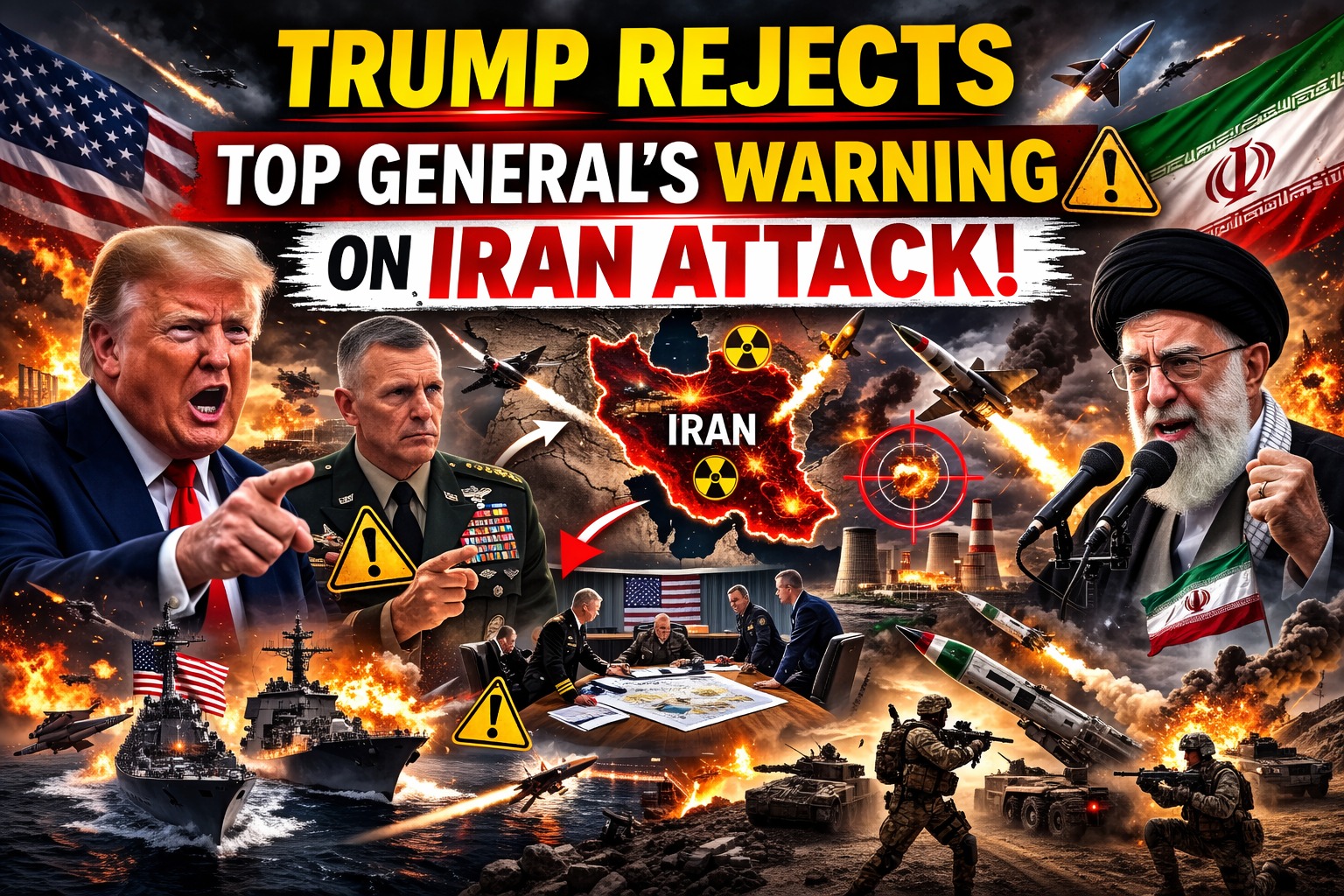
Trump Denies Top General Warned Against Iran Strike Amid Rising US–Tehran Tensions
US President Donald Trump has strongly rejected media reports suggesting that General Dan Caine, Chairman of the Joint Chiefs of Staff, cautioned him about the risks of a potential U.S. military strike on Iran, calling the accounts entirely inaccurate.
In a post on his Truth Social platform, Trump dismissed claims circulating in U.S. news outlets that Caine had flagged concerns about a possible attack on Iran, including the danger of a prolonged conflict, stretched munitions stockpiles, and potential American casualties. The president described those reports as “100 percent incorrect” and asserted that his top military adviser believes any conflict with Tehran could be “easily won.”
What the Reports Said
Several U.S. media organisations, including The Washington Post and Axios, reported that General Caine had raised internal caution about military action in discussions with the White House and the Pentagon. According to those reports, Caine — a key military advisor — highlighted potential challenges such as depleted munitions due to existing commitments supporting allies, limited coalitional backing in the Middle East, and the inherent complexity of a campaign against Iran.
The reports also noted that the United States has deployed substantial forces to the region and is considering various military options. Some sources told Axios that Caine, unlike other past operations, had a more measured tone about Iran, reflecting concerns about escalation and sustained involvement.
Caine’s official office responded to media coverage by underscoring his established role: providing civilian leaders with a range of military options and assessments of associated risks and consequences.
Trump’s Response and Position
President Trump rejected characterisations that his leadership was divided or that his top general opposed potential military action. On social media, he emphasised that Caine’s remarks were being misrepresented and reiterated confidence in the general’s leadership and commitment. Trump stressed that, ultimately, the decision on any military action rests with him as commander-in-chief.
While denying the reports of dissent, Trump also affirmed that diplomatic efforts remain ongoing. He indicated a preference for a negotiated settlement with Tehran but warned that failure to reach an agreement could lead to severe consequences for the Iranian leadership.
Strategic Context
The controversy arises amid heightened U.S.–Iran tensions and renewed diplomacy. In recent weeks, the United States has concentrated military assets in the Middle East, and senior Iranian officials have simultaneously reiterated their readiness to defend against aggression. Indirect talks between U.S. negotiators and Iranian representatives have continued in Geneva, but no breakthrough has been reported.
Separate reporting indicates that U.S. forces remain concerned about the readiness of missile defence systems and the potential for extended conflict, especially in the context of simultaneous commitments such as support for Ukraine and Israel.
The debate over military versus diplomatic paths highlights the complexity of deterrence and negotiation strategies in U.S. foreign policy towards Iran. Trump’s public denial of internal cautionary voices reinforces a narrative of executive control while underscoring ongoing uncertainty about how, and whether, military options will be pursued.
Summary
President Trump has rejected media reports that General Dan Caine warned him about the risks of attacking Iran, calling such stories “100 percent incorrect.” While leading U.S. news outlets reported Caine had expressed caution over military challenges and potential casualties, the White House maintains the general supports national defence decisions and believes any conflict could be “easily won.” The controversy unfolds amid intensified U.S. military positioning in the Middle East and ongoing diplomatic engagement with Tehran.
Disclaimer
This article is based on reporting from multiple reputable news organisations, including Al Jazeera, The Washington Post, and Reuters-syndicated sources, reflecting information available as of late February 2026. Developments in U.S.–Iran relations and military deliberations are ongoing and subject to change. The No Cap Times is not responsible for any factual error/ mistake in the news/information mentioned in the article.