

PM Modi’s Israel Visit Caught in Judicial Row as Opposition Warns of Knesset Boycott
Prime Minister Narendra Modi’s upcoming visit to Israel is facing unexpected turbulence as the country’s internal political tensions spill into diplomatic space. The controversy centres on whether the President of the Supreme Court of Israel, Yitzhak Amit, will be invited to attend Modi’s expected address to the Knesset.
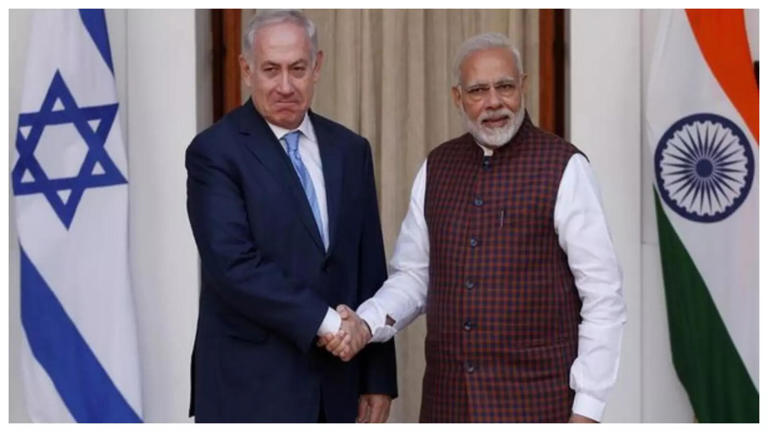
Modi is scheduled to arrive in Israel on February 25 for a two-day visit, during which he is expected to meet Prime Minister Benjamin Netanyahu, President Isaac Herzog, and address the Israeli Parliament — an honour seen as a major diplomatic milestone.
Why the Controversy?
Leader of Opposition Yair Lapid has warned that his bloc may boycott Modi’s parliamentary address unless Chief Justice Yitzhak Amit is formally invited, as per established parliamentary convention.
Lapid has argued that excluding the Supreme Court President from such a ceremonial session would embarrass Israel internationally. He stressed that the issue is not about boycotting India, but about maintaining institutional protocol.
“We do not want India to be embarrassed by us, with the Prime Minister of a nation of a billion people standing before a half-empty Knesset,” Lapid said during a recent parliamentary session.
Opposition sources claim the government is “intentionally pushing them into a corner” by excluding Amit from official events.
The Judicial Overhaul Backdrop
The dispute is rooted in Israel’s ongoing judicial overhaul debate — a deeply polarising issue that has divided the country for more than two years.
Following Yitzhak Amit’s election as Supreme Court President in January 2025, Justice Minister Yariv Levin reportedly refused to recognise his authority formally. The State Gazette has not published his appointment as required, and Amit has been excluded from multiple official Knesset ceremonies — including addresses by former US President Donald Trump and other world leaders.
The tension has already led to opposition boycotts, including during the Knesset’s 77th anniversary session.
Heated Exchanges Between Government and Opposition
Knesset Speaker Amir Ohana accused Lapid of using India-Israel relations as leverage in a domestic political battle.
Ohana posted on X that harming foreign relations with “an important friend and global power” would be an unfortunate and wrong choice. He described such threats as “illegitimate weapons in an internal political struggle.”
Lapid countered by urging Prime Minister Netanyahu to intervene and ensure Amit’s invitation, arguing that the boycott responsibility lies with the Speaker’s office.
He emphasised that the opposition has no desire to harm Israel’s ties with India, describing India as a “great friend and strategic ally.”
Diplomatic Stakes High
India-Israel relations have strengthened significantly over the past decade, particularly in defence cooperation, technology, agriculture, and innovation partnerships. Modi’s address to the Knesset is viewed as a symbolic affirmation of this strategic partnership.
However, the internal rift threatens to cast a shadow over what is otherwise expected to be a high-profile diplomatic engagement.
Senior opposition sources reiterated that they are not calling for a boycott of Modi himself but are demanding adherence to institutional protocol.
What Happens Next?
All eyes are now on Prime Minister Netanyahu and whether he directs the Knesset Speaker to extend a formal invitation to Supreme Court President Yitzhak Amit.
With diplomatic optics at stake, Israeli leadership faces pressure to prevent domestic political divisions from overshadowing an important international visit.
📌 Key Takeaways
- PM Narendra Modi is expected to visit Israel on February 25.
- Opposition leader Yair Lapid threatens boycott over exclusion of Supreme Court President Yitzhak Amit.
- The issue is tied to Israel’s ongoing judicial overhaul controversy.
- Government and opposition exchange sharp words over potential diplomatic embarrassment.
- India-Israel strategic ties remain strong but face symbolic tension due to internal politics.