

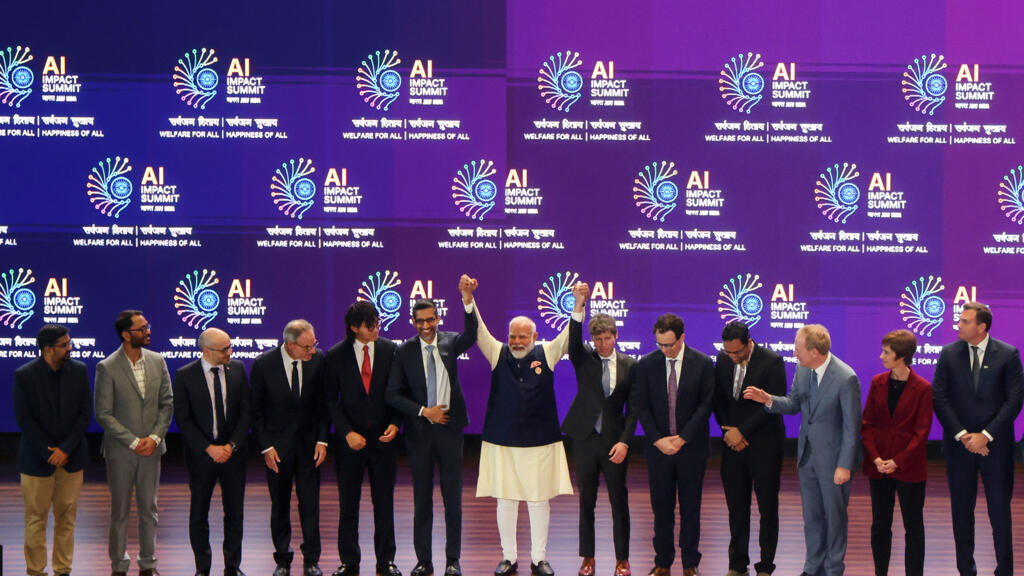
New Delhi AI Summit 2026: 88 Nations Back Human-Centric Global Framework
In a landmark moment for global technology governance, 88 countries and international organisations have adopted the New Delhi Declaration on Artificial Intelligence, placing digital access, affordability, and workforce readiness at the heart of the global AI agenda.
Hosted by India, the AI Impact Summit 2026 marks the first time a major global AI governance summit has been held in the Global South — and the shift in venue has brought a decisive change in priorities.
From AI Risk to AI Access
Unlike earlier summits in Bletchley Park, Seoul, and Paris — which largely focused on AI safety, regulation, and existential risks — the New Delhi Declaration emphasizes practical barriers that developing nations face: limited computing infrastructure, unreliable internet connectivity, and shortages of skilled professionals.
The declaration states that robust digital infrastructure and affordable connectivity are essential prerequisites for unlocking AI’s full potential. It also calls for modernizing vocational training systems, upgrading public sector capacity, and building local AI talent pools.
Importantly, the framework promotes open-source AI — “where appropriate” — as a scalable solution for countries that cannot afford to build proprietary systems from scratch.
Broadest Global Endorsement Yet
The declaration has drawn the widest participation in the four-summit history of global AI cooperation. Among the signatories are the United States, the United Kingdom, China, Russia, and the European Union — marking a rare moment of convergence in an otherwise fragmented geopolitical environment.
Speaking at the summit, Prime Minister Narendra Modi emphasized that the decisions made today will shape the technological destiny of future generations.
Union Minister for Electronics and IT Ashwini Vaishnaw described the declaration as rooted in India’s human-centric philosophy, highlighting the principle of “Sarvajana Hitaya, Sarvajana Sukhaya” — welfare and prosperity for all — as the guiding vision behind democratizing AI access.
Seven Voluntary Frameworks Announced
Although the New Delhi Declaration is non-binding and carries no legal obligations, the summit unveiled seven voluntary initiatives aimed at fostering inclusive AI growth:
- Charter for the Democratic Diffusion of AI – Promotes equitable access to foundational AI resources and encourages locally relevant innovation.
- Global AI Impact Commons – Seeks to replicate successful AI use cases across regions, particularly in public services.
- Trusted AI Commons – A repository of technical tools, benchmarks, and best practices to ensure secure and responsible AI deployment.
- International Network of AI for Science Institutions – Designed to connect global research bodies and pool scientific expertise.
A full pillar of the declaration remains dedicated to secure and trustworthy AI systems, signaling that safety concerns have not been sidelined — but reframed within a broader inclusion-first approach.
A Global South Perspective
The summit’s significance lies not just in its outcomes, but in its framing. By shifting the debate from abstract risks to tangible access, India has positioned itself as a leading voice for emerging economies seeking a greater role in shaping AI governance.
As geopolitical tensions reshape global technology supply chains, the New Delhi Declaration signals a push toward multilateral cooperation that prioritizes digital equity alongside innovation.
Whether the voluntary frameworks evolve into enforceable standards remains to be seen. But for now, the summit marks a pivotal step in redefining who gets to participate in — and benefit from — the AI revolution.
Summary
The AI Impact Summit 2026 in New Delhi concluded with 88 countries and international organisations signing the New Delhi Declaration on Artificial Intelligence. The declaration emphasizes digital infrastructure, workforce training, affordable AI systems, and open-source solutions, shifting the global AI conversation toward inclusion and accessibility. While non-binding, the summit introduced seven voluntary frameworks to promote democratic diffusion of AI and international research collaboration, marking a significant Global South-led milestone in AI governance.