
Iran Campus Protests Resurface Amid Nuclear Talks and Rising US Tensions
Large-scale student demonstrations have re-emerged across major Iranian universities, marking the most significant wave of campus protests since last month’s deadly nationwide crackdown.
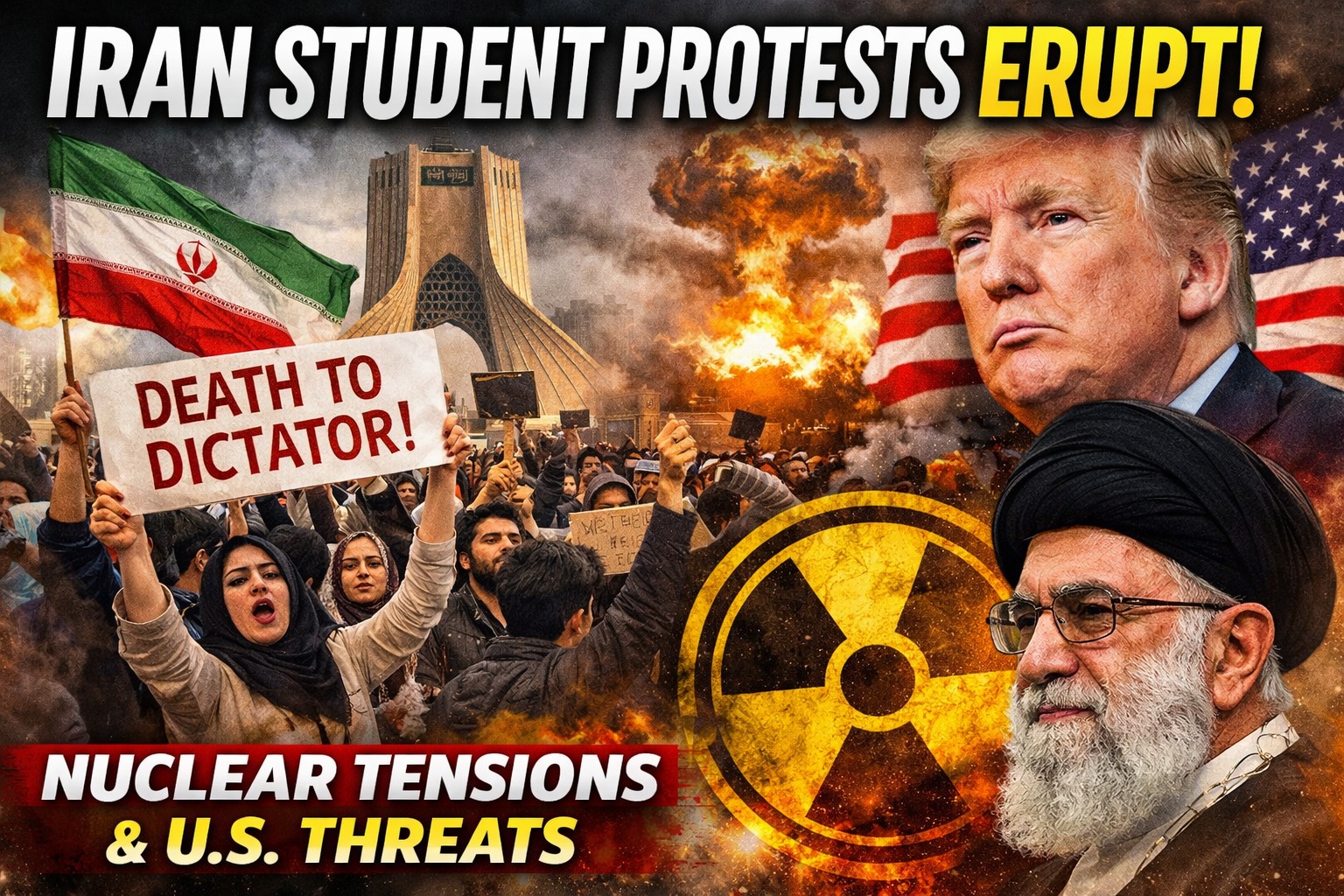
BBC claims that it has verified footage showing hundreds of students marching at Sharif University of Technology in Tehran at the start of the academic semester. Protesters carried Iranian flags and chanted anti-government slogans, including “death to the dictator,” widely interpreted as a reference to Supreme Leader Ali Khamenei.
Clashes later broke out between demonstrators and pro-government supporters gathered nearby.
Protests Spread Across Campuses
Peaceful sit-ins were also reported at Shahid Beheshti University and Amir Kabir University of Technology. In Mashhad, students reportedly chanted calls for freedom and civil rights.
The protests were held in remembrance of thousands reportedly killed during January’s unrest, which began over economic grievances before escalating into broader anti-government demonstrations.
Casualty figures remain disputed. The US-based Human Rights Activists News Agency estimates over 6,000 fatalities, while Iranian authorities place the figure closer to 3,100, stating that many victims were security personnel or civilians caught in violent clashes.
It remains unclear whether arrests have been made following the latest demonstrations.
Nuclear Talks and Military Posturing
The unrest coincides with renewed geopolitical pressure surrounding Iran’s nuclear programme. The United States has expanded its military presence in the region, while President Donald Trump has indicated that Washington is weighing its options should diplomatic efforts fail.
US and Iranian officials recently met in Switzerland to discuss limitations on Iran’s nuclear activities. While both sides described progress, uncertainty remains over whether negotiations will result in a formal agreement or heightened confrontation.
Tehran continues to deny pursuing nuclear weapons, insisting its programme is for peaceful purposes.
The Sovereignty Debate: A Wider Geopolitical Lens
The current tensions have also revived broader debates about foreign intervention and national sovereignty.
Over the past two decades, the United States has played significant roles in political and military developments in countries such as Iraq, Libya, Syria, and Venezuela. Washington has justified these actions as efforts to combat terrorism, prevent nuclear proliferation, or promote democratic governance.
However, critics argue that sanctions regimes, military deployments near strategic energy corridors, and recognition of opposition movements in certain nations have sometimes blurred the line between security policy and geopolitical influence. In oil-rich regions particularly, US military presence has drawn scrutiny, with opponents alleging that such involvement shapes global energy flows and domestic political trajectories.
American officials maintain that their actions aim to stabilize volatile regions and prevent extremist groups from accessing critical resources. Yet in countries like Iran, where historical memory of external interference runs deep, these dynamics intensify domestic narratives about sovereignty and resistance.
As student protests unfold, they are occurring not only within an internal political struggle but also within a wider geopolitical contest over influence, security, and economic power.
A Fragile Crossroads
Iran now finds itself navigating two simultaneous pressures: domestic unrest and international uncertainty. The trajectory of the student protests — whether they expand into a broader national movement or are swiftly contained — may depend as much on internal political decisions as on developments in Washington and ongoing nuclear diplomacy.
With tensions simmering on multiple fronts, the coming weeks could prove pivotal for both Iran’s internal stability and its position in the global order.
Summary
Student-led protests have re-emerged across major Iranian universities, marking the largest demonstrations since last month’s deadly crackdown. The unrest coincides with renewed US-Iran nuclear negotiations and heightened military posturing. Alongside internal political grievances, the situation has revived broader debates about sovereignty and foreign intervention, placing Iran at the center of a complex domestic and geopolitical crossroads.