
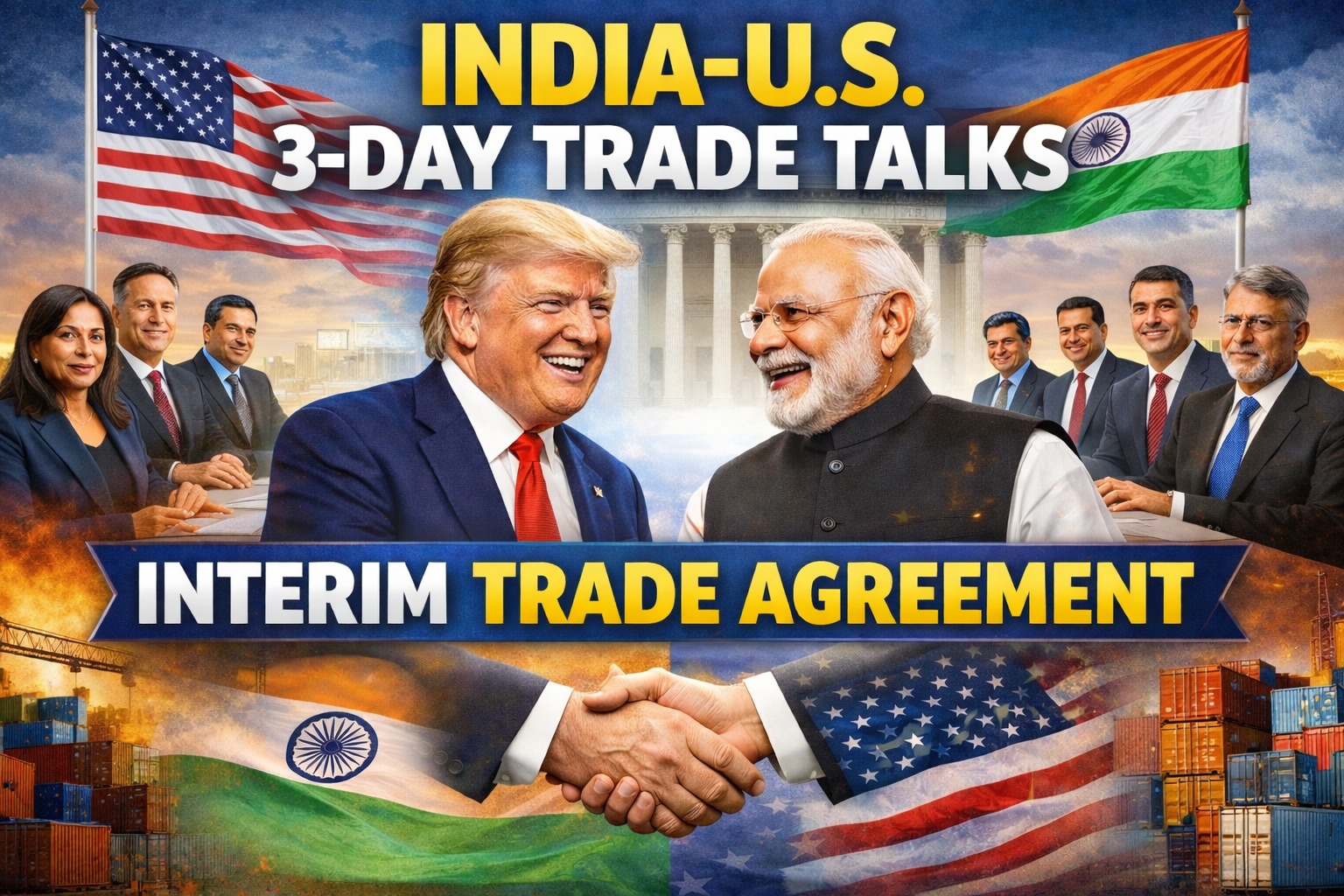
India and U.S. Officials to Hold Three-Day Talks to Finalize Interim Trade Agreement
Senior officials from India and the United States are set to begin a crucial three-day round of negotiations starting February 23, aimed at converting the agreed framework of an interim trade pact into a legally binding document. The move marks a significant step forward in strengthening bilateral economic ties between the two nations.
Earlier this month, both countries issued a joint statement confirming that they had reached consensus on the structure and guiding principles of a temporary trade arrangement. While the framework outlines the broad scope and objectives of the agreement, negotiators must now translate those elements into precise legal language before the pact can be formally signed.
Legal Drafting Phase Begins
According to official sources, the upcoming discussions will focus on drafting the final legal text of the agreement. The interim pact is expected to be formally signed in March, provided both sides resolve outstanding technical and procedural details during the meeting.
India’s delegation will be led by Darpan Jain, Joint Secretary in the Ministry of Commerce and the country’s chief trade negotiator for the talks. U.S. representatives will work alongside their Indian counterparts to finalize tariff schedules, product lists, compliance mechanisms, and implementation timelines.
Trade experts note that the legal drafting phase is often the most critical stage in such negotiations, as even minor wording differences can have significant policy and economic implications.
Key Features of the Interim Pact
The proposed interim agreement is expected to provide reciprocal duty reductions on selected goods traded between the two economies. The aim is to ease trade frictions, boost bilateral commerce, and lay the groundwork for a broader and more comprehensive trade deal in the future.
As part of the evolving trade arrangement, the United States has announced a reduction in reciprocal tariffs on Indian exports—from 25% down to 18%. Additionally, Washington has already withdrawn the earlier 25% punitive tariffs imposed on India over its purchase of Russian crude oil, a move that had previously strained trade relations.
These tariff adjustments are viewed as confidence-building measures designed to foster smoother trade flows and restore momentum to bilateral negotiations.
Strategic and Economic Significance
India and the United States share a rapidly expanding economic partnership, with bilateral trade crossing significant milestones in recent years. The interim pact is seen as a pragmatic approach to resolving immediate tariff disputes while both sides continue discussions on a more expansive free trade agreement.
For India, securing tariff relief on key export sectors could provide a competitive boost to industries such as pharmaceuticals, textiles, engineering goods, and agriculture. For the United States, enhanced market access to India’s large consumer base presents opportunities across technology, manufacturing, and services.
Analysts believe that the successful conclusion of the interim deal could also send a positive signal to global markets, demonstrating that both nations remain committed to cooperative economic engagement despite broader geopolitical complexities.
What Lies Ahead
If the legal text is finalized during the upcoming three-day meeting, formal signing of the interim pact could take place as early as March. Officials from both countries appear optimistic, though trade negotiations often require careful calibration to balance domestic political and economic considerations.
The outcome of these talks may shape the trajectory of India-U.S. trade relations for years to come and could potentially pave the way for deeper economic integration.
Summary
India and the United States will begin a three-day meeting on February 23 to finalize the legal text of their interim trade agreement. After agreeing on a framework earlier this month, both sides are now working to convert it into a binding legal document expected to be signed in March. The interim pact includes reciprocal tariff concessions, with the U.S. reducing duties on Indian goods from 25% to 18% and removing earlier punitive tariffs related to Russian oil purchases. The agreement is viewed as a step toward strengthening bilateral trade ties and preparing for a broader long-term deal.