

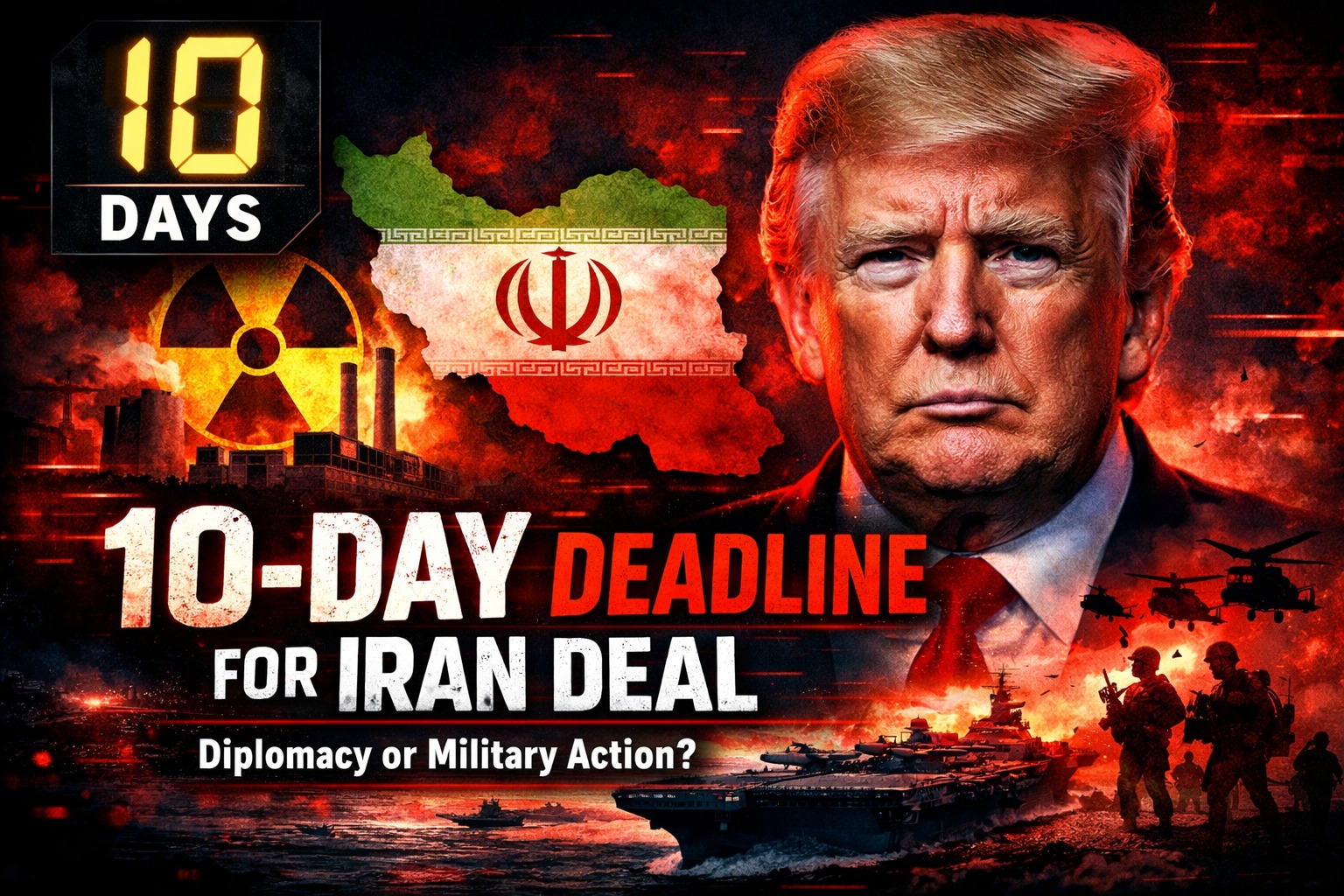
Trump Sets 10-Day Window for Iran Nuclear Deal as U.S. Expands Military Presence in Middle East
U.S. President Donald Trump has indicated that the coming days will determine whether Washington and Tehran can reach a renewed agreement over Iran’s nuclear programme. Speaking in Washington at the inaugural session of his newly formed Board of Peace, Trump said clarity on a potential deal would likely emerge within “about 10 days,” underscoring both urgency and rising tensions in the region.
The statement comes amid a noticeable expansion of U.S. military deployments across the Middle East. A second American carrier strike group is en route to the region, reinforcing an already substantial naval and air presence. Trump reiterated that Iran must not acquire nuclear weapons and warned of serious consequences if Tehran continued actions that he described as destabilising to regional security.
Recent diplomatic engagements between U.S. envoys and Iranian representatives in Geneva have focused on Tehran’s uranium enrichment activities. Iran’s programme was significantly damaged during last year’s brief but intense 12-day conflict involving U.S. and Israeli airstrikes. While key facilities were degraded, experts believe the programme was not entirely dismantled. Following the Geneva discussions, Iran indicated it would respond within two weeks to U.S. demands that it halt enrichment in exchange for relief from sanctions — a timeframe that broadly aligns with Trump’s stated deadline.
At the same time, military analysts note that the United States already possesses the operational capability to launch a sustained air campaign should diplomacy fail. The USS Abraham Lincoln carrier strike group has been operating in the Arabian Sea for weeks, carrying advanced aircraft including F-35 Lightning II and F/A-18 Super Hornets. Meanwhile, the USS Gerald R. Ford, the world’s largest aircraft carrier, is expected to move toward the eastern Mediterranean after transiting from the Atlantic. Together, the two strike groups could support hundreds of sorties daily if required.
Additional assets have been deployed to enhance readiness. Airborne early-warning aircraft, including multiple E-3 Sentry AWACS planes, have been positioned at Prince Sultan Air Base in Saudi Arabia to strengthen surveillance and command capabilities. Satellite imagery also suggests expanded missile defence coverage, with Patriot systems installed at key regional bases such as Al-Udeid in Qatar. U.S. naval destroyers in the Mediterranean are also positioned to intercept potential missile threats aimed at allies.
The central question, however, remains strategic intent. Defence experts suggest that the scale of the buildup provides the White House with options ranging from targeted strikes against specific nuclear infrastructure to broader operations addressing Iran’s missile capabilities. Some potential targets reportedly include previously unstruck nuclear-related sites. Concerns persist about Iran’s stockpile of highly enriched uranium, estimated at hundreds of kilograms enriched to 60 percent purity — a level that could theoretically be further processed into weapons-grade material.
Israel has urged Washington to address not only nuclear facilities but also Iran’s extensive ballistic missile programme, which includes thousands of missiles and numerous launch bases. During last year’s hostilities, Iran demonstrated improved missile penetration rates despite sophisticated air defence systems deployed by Israel and its allies. Iranian leadership has warned that any military aggression would be met with retaliation against U.S. bases and assets across the region.
While diplomatic channels remain open, the atmosphere is tense. Western allies are preparing contingency measures to defend regional partners if hostilities escalate, though some nations have signaled limits on direct involvement in offensive operations.
As the 10-day window approaches, the situation reflects a delicate balance between negotiation and deterrence. The coming days will determine whether diplomacy prevails or whether the reinforced military posture signals the prelude to renewed confrontation.
Summary:
President Donald Trump has set a roughly 10-day timeline to determine whether the U.S. and Iran can reach a nuclear agreement, even as American military deployments in the Middle East expand significantly. Two carrier strike groups, advanced aircraft, and enhanced missile defence systems provide Washington with substantial operational options. While diplomatic talks continue, tensions remain high, with concerns over Iran’s enriched uranium stockpile and missile capabilities shaping the next phase of this critical standoff.